- 1. What is thermodynamics?
Answer: Thermodynamics is a branch of physics that deals with heat, work, and temperature and their participation in energy, radiation, and physical properties of materials.

व्याख्यान 9: उष्मागतिकीछोटे विवरण में:
- 1. ऊष्मागतिकी क्या है?
उत्तर: ऊष्मागतिकी भौतिकी की एक शाखा है जो गर्मी, कार्य और तापमान और ऊर्जा, विकिरण और सामग्री के भौतिक गुणों में उनकी भागीदारी से संबंधित है।
Q 2. What is the distinction between mechanics and thermodynamics?
Answer: The difference between mechanics and thermodynamics is a very significantcharacteristic. Mechanics is described as the movement of particles or bodies under the control of forces and torques. While thermodynamics deals with the action of the system as a whole. It is impacted only by the inner macroscopic facts of a substance.
प्रश्न 2. यांत्रिकी और ऊष्मागतिकी में क्या अंतर है?
उत्तर: यांत्रिकी और ऊष्मागतिकी के बीच का अंतर एक बहुत ही महत्वपूर्ण विशेषता है। यांत्रिकी को बलों और टॉर्क के नियंत्रण में कणों या पिंडों की गति के रूप में वर्णित किया गया है। जबकि ऊष्मागतिकी समग्र रूप से प्रणाली की क्रिया से संबंधित है। यह केवल किसी पदार्थ के आंतरिक स्थूल तथ्यों से प्रभावित होता है।
Q 3. How can we classify the various areas of thermodynamics?
Answer: Thermodynamics is divided into the following four fields:
- Classic thermodynamics
- Statistical thermodynamics
- Chemical thermodynamics
- Equilibrium thermodynamics
Classic thermodynamics
In classical thermodynamics, the behavior of matter is analyzed using a macroscopic methodology. Units such as temperature and pressure are taken into account, which benefits people calculate other properties and forecast the properties of the matter go through the procedure.
Statistical Thermodynamics
In statistical thermodynamics, each molecule takes the focus, that is the properties of each molecule and their collaboration are deemed to describe the behavior of a set of molecules.
Chemical Thermodynamics
Chemical thermodynamics deals with the relationship between work and heat in chemical reactions and fluctuations in state.
Equilibrium thermodynamics
Equilibrium thermodynamics is the assessment of conversions of energy and matter as they shift towards stability or equilibrium.
क्यू 3। हम ऊष्मागतिकी के विभिन्न क्षेत्रों को कैसे वर्गीकृत कर सकते हैं?
उत्तर ऊष्मागतिकी को निम्नलिखित चार क्षेत्रों में विभाजित किया गया है:
- क्लासिक थर्मोडायनामिक्स
- सांख्यिकीय ऊष्मागतिकी
- रासायनिक उष्मागतिकी
- संतुलन ऊष्मागतिकी
क्लासिक ऊष्मागतिकी
शास्त्रीय ऊष्मागतिकी में, मैक्रोस्कोपिक पद्धति का उपयोग करके पदार्थ के व्यवहार का विश्लेषण किया जाता है। तापमान और दबाव जैसी इकाइयों को ध्यान में रखा जाता है, जिससे लोगों को अन्य गुणों की गणना करने में लाभ होता है और प्रक्रिया के माध्यम से मामले के गुणों का अनुमान लगाया जाता है।
सांख्यिकीय ऊष्मागतिकी
सांख्यिकीय थर्मोडायनामिक्स में, प्रत्येक अणु फोकस लेता है, यानी प्रत्येक अणु के गुण और उनके सहयोग को अणुओं के एक सेट के व्यवहार का वर्णन करने के लिए समझा जाता है।
रासायनिक ऊष्मागतिकी
रासायनिक ऊष्मागतिकी रासायनिक प्रतिक्रियाओं और राज्य में उतार-चढ़ाव में काम और गर्मी के बीच संबंध से संबंधित है।
संतुलन ऊष्मागतिकी
संतुलन ऊष्मागतिकी ऊर्जा और पदार्थ के रूपांतरण का आकलन है क्योंकि वे स्थिरता या संतुलन की ओर बढ़ते हैं।
Q4. What are the essential beliefs of thermodynamics?
Thermodynamic expressions
Thermodynamics has its particular distinctive dictionary. A nice interpretation of the simple ideas creates a solid awareness of several issues debated in thermodynamics, thereby avoiding possible disagreements.
Thermodynamic Systems
system
A thermodynamic system is a particular part of matter with a certain periphery or boundary to which our interest is concentrated. The system boundary can be true or fictional, fixed, or deformable.
There are three types of systems:
- Isolated system – An isolated or inaccessible system cannot trade energy or mass with its environment. The universe is perceived as an isolated system.
- Closed System – There is transmission of energy but no transmission of mass crossways the border of the closed system. Refrigeration machines, gas compression in the piston-cylinder unit are instances of closed systems.
- Open system – In an open system, both mass and energy can be transmitted among the system and the atmosphere. A steam turbine is an instance of an open system.
Surroundings
Something beyond of the system that has a direct influence on the conduct of the system is known as the atmosphere.
Q4. What are the essential notions of Thermodynamics?
- Isolated System – An isolated or inaccessible system cannot trade both energy and mass with its environments. The universe is deemed an isolated system.
- Closed System – Through the border of the closed system, the transport of energy happens but the transport of mass cannot happen. Examples are the closed systems such as Refrigerator, compression of gas in the piston-cylinder construction.
- Open System – In an open system, the mass and energy both may be transferred between the system and surroundings. A steam turbine is an example of an open system.
- क्यू3बी। ऊष्मागतिकी की आवश्यक मान्यताएँ क्या हैं?
- ऊष्मागतिकी अभिव्यक्ति
- थर्मोडायनामिक्स का अपना विशिष्ट विशिष्ट शब्दकोश है। सरल विचारों की एक अच्छी व्याख्या ऊष्मागतिकी में बहस किए गए कई मुद्दों के बारे में एक ठोस जागरूकता पैदा करती है, जिससे संभावित असहमति से बचा जा सकता है।
- थर्मोडायनामिक सिस्टम
- प्रणाली
- एक थर्मोडायनामिक प्रणाली एक निश्चित परिधि या सीमा के साथ पदार्थ का एक विशेष हिस्सा है जिसमें हमारी रुचि केंद्रित होती है। सिस्टम की सीमा सही या काल्पनिक, स्थिर या विकृत हो सकती है।
- तीन प्रकार के सिस्टम हैं:
- पृथक प्रणाली – एक पृथक या दुर्गम प्रणाली अपने पर्यावरण के साथ ऊर्जा या द्रव्यमान का व्यापार नहीं कर सकती है। ब्रह्मांड को एक पृथक प्रणाली के रूप में माना जाता है।
- बंद प्रणाली – ऊर्जा का संचरण होता है लेकिन बंद प्रणाली की सीमा के पार बड़े पैमाने पर संचरण नहीं होता है। प्रशीतन मशीन, पिस्टन-सिलेंडर इकाई में गैस संपीड़न बंद सिस्टम के उदाहरण हैं।
बंद प्रणाली की सीमा के माध्यम से, ऊर्जा का परिवहन होता है लेकिन द्रव्यमान का परिवहन नहीं हो सकता है। उदाहरण बंद प्रणालियाँ हैं जैसे कि फ्रिज, पिस्टन-सिलेंडर निर्माण में गैस का संपीड़न।
- खुली प्रणाली – एक खुली प्रणाली में, प्रणाली और वातावरण के बीच द्रव्यमान और ऊर्जा दोनों का संचार किया जा सकता है। एक भाप टरबाइन एक खुली प्रणाली का एक उदाहरण है।
- परिवेश
- सिस्टम से परे कुछ जो सिस्टम के आचरण पर सीधा प्रभाव डालता है उसे वायुमंडल के रूप में जाना जाता है
Q 5 What are the various thermodynamic procedures?
A system is experiencing a thermodynamic procedureonce an energetic variationhappensinside the system that is coupled with fluctuations in pressure, volume, and itsinner energy.
Normally we can say that four types of thermodynamic processes are possible that have their distinctivecharacteristics such as:
- Adiabatic Process –It is a kind of procedure in which there is no heat transmissioninside or outside of the system.
- Isochoric Process – It is a kind of procedure in which no volume shifthappens while the system is not under operation.
- Isobaric Process – It is a kind of procedure in which no pressure shifthappens.
- Isothermal Process –This is process or procedure in which no temperature shifthappens.
We can just claim a thermodynamic phase is a process or pattern of processes accomplished in such a sense that the opening and closing states of the system are the identical. A thermodynamic cycle is also described to as cycle function or cycle processes.
प्रश्न 5 विभिन्न थर्मोडायनामिक प्रक्रियाएं क्या हैं?
एक बार सिस्टम के अंदर एक ऊर्जावान बदलाव होता है जो दबाव, मात्रा और इसकी आंतरिक ऊर्जा में उतार-चढ़ाव के साथ मिलकर एक थर्मोडायनामिक प्रक्रिया का अनुभव कर रहा है।
आम तौर पर हम कह सकते हैं कि चार प्रकार की थर्मोडायनामिक प्रक्रियाएं संभव हैं जिनकी अपनी विशिष्ट विशेषताएं हैं जैसे:
ए। रुद्धोष्म प्रक्रिया – यह एक प्रकार की प्रक्रिया है जिसमें प्रणाली के अंदर या बाहर कोई ऊष्मा संचरण नहीं होता है।
बी। आइसोकोरिक प्रक्रिया – यह एक तरह की प्रक्रिया है जिसमें सिस्टम के संचालन के दौरान कोई वॉल्यूम शिफ्ट नहीं होता है।
सी। समदाब रेखीय प्रक्रिया – यह एक प्रकार की प्रक्रिया है जिसमें कोई दाब परिवर्तन नहीं होता है।
डी। इज़ोटेर्मल प्रक्रिया – यह प्रक्रिया या प्रक्रिया है जिसमें कोई तापमान परिवर्तन नहीं होता है।
हम केवल यह दावा कर सकते हैं कि थर्मोडायनामिक चरण एक प्रक्रिया या प्रक्रियाओं का पैटर्न है जो इस तरह से पूरा किया जाता है कि सिस्टम के उद्घाटन और समापन राज्य समान होते हैं। एक थर्मोडायनामिक चक्र को चक्र कार्य या चक्र प्रक्रियाओं के रूप में भी वर्णित किया जाता है।
Q 6. What is thermodynamic equilibrium?
In a given state, all properties of a system mustcorrect values. Therefore, if the value of even single property shifts, the state of the system shifts to a new. In a system that is in balance or equilibrium, no fluctuations in the value of properties happen when it is isolated from its atmosphere.
- It should be noted that if the temperature is the similarduring the system, we call that system that it is in thermal balance or equilibrium.
- It should be also noted that if no pressure change happensanyplace in the system, we can callsuch system to be in mechanical balance or equilibrium.
- If on the other hand chemical structure of a system does not shiftacrosstime, we call the system as in chemical equilibrium.
- Surrounding
- While is very essential to note that allbeyond the system that has a directlyimpact on the performance of the system is called as a surrounding.
- प्रश्न उष्मागतिकी संतुलन क्या है?
- किसी दिए गए राज्य में, सिस्टम के सभी गुणों को मानों को सही करना चाहिए। इसलिए, यदि एकल संपत्ति का मूल्य भी बदल जाता है, तो सिस्टम की स्थिति एक नए में बदल जाती है। एक ऐसी प्रणाली में जो संतुलन या संतुलन में है, गुणों के मूल्य में कोई उतार-चढ़ाव नहीं होता है जब इसे अपने वातावरण से अलग किया जाता है।
- ए। यह ध्यान दिया जाना चाहिए कि यदि सिस्टम के दौरान तापमान समान है, तो हम उस सिस्टम को कहते हैं कि यह थर्म में है
- Q 7. What is the Thermodynamic Equilibrium?
- At a certain state, the entire properties of a system have their stable values. Therefore, if the value of yet one property shifts, the state of the system shifts to another value. In a system that is in equilibrium or balance, no fluctuations in the value of properties happenonce it is separated or isolated from its environments.
- When the temperature is the similarall over the whole system, we believe the system should be in thermal equilibrium.
- When there is no shift in pressure at any moment of the system, we believe the system should be in mechanical equilibrium.
- When the chemical structure of a system cannotfluctuate with time, we believe that the system should be in chemical equilibrium.
- While phase equilibrium in a double-phase system is when the mass of every phase achieves an equilibrium point.
- It should be noted that a thermodynamic system is supposed to be in thermodynamic equilibrium if it is in chemical equilibrium, mechanical equilibrium and thermal equilibrium and the appropriatefactorsterminate to fluctuate with time.
प्रश्न 7. थर्मोडायनामिक संतुलन क्या है?
एक निश्चित अवस्था में, सिस्टम के संपूर्ण गुणों का अपना स्थिर मान होता है। इसलिए, यदि अभी तक एक संपत्ति का मूल्य बदल जाता है, तो सिस्टम की स्थिति दूसरे मूल्य में बदल जाती है। एक ऐसी प्रणाली में जो संतुलन या संतुलन में है, गुणों के मूल्य में कोई उतार-चढ़ाव नहीं होता है जब यह अपने वातावरण से अलग या अलग हो जाता है।
- जब तापमान पूरे सिस्टम में समान होता है, तो हम मानते हैं कि सिस्टम थर्मल संतुलन में होना चाहिए।
- जब सिस्टम के किसी भी क्षण दबाव में कोई बदलाव नहीं होता है, तो हम मानते हैं कि सिस्टम यांत्रिक संतुलन में होना चाहिए।
- जब किसी प्रणाली की रासायनिक संरचना समय के साथ नहीं बदल सकती है, तो हम मानते हैं कि प्रणाली रासायनिक संतुलन में होनी चाहिए।
- जबकि एक दोहरे चरण प्रणाली में चरण संतुलन तब होता है जब प्रत्येक चरण का द्रव्यमान एक संतुलन बिंदु प्राप्त करता है।
यह ध्यान दिया जाना चाहिए कि एक थर्मोडायनामिक प्रणाली को थर्मोडायनामिक संतुलन में माना जाता है यदि यह रासायनिक संतुलन, यांत्रिक संतुलन और थर्मल संतुलन में है और उपयुक्त कारक समय के साथ उतार-चढ़ाव के लिए समाप्त हो जाते हैं।
Q 8. How can we define the Thermodynamic Properties?
Thermodynamic properties are described as distinctiveaspects of a system, efficient of identifying the system’s state. Thermodynamic properties may be vast or rigorous.
Intensive properties are properties that do not fluctuate on the amount of matter. Examples are pressure and temperature as the intensive properties.
In the instance of vast properties, their value varies on the mass of the system. Examples of extensive properties are the Volume, energy, and enthalpy.
प्रश्न 8. हम थर्मोडायनामिक गुणों को कैसे परिभाषित कर सकते हैं?
थर्मोडायनामिक गुणों को सिस्टम के विशिष्ट पहलुओं के रूप में वर्णित किया जाता है, जो सिस्टम की स्थिति की पहचान करने में कुशल होते हैं। थर्मोडायनामिक गुण विशाल या कठोर हो सकते हैं।
गहन गुण वे गुण हैं जो पदार्थ की मात्रा पर उतार-चढ़ाव नहीं करते हैं। गहन गुणों के रूप में उदाहरण दबाव और तापमान हैं।
विशाल गुणों के उदाहरण में, उनका मूल्य प्रणाली के द्रव्यमान पर भिन्न होता है। व्यापक गुणों के उदाहरण आयतन, ऊर्जा और थैलीपी हैं।
Q 9.What can define the Enthalpy?
Enthalpy may be defined as the quantity of energy in a thermodynamic system. The amount of enthalpy amount to the aggregate heat content of a system, equivalent to the internal energy of a system added with the multiplication of volume and pressure.
Systematically, the enthalpy, H, amount to the sum total of the internal energy E and the multiplication of P (pressure) and V (volume) of a given system; that is
H = E + PV
क्यू 9। एन्थैल्पी को क्या परिभाषित कर सकता है?
एन्थैल्पी को थर्मोडायनामिक प्रणाली में ऊर्जा की मात्रा के रूप में परिभाषित किया जा सकता है। एक प्रणाली की कुल गर्मी सामग्री के लिए थैलेपी राशि की मात्रा, मात्रा और दबाव के गुणन के साथ जोड़े गए सिस्टम की आंतरिक ऊर्जा के बराबर होती है।
वैज्ञानिक रूप से, एन्थैल्पी, एच, आंतरिक ऊर्जा E के कुल योग और किसी दिए गए सिस्टम के P (दबाव) और V (वॉल्यूम) के गुणन के बराबर है; अर्थात्
H = E + PV
Q 10. How can we describe the Entropy?
The entropy may be described as the thermodynamic quantity whose value cantered on the physical state or form of a system. Otherwise, it is a function of thermodynamicsused to ascertain the instability or disorder.
Example is the entropy of a solid wherever the particles are not allowed to move about, is fewer than the entropy of a gas in which case the particles will load the vessel in which they occupy.
क्यू 10। हम एन्ट्रापी को कैसे परिभाषित कर सकते हैं?
एन्ट्रापी को थर्मोडायनामिक राशि के रूप में परिभाषित किया जा सकता है जिसका मूल्य भौतिक अवस्था या सिस्टम के रूप पर आधारित होता है। वैकल्पिक रूप से, यह थर्मोडायनामिक्स का एक कार्य है जिसका उपयोग अप्रत्याशितता या विकार को निर्धारित करने के लिए किया जाता है।
उदाहरण एक ठोस की एन्ट्रापी है जहाँ कणों को इधर-उधर जाने की अनुमति नहीं है, यह गैस की एन्ट्रापी से कम है जिस स्थिति में कण उस बर्तन को लोड करेंगे जिसमें वे रहते हैं।
- 11.How can we describe the Thermodynamic Potentials?
Thermodynamic potentials are described as the mathematicalamounts of the collected energy in a system. Potentials define the energy differences in a system as they go on from early state to final state. Focussed on the system restrictions, such as temperature and pressure, several potentials are employed.
Variouskinds of thermodynamic potentials along with their correspondingformula are givenas:
| Internal Energy | U |
| Helmholtz free energy | F = U – TS |
| Enthalpy | H = U + PV |
| Gibbs Free Energy | G |
प्रश्न 11. हम थर्मोडायनामिक क्षमता को कैसे परिभाषित कर सकते हैं?
थर्मोडायनामिक क्षमता को एक प्रणाली में संचित ऊर्जा की संख्यात्मक मात्रा के रूप में परिभाषित किया गया है। क्षमताएं एक प्रणाली में ऊर्जा भिन्नताओं को निर्धारित करती हैं क्योंकि वे प्रारंभिक अवस्था से अंतिम अवस्था तक जाती हैं। तापमान और दबाव जैसे सिस्टम की सीमाओं पर केंद्रित, विभिन्न क्षमताएं कार्यरत हैं।
उनके संबंधित सूत्र के साथ विभिन्न प्रकार की थर्मोडायनामिक क्षमताएं इस प्रकार प्रस्तुत की जाती हैं:
आंतरिक ऊर्जा यU
हेल्महोल्ट्ज़ मुक्त ऊर्जा F = U – TS
एन्थैल्पी एच = U + PV
गिब्स फ्री एनर्जी G
- 12. What can we describe the Laws of Thermodynamics ?
Thermodynamics laws identify the essential physical quantities as energy, temperature and entropy that describe thermodynamic systems at thermal equilibrium. Such laws of thermodynamics indicateprecisely howsuch quantities behave under numerouscircumstances.
प्रश्न 11. ऊष्मागतिकी के नियमों का हम क्या वर्णन कर सकते हैं?
थर्मोडायनामिक्स कानून बुनियादी भौतिक मात्राओं को ऊर्जा, तापमान और एन्ट्रॉपी के रूप में निर्दिष्ट करते हैं जो थर्मल संतुलन पर थर्मोडायनामिक सिस्टम का वर्णन करते हैं। ऊष्मागतिकी के ऐसे नियम यह दर्शाते हैं कि ऐसी मात्राएँ कई स्थितियों में कैसे कार्य करती हैं।
- 13. How much laws of thermodynamics exist?Describe.
We can define four laws of thermodynamics which are statedas:
Zeroth law of thermodynamics
First law of thermodynamics
Second law of thermodynamics
Third law of thermodynamics
- 13. ऊष्मागतिकी के कितने नियम मौजूद हैं? वर्णन करना।
हमारे पास ऊष्मागतिकी के चार नियम हैं जिनका उल्लेख इस प्रकार है:
ऊष्मागतिकी का ज़ीरोथ नियम
ऊष्मागतिकी का पहला नियम
ऊष्मागतिकी का दूसरा नियम
ऊष्मागतिकी का तीसरा नियम
Q 14. Describe the Zeroth law of thermodynamics and provide its appropriate example.
Zeroth Law of Thermodynamics:
The Zeroth law of thermodynamics states that if two bodies are separately in equilibrium with a separate third body, then the first two bodies are also in thermal equilibrium with each other.
This implies that if system A is in thermal equilibrium with system C and system B is likewise in equilibrium with system C, then system A and B are as well in thermal equilibrium.
प्रश्न 14. उष्मागतिकी के ज़ीरोथ नियम का वर्णन करें और इसका उपयुक्त उदाहरण प्रदान करें।
ऊष्मागतिकी का शून्य नियम:
उष्मागतिकी के ज़ीरोथ नियम में कहा गया है कि यदि दो निकाय अलग-अलग तीसरे शरीर के साथ व्यक्तिगत रूप से संतुलन में हैं, तो पहले दो निकाय भी एक दूसरे के साथ तापीय संतुलन में हैं।
इसका मतलब यह है कि यदि सिस्टम ए सिस्टम सी के साथ थर्मल संतुलन में है और सिस्टम बी भी सिस्टम सी के साथ संतुलन में है, तो सिस्टम ए और बी भी थर्मल संतुलन में हैं।
Q 15. What is the instance of Zeroth law of thermodynamics in everyday life?
Anexcitinginstancedescribing the Zeroth Law is:
Thermodynamics Illustrations in EverydayNatural life states may be very useful to understand it.
Whether we are resting in an air-conditioned area or moving in any car, the use of thermodynamics is all over. Some of them beingcatalogued as below:
Severalkinds of vehicles for example planes, buses and ships operatebased on the second law of thermodynamics.
We have the three methods of heat transmission work based on thermodynamics. The heat transmissiontheories are commonlyemployed in radiators, heaters and coolers.
Thermodynamics is engaged in the analysis of variouskinds of fuel plants such as nuclear power plants, thermal power plants etc.
Q 15. दैनिक जीवन में उष्मागतिकी के ज़ीरोथ नियम का उदाहरण क्या है?
ज़ीरोथ कानून की व्याख्या करने वाला एक दिलचस्प उदाहरण है:
रोजमर्रा की प्राकृतिक जीवन अवस्थाओं में थर्मोडायनामिक्स चित्र इसे समझने के लिए बहुत उपयोगी हो सकते हैं।
चाहे हम वातानुकूलित क्षेत्र में आराम कर रहे हों या किसी कार में घूम रहे हों, थर्मोडायनामिक्स का उपयोग खत्म हो गया है। उनमें से कुछ को नीचे सूचीबद्ध किया जा रहा है:
ऊष्मागतिकी के दूसरे नियम के आधार पर कई प्रकार के वाहन, उदाहरण के लिए विमान, बस और जहाज संचालित होते हैं।
हमारे पास ऊष्मागतिकी पर आधारित ऊष्मा संचरण कार्य की तीन विधियाँ हैं। गर्मी संचरण सिद्धांत आमतौर पर रेडिएटर, हीटर और कूलर में नियोजित होते हैं।
थर्मोडायनामिक्स विभिन्न प्रकार के ईंधन संयंत्रों जैसे परमाणु ऊर्जा संयंत्र, थर्मल पावर प्लांट आदि के विश्लेषण में लगा हुआ है।
Q 16: What is the common significance of the laws of thermodynamics?
The laws of thermodynamics describe physical quantities like temperature, energy & entropy that describe thermodynamic systems which are under thermal equilibrium.
प्रश्न 16: ऊष्मागतिकी के नियमों का सामान्य महत्व क्या है?
ऊष्मागतिकी के नियम तापमान, ऊर्जा और एन्ट्रापी जैसी भौतिक मात्राओं का वर्णन करते हैं जो थर्मोडायनामिक प्रणालियों का वर्णन करते हैं जो थर्मल संतुलन के तहत हैं।
Q 17: How can we describe an example of negative work?
Oncewe push an itemdown the floor then the work done is negative as a result of Kinetic Friction.
प्रश्न 17: हम नकारात्मक कार्य के उदाहरण का वर्णन कैसे कर सकते हैं?
एक बार जब हम किसी वस्तु को फर्श से नीचे धकेलते हैं तो काइनेटिक घर्षण के परिणामस्वरूप किया गया कार्य ऋणात्मक होता है।
Q 18: Is it possible that energy be destroyed or lost?
Energy can never neither be produced nor be destroyed, it can just be transportedas of one kind to a new.
प्रश्न 18: क्या यह संभव है कि ऊर्जा नष्ट हो जाए या नष्ट हो जाए?
ऊर्जा को न तो कभी उत्पादित किया जा सकता है और न ही नष्ट किया जा सकता है, इसे केवल एक प्रकार से नए में पहुँचाया जा सकता है।
Q 19: Fans transform electric power into mechanical power, which law explain it?
This may be clarified by the application of first law of thermodynamics.
Q 19: पंखे विद्युत शक्ति को यांत्रिक शक्ति में बदलते हैं, इसे कौन सा नियम समझाता है?
इसे ऊष्मागतिकी के प्रथम नियम के अनुप्रयोग द्वारा स्पष्ट किया जा सकता है।
Q 20: Can we claim that human body comply with the thermodynamics laws?
Yes, we can. Because the human body respects the law of thermodynamics. When we are in a filled room with morepersons, westart to be feelinghot, and westart to worry. This is the attitude of the body to cool down itself. Actually, what turn out that heat from the body is transported to the sweat. As the sweat graspsextra heat, it evaporates from our body, turn out to be more disorganized and transferring heat to the atmosphere, which heats the room at the air temperature.
If there is closed room and having numerous people, then location will be instantly heated up which describes the laws of thermodynamics together first and second. No means heat is fatigued; it is simplytransported and enhances equilibrium with extreme entropy.
प्रश्न 20: क्या हम यह दावा कर सकते हैं कि मानव शरीर ऊष्मागतिकी के नियमों का पालन करता है?
हाँ हम कर सकते हैं। क्योंकि मानव शरीर ऊष्मागतिकी के नियम का पालन करता है। जब हम अधिक व्यक्तियों के साथ भरे हुए कमरे में होते हैं, तो हमें गर्मी लगने लगती है, और हमें चिंता होने लगती है। यह शरीर का स्वयं को ठंडा करने का तरीका है। दरअसल, ऐसा क्या होता है कि शरीर से निकलने वाली गर्मी पसीने में पहुंच जाती है। जैसे ही पसीना अतिरिक्त गर्मी को पकड़ लेता है, यह हमारे शरीर से वाष्पित हो जाता है, अधिक अराजक हो जाता है और वातावरण में गर्मी संचारित करता है, जो कमरे के हवा के तापमान को गर्म करता है।
यदि कमरा बंद है और बहुत से लोग हैं, तो स्थान जल्दी से गर्म हो जाएगा जो पहले और दूसरे दोनों में थर्मोडायनामिक्स के नियमों की व्याख्या करता है। किसी भी तरह से गर्मी समाप्त नहीं होती है; यह आसानी से स्थानांतरित हो जाता है और अधिकतम एन्ट्रापी के साथ संतुलन में सुधार करता है।
Q 21. What are the laws of THERMODYNAMICS?
Answer Q 21. We have four laws thermodynamics these are the extremelyvital laws of physics. These laws are defining as:
- Zeroth law of thermodynamics states that if two systems of thermodynamics are each one in thermal equilibrium along with a third then off course, they should be in thermal equilibrium with each other.
- 1st law of thermodynamics states that Energy can neither be produced nor demolished while it can justshift from one form to another form. It means during any process; the entire energy of this universe stays the identical. For any cycle of thermodynamic the overall heat delivered to the system amount to the overall work performedthrough the system.
- 2nd law of thermodynamics defines thatthe entropy of any system which is isolatedor alone not in equilibrium will be likely to riseacross time which approaches a highestamount at the equilibrium.
- Third law of thermodynamics says thatas temperature move towards absolute zero temperature then the entropy of a given system move towards a constant lowest value.
Q 22. What are the Systems and surroundings?
- Ans 22: When we talk of Biology, then thermodynamics indicatesit is the study of energy transmissions that happen in molecules or groups of molecules. While we are thinking of thermodynamics, the specificpiece or collection of pieces is known as the system, on the other handthe whole thingwhich are not the part of the system is defined as the the surroundings.
Q 23. How many types of the systems in thermodynamics are possible?
Answer 23: There are total three types of the systems and they are the
open, closed, and isolated system.
Q 24. Define the three types of the systems in the thermodynamics?
- An open system is a system that can interchangetogether energy and matter together with surroundings of its own. The example is the stovetop that would be an open system since heat and water vapor both can be wastedinto the air. Another example is the example is an open cup of coffee.
- A closed system is the systemin contrast that can interchangejust energy with surroundings of its own while it cannot exchangethe matter. Example is a cup of coffee with a top on it or another example isa water bottle.
- An isolated system is the system that cannot interchangeany matter or energy with surroundings of its own. Anideal isolated system is difficultto quote, however, an A closed thermos bottle or a sealed vacuum flask is essentially an isolated system if the real exceptions are avoided.
- Q 25: What is the example of the first law of thermodynamics?
The first law of thermodynamics says that total amount of energy in the universe, and it states that this total amount does not change. Examples are:
- Simple example is that light bulbs convert electrical energy into light energy which is called the radiant energy.
- One pool ball hit another balltransporting its kinetic energy and getting the second ball to cause move.
प्रश्न 21. थर्मोडायनामिक्स के नियम क्या हैं?
उत्तर Q 21. हमारे पास चार नियम हैं ऊष्मागतिकी ये भौतिकी के अत्यंत महत्वपूर्ण नियम हैं। ये कानून इस प्रकार परिभाषित कर रहे हैं:
- ऊष्मागतिकी का ज़ीरोथ नियम कहता है कि यदि ऊष्मागतिकी की दो प्रणालियाँ ऊष्मीय संतुलन में एक के साथ-साथ एक हैं तो निश्चित रूप से, वे एक दूसरे के साथ तापीय संतुलन में होनी चाहिए।
- ऊष्मागतिकी का पहला नियम कहता है कि ऊर्जा का न तो उत्पादन किया जा सकता है और न ही नष्ट किया जा सकता है, जबकि यह केवल एक रूप से दूसरे रूप में स्थानांतरित हो सकता है। इसका मतलब है किसी भी प्रक्रिया के दौरान; इस ब्रह्मांड की सारी ऊर्जा एक समान रहती है। थर्मोडायनामिक के किसी भी चक्र के लिए सिस्टम को दी गई समग्र गर्मी सिस्टम के माध्यम से किए गए समग्र कार्य के बराबर होती है।
- ऊष्मागतिकी का दूसरा नियम परिभाषित करता है कि किसी भी प्रणाली की एन्ट्रापी जो अलग है या अकेले संतुलन में नहीं है, समय के साथ बढ़ने की संभावना होगी जो संतुलन पर उच्चतम राशि तक पहुंचती है।
- ऊष्मागतिकी का तीसरा नियम कहता है कि जब तापमान परम शून्य तापमान की ओर बढ़ता है तो किसी दिए गए सिस्टम की एन्ट्रापी एक स्थिर न्यूनतम मान की ओर बढ़ती है।
प्रश्न 22. सिस्टम और परिवेश (surrounding) क्या हैं?
प्रश्न 22: जब हम जीव विज्ञान की बात करते हैं, तो थर्मोडायनामिक्स इंगित करता है कि यह अणुओं या अणुओं के समूहों में होने वाले ऊर्जा संचरण का अध्ययन है। जबकि हम थर्मोडायनामिक्स के बारे में सोचते हैं, विशिष्ट टुकड़े या टुकड़ों के संग्रह को सिस्टम के रूप में जाना जाता है, दूसरी ओर पूरी चीज जो सिस्टम का हिस्सा नहीं है उसे परिवेश के रूप में परिभाषित किया जाता है।
प्रश्न 23. थर्मोडायनामिक्स में कितने प्रकार के सिस्टम संभव हैं?
उत्तर 23: प्रणालियाँ कुल तीन प्रकार की होती हैं और वे हैं
खुली, बंद और पृथक प्रणाली।
Q 24. ऊष्मागतिकी में तीन प्रकार की प्रणालियों को परिभाषित करें?
- खुली प्रणाली एक ऐसी प्रणाली है जो ऊर्जा और पदार्थ को अपने आसपास के वातावरण के साथ आपस में बदल सकती है। उदाहरण स्टोवटॉप है जो एक खुली प्रणाली होगी क्योंकि गर्मी और जल वाष्प दोनों हवा में बर्बाद हो सकते हैं। एक अन्य उदाहरण उदाहरण है एक खुला कप कॉफी।
- एक बंद प्रणाली इसके विपरीत प्रणाली है जो केवल ऊर्जा को अपने परिवेश के साथ बदल सकती है जबकि यह पदार्थ का आदान-प्रदान नहीं कर सकती है। उदाहरण एक कप कॉफी है जिसके ऊपर शीर्ष है या दूसरा उदाहरण पानी की बोतल है।
- एक पृथक प्रणाली वह प्रणाली है जो किसी भी पदार्थ या ऊर्जा को अपने परिवेश के साथ नहीं बदल सकती है। एक आदर्श पृथक प्रणाली को उद्धृत करना मुश्किल है, हालांकि, एक बंद थर्मस बोतल या एक सीलबंद वैक्यूम फ्लास्क अनिवार्य रूप से एक पृथक प्रणाली है यदि वास्तविक अपवादों से बचा जाता है।
प्रश्न 25: ऊष्मागतिकी के प्रथम नियम का उदाहरण क्या है?
ऊष्मागतिकी का पहला नियम कहता है कि ब्रह्मांड में ऊर्जा की कुल मात्रा है, और यह बताता है कि यह कुल राशि नहीं बदलती है। उदाहरण हैं:
- सरल उदाहरण यह है कि प्रकाश बल्ब विद्युत ऊर्जा को प्रकाश ऊर्जा में परिवर्तित करते हैं जिसे विकिरण ऊर्जा कहा जाता है।
- एक पूल बॉल दूसरी गेंद से टकराती है जो अपनी गतिज ऊर्जा को ले जाती है और दूसरी गेंद को हिलाने के लिए प्रेरित करती है।
Information:
This is an important lecture on Heat and Thermodynamics basics.The next lecture will be based on advanced questions. We have decided to submit some of the questions pertaining to the competition as well. There are some confusing words and terminology which has been taken of care. Such terminology has been explained in a much better way.Once you understand this lecture will help in making your mind for the next lectures on Heat and thermodynamics.
जानकारी:
यह ऊष्मा और ऊष्मागतिकी की मूल बातें पर एक महत्वपूर्ण व्याख्यान है। अगला व्याख्यान उन्नत प्रश्नों पर आधारित होगा। हमने प्रतियोगिता से संबंधित कुछ प्रश्नों को भी प्रस्तुत करने का निर्णय लिया है। कुछ भ्रमित करने वाले शब्द और शब्दावली हैं जिनका ध्यान रखा गया है। इस तरह की शब्दावली को बहुत बेहतर तरीके से समझाया गया है।एक बार जब आप इस व्याख्यान को समझ लेते हैं तो आपको ऊष्मा और ऊष्मागतिकी पर अगले व्याख्यान के लिए अपना मन बनाने में मदद मिलेगी।
- 1. How can we define Heat or thermal energy?
Thermal energy (also known as heat energy) is produced when a rise in temperature produces atoms and molecules to go more rapidly and have a collision with each other. The energy that comes from the temperature of the heated substance is called thermal energy.
- 2. How is heat generated?
Heat is generated by mechanical and electrical machines, and every time one rubs against another. When warmer things are shared with cooler ones, hot things lose heat and cool things achieve until they are all the similar temperature. A hotter object can warm a colder one through make contact or from a gap.
- 3. What’s really heat is and how it is produced?
Heat energy is the outcome of the movement of little particles known as atoms, molecules or ions in solids, liquids and gases. Heat energy can be transmitted from one object to another. The transmission or flow owing to the variation in temperature between the two objects is known as heat.
- 4. What just is heat?
Heat is a kind of energy that can be transported from one body to another or even produced at the cost of the failure of other types of energy. To check, temperature is a gauge of the capability of a material to transmit heat energy to a further physical system.
- 5. What makes heat generated suggest?
The energy moved because of a variation in temperature.
What are the methods to generate heat?
Heat can be generated in various approaches:
- Solar radiation.
- Rubbing.
- Burning.
- 6. How we can say that heat generated and wasted in the body?
The body spends two-third of its heat because of radiation. Conduction (for example as heat damage from sleeping on the cool floor). Heat is wasted in air temperatures smaller than 68°F (20°C). The body spends about 2% of its heat out of air conduction.
- 1. ऊष्मा या तापीय ऊर्जा:
तापीय ऊर्जा (जिसे ऊष्मीय ऊर्जा भी कहा जाता है) तब उत्पन्न होती है जब तापमान में वृद्धि के कारण परमाणु और अणु तेजी से आगे बढ़ते हैं और एक दूसरे से टकराते हैं। गर्म पदार्थ के ताप से जो ऊर्जा प्राप्त होती है उसे ऊष्मीय ऊर्जा कहते हैं।
प्रश्न 2. ऊष्मा कैसे उत्पन्न होती है?
गर्मी यांत्रिक और विद्युत मशीनों द्वारा उत्पन्न होती है, और किसी भी समय एक चीज किसी और चीज के खिलाफ रगड़ती है। जब गर्म चीजों को कूलर के साथ रखा जाता है, तो गर्म चीजें गर्मी खो देती हैं और ठंडी चीजें तब तक प्राप्त करती हैं जब तक कि वे सभी एक ही तापमान पर न हों। एक गर्म वस्तु एक कूलर को संपर्क से या दूर से गर्म कर सकती है।
प्र. 3. ऊष्मा क्या है और यह कैसे उत्पन्न होती है?
ऊष्मा ऊर्जा ठोस, तरल और गैसों में परमाणु, अणु या आयन नामक छोटे कणों की गति का परिणाम है। ऊष्मा ऊर्जा को एक वस्तु से दूसरी वस्तु में स्थानांतरित किया जा सकता है। दो वस्तुओं के बीच तापमान में अंतर के कारण स्थानांतरण या प्रवाह को गर्मी कहा जाता है।
प्रश्न 4. ऊष्मा वास्तव में क्या है?
ऊष्मा ऊर्जा का एक रूप है जिसे एक वस्तु से दूसरी वस्तु में स्थानांतरित किया जा सकता है या ऊर्जा के अन्य रूपों के नुकसान की कीमत पर भी बनाया जा सकता है। तापमान एक पदार्थ की क्षमता का एक उपाय है, या किसी भी भौतिक प्रणाली की, गर्मी ऊर्जा को किसी अन्य भौतिक प्रणाली में स्थानांतरित करने के लिए।
प्रश्न 5. उत्पादित ऊष्मा का क्या अर्थ है?
एन। 1 तापमान में अंतर के परिणामस्वरूप ऊर्जा स्थानांतरित होती है। 2 ऊष्मीय ऊर्जा के कारण शरीर में होने वाली अनुभूति; गरमाहट।
गर्मी पैदा करने के तरीके क्या हैं?
गर्मी का उत्पादन कई तरीकों से किया जा सकता है:
- सौर विकिरण।
- रगड़ना।
- जलना।
प्रश्न 6. शरीर में गर्मी कैसे उत्पन्न और नष्ट होती है?
विकिरण के माध्यम से शरीर अपनी 2/3गर्मी खो देता है। जैसे ठंडी जमीन पर सोने से गर्मी का नुकसान। 68°F से कम हवा के तापमान में गर्मी खो जाती है। वायु चालन के माध्यम से शरीर अपनी गर्मी का लगभग 1/50खो देता है।
- 7. What is the brief answer about heat?
Heat is the transport of kinetic energy from one medium to another, or from an energy supplier to a medium. Such energy transmission can arise in three circumstances: radiation, conduction, and convection.
- 8. How many techniques can heat be created?
Heat is conveyed by three distinct techniques: They are: conduction, convection, and radiation.
- 9. What is the answer about heat for children?
Heat is the transport of energy from a one body to another owing to a variation in temperature.
- 10. What is the quick heat instance?
The best instance of heat energy in within our solar structure is the sun. The sun radiates heat to heat us up on earth. Once the burner of a stovetop is very warm, it is a resource of heat energy.
- 11. Where does the heat take place from?
The flow of heat from Earth’s inner to the surface is expected around 50 terawatts (TW) and come in from two major suppliers in approximately equivalent quantities: the radiogenic heat which is formed by the radioactive deterioration of isotopes (withing mantle/crust), and the primordial heat gone over (from creation of Earth).
- 12. What kind of a force heat may be referred?
Heat is a kind of energy. It cannot be claimed as force. Any shift in momentum is owing to heat being attracted by the gas, which improves its kinetic energy, and consequently the gas temperature.
प्रश्न 7. ऊष्मा संक्षिप्त उत्तर क्या है?
ऊष्मा एक माध्यम या वस्तु से दूसरे माध्यम या किसी ऊर्जा स्रोत से किसी माध्यम या वस्तु में गतिज ऊर्जा का स्थानांतरण है। ऐसा ऊर्जा हस्तांतरण तीन तरीकों से हो सकता है: विकिरण, चालन और संवहन।
- 8. ऊष्मा कितने तरीकों से उत्पन्न की जा सकती है?
ऊष्मा को तीन अलग-अलग तरीकों से स्थानांतरित किया जाता है: चालन, संवहन और विकिरण।
प्रश्न 9. बच्चों के लिए गर्मी अर्थक्या है?
गर्मी का विज्ञान। ताप में अंतर के कारण एक वस्तु से दूसरी वस्तु में ऊर्जा का स्थानांतरण ऊष्मा कहलाता है।
- 10. ऊष्मा का उदाहरण क्या है?
हमारे सौरमंडल में ऊष्मा ऊर्जा का सबसे बड़ा उदाहरण स्वयं सूर्य है। सूर्य हमें पृथ्वी ग्रह पर गर्म करने के लिए गर्मी विकीर्ण करता है। जब स्टोवटॉप का बर्नर बहुत गर्म होता है, तो यह ऊष्मा ऊर्जा का स्रोत होता है। … ऑटोमोबाइल ईंधन जैसे गैसोलीन ऊष्मा ऊर्जा के स्रोत हैं,
प्रश्न 11. गर्मी कहाँ से आती है?
पृथ्वी के आंतरिक भाग से सतह तक ऊष्मा का प्रवाह अनुमानित रूप से कईटेरावाट (TW) है और मोटे तौर पर समान मात्रा में दो मुख्य स्रोतों से आता है: मेंटल और क्रस्ट में आइसोटोप के रेडियोधर्मी क्षय द्वारा उत्पादित रेडियोजेनिक गर्मी, और प्राइमर्डियल पृथ्वी के निर्माण से बची हुई गर्मी।
- 12. ऊष्मा क्या बल है?
ऊष्मा ऊर्जा का एक रूप है। यह कोई बल नहीं है। संवेग में कोई भी परिवर्तन गैस द्वारा ऊष्मा को अवशोषित करने के कारण होता है, जिससे इसकी गतिज ऊर्जा बढ़ जाती है, और इसलिए गैस का तापमान बढ़ जाता है।
- 13. What can we define the exothermic heat?
Reaction like exothermic happens once the temperature of a structure improves owing to the development of heat. For example: A system that distributes heat to the atmospheres, this exothermic reaction, possesses a minus ΔH by convention, because the enthalpy of the commodities is reduced than the enthalpy of the reactants of given system.
- 14. What did you say about heat and its kinds?
First is conduction, which happens in solids and fluids that are at rest, such as metal bar while the other type of heat transport is due to convection, which happens in liquids and gases that are in flow. Last type of heat transmission is radiation, which happens without material hauler.
Q.15. What are the three normal types of heat?
Heat can be moved by three methods: by conduction, by convection, and by radiation.
- Conduction may be defined as transmission of energy from a molecule to a further by immediate link.
- Convection may be defined as passage of heat by way of a fluid for example water and air.
- Radiation may be termed as transmission of heat by the way of waves of electromagnetic in nature.
- 16a. What are the primary resources of heat?
- Solar Energy. The sun is Earth’s key outer supply of heat.
- Geothermal Energy. Geothermal energy appears from inside the Earth.
- Biomass. …
- Fossil Fuels.
16.b. what is the difference between heat and temperature?
Heat may be regarded as a type of energy. It may be computed in the units of Joules. It correlates to kinetic energy which triggers the particles in an entity or substance to vibrate while Temperature is the mean kinetic energy of the particles in a material or substance.
- 13. ऊष्माक्षेपी (exothermic) ऊष्मा क्या है?
- 13. एक ऊष्माक्षेपी अभिक्रियाक्याहै?
एक ऊष्माक्षेपी अभिक्रिया तब होती है जब ऊष्मा के विकास के कारण किसी निकाय का तापमान बढ़ जाता है। … एक प्रणाली जो परिवेश को गर्मी छोड़ती है, एक एक्ज़ोथिर्मिक प्रतिक्रिया, परंपरा के अनुसार एक नकारात्मक ΔH है, क्योंकि उत्पादों की थैलेपी प्रणाली के अभिकारकों की थैलीपी से कम है।
- 14. ऊष्मा क्या है और इसके प्रकार क्या हैं?
पहला चालन है, जो ठोस या तरल पदार्थ में होता है जो आराम पर होते हैं, जैसे कि यह धातु की पट्टी। गर्मी हस्तांतरण का दूसरा रूप संवहन है, जो तरल पदार्थ या गैसों में होता है जो गति में होते हैं। और गर्मी हस्तांतरण का तीसरा रूप विकिरण है, जो बिना किसी सामग्री वाहक के होता है।
प्रश्न 15. गर्मी के 3 प्रकार क्या हैं?
ऊष्मा को तीन तरीकों से स्थानांतरित किया जा सकता है: चालन द्वारा, संवहन द्वारा और विकिरण द्वारा।
- चालन सीधे संपर्क द्वारा एक अणु से दूसरे अणु में ऊर्जा का स्थानांतरण है। …
- संवहन एक तरल पदार्थ जैसे पानी या हवा द्वारा गर्मी की गति है। …
- विकिरण विद्युतचुंबकीय तरंगों द्वारा ऊष्मा का स्थानांतरण है।
प्रश्न 16. ऊष्मा के मुख्य स्रोत क्या हैं?
ऊष्मा ऊर्जा के प्राकृतिक स्रोत पौधे और पशु उत्पादों, जीवाश्म ईंधन, सूर्य और पृथ्वी के भीतर से पाए जा सकते हैं।
- सौर ऊर्जा। सूर्य पृथ्वी की ऊष्मा ऊर्जा का प्रमुख बाहरी स्रोत है। …
- भू – तापीय ऊर्जा। भूतापीय ऊर्जा पृथ्वी के भीतर से आती है। …
- बायोमास। …
- जीवाश्म ईंधन।
- 17a. How can we differentiate about heat a force or energy?
- Thermal energy indicates to the energy covered inside a system that is accountable for its temperature. Heat is the movement of thermal energy.
17b. What is heat definition fitting to physics?
- Heat is the kind of energy that is transported among two materials of distinct temperature. This transmission of energy arises for the reason that of variations in the mean translational kinetic energy each molecule between two substances.
- 18a. What does it imply that there is a negative heat?
Negative Heat negative implies that the quantity of heat is being out means the reaction is exothermic.
- 18b. How we exactly say about heat and work?
In behaviour Heat and work are two distinct aspects of transporting energy from one kind of system to another system. Heat is regarded as the transfer of thermal energy among systems, but work is the transmission of technical energy among two systems.
- 19. Why there is a need of heat transference?
A region of greater kinetic energy transmits thermal energy to the smaller kinetic energy region. High-velocity particles collide with particles shifting at a gradual speed, therefore reduce speed particles boost their kinetic energy. This is a typical type of heat transport and happens because of physical contact.
- 20. How can we differentiate the heat and radiation?
In conduction, heat transfer takes place between objects by direct contact. In convection, the heat transfer takes within the fluid. In radiation, heat transfer occurs through electromagnetic waves without involving particles.
- 21. How can we define the structure or composition of heat?
Heat transport processes are the means through which thermal energy can be transported among bodies, this is based on the fundamental notion that kinetic energy or heat needs to be at balance.
प्रश्न 17. गर्मी एक बल या ऊर्जा है?
- ऊष्मीय ऊर्जा एक प्रणाली के भीतर निहित ऊर्जा को संदर्भित करती है जो इसके तापमान के लिए जिम्मेदार होती है। ऊष्मा तापीय ऊर्जा का प्रवाह है।
- भौतिकी के अनुसार ऊष्मा क्या है?
- उष्मा वह है जिसे वैज्ञानिक ऊर्जा के रूप कहते हैं जो अलग-अलग तापमान की दो सामग्रियों के बीच स्थानांतरित होता है। ऊर्जा का यह स्थानांतरण दो सामग्रियों में प्रति अणु औसत स्थानान्तरण गतिज ऊर्जा में अंतर के कारण होता है।
प्रश्न 18. ऋणात्मक ऊष्मा का क्या अर्थ है?
गर्मी (Q) नकारात्मक है जब गर्मी की मात्रा जारी की जा रही है/प्रतिक्रिया एक्ज़ोथिर्मिक है।
प्रश्न 18. ऊष्मा और कार्य क्या है?
ऊष्मा और कार्य ऊर्जा को एक प्रणाली से दूसरी प्रणाली में स्थानांतरित करने के दो अलग-अलग तरीके हैं। … ऊष्मा प्रणालियों के बीच तापीय ऊर्जा का स्थानांतरण है, जबकि कार्य दो प्रणालियों के बीच यांत्रिक ऊर्जा का स्थानांतरण है।
- 19. ऊष्मा का स्थानांतरण क्यों होता है?
उच्च गतिज ऊर्जा का क्षेत्र ऊष्मीय ऊर्जा को निम्न गतिज ऊर्जा क्षेत्र की ओर स्थानांतरित करता है। उच्च गति के कण धीमी गति से गति करने वाले कणों से टकराते हैं, परिणामस्वरूप धीमी गति के कण अपनी गतिज ऊर्जा को बढ़ाते हैं। यह गर्मी हस्तांतरण का एक विशिष्ट रूप है और शारीरिक संपर्क के माध्यम से होता है।
प्रश्न 20. ऊष्मा और विकिरण में क्या अंतर है?
चालन में, सीधे संपर्क द्वारा वस्तुओं के बीच गर्मी हस्तांतरण होता है। संवहन में, गर्मी हस्तांतरण द्रव के भीतर होता है। विकिरण में, कणों को शामिल किए बिना विद्युत चुम्बकीय तरंगों के माध्यम से गर्मी हस्तांतरण होता है।
प्रश्न 21. ऊष्मा तंत्र (structure) क्या है?
हीट ट्रांसफर मैकेनिज्म वे तरीके हैं जिनके द्वारा थर्मल ऊर्जा को वस्तुओं के बीच स्थानांतरित किया जा सकता है, और वे सभी मूल सिद्धांत पर भरोसा करते हैं कि गतिज ऊर्जा या गर्मी संतुलन या समान ऊर्जा समकक्षस्तरमें होना चाहती है।
- 22. What are the results of the consequences of heat?
Sustained experience to severe heat can affect heat fatigue, heat cramps, heat stroke, and death, as well as aggravate pre-existing chronic conditions, such as various respiratory, cerebral, and cardiovascular diseases.
- 23. How it is possible to describe heat energy to a child?
Heat energy, also known as thermal energy, is the energy a body has since of the passage of its molecules, and heat can be transmitted from one body to another body. Heat energy on Earth comes is due to the existence of earth.
- 24. Which is the largest supplier of heat?
Sun is the biggest source of heat energy in our solar system. It radiates heat, which affects Earth in the kind of radiation.
- 25. What is the difference between energy and heat?
Energy is the ability or capacity of a system to do work but heat is the energy being transported.
- 26. What is heat short answer?
Heat is the transfer of kinetic energy from one object to another. Such energy transmission can happen in three methods: radiation, conduction, and convection.
- 27. What way does heat move?
Unless people interfere, thermal energy — or heat — obviously flows in one direction only: from hot to cold. Heat goes organically by any of three means. These methods are well-known as conduction, convection and radiation. However, at times additional than one may happen at the similar time.
- 28. Is heat a chemical or physics?
The examination or study of heat and temperature is component of a field of physics identified as thermodynamics. The principles of thermodynamics dominate the movement of energy all through the universe. These are analysed in all fields of science, environmentalscience, and engineering, chemistry and of course biology.
प्र. 22. ऊष्मा के क्या प्रभाव होते हैं?
अत्यधिक गर्मी के लंबे समय तक संपर्क में रहने से हीट थकावट, हीट क्रैम्प्स, हीट स्ट्रोक और मृत्यु हो सकती है, साथ ही विभिन्न श्वसन, मस्तिष्क और हृदय संबंधी बीमारियों जैसे पहले से मौजूद पुरानी स्थितियों को बढ़ा सकता है।
प्रश्न 23. आप एक बच्चे को ऊष्मा ऊर्जा की व्याख्या कैसे करते हैं?
ऊष्मा ऊर्जा, जिसे ऊष्मीय ऊर्जा भी कहा जाता है, वह ऊर्जा है जो किसी वस्तु में उसके अणुओं की गति के कारण होती है, और ऊष्मा को एक वस्तु से दूसरी वस्तु में स्थानांतरित किया जा सकता है। पृथ्वी पर ऊष्मा ऊर्जा सूर्य से आती है।
- 24. गर्मीकासबसेबड़ास्रोतकौनसाहै?
सूर्यहमारेसौरमंडलमेंऊष्माऊर्जाकासबसेबड़ास्रोतहै।यहऊष्माविकीर्णकरताहै, जोविकिरणकेरूपमेंपृथ्वीतकपहुँचतीहै।
- 25. ऊर्जाऔरऊष्मामेंक्याअंतरहै?
ऊर्जाएकप्रणालीकीकार्यकरनेऔरऊर्जाकेपरिवर्तनकीक्षमताहै, जबकिगर्मीऊर्जाकोस्थानांतरितकियाजारहाहै।
प्रश्न26. ऊष्मासंक्षिप्तउत्तरक्याहै?
ऊष्माएकमाध्यमयावस्तुसेदूसरेमाध्यमयाकिसीऊर्जास्रोतसेकिसीमाध्यमयावस्तुमेंगतिजऊर्जाकास्थानांतरणहै।ऐसाऊर्जाहस्तांतरणतीनतरीकोंसेहोसकताहै: विकिरण, चालनऔरसंवहन।
- 27. ऊष्माकिसदिशामेंचलतीहै?
औरजबतकलोगहस्तक्षेपनहींकरते, तापीयऊर्जा – यागर्मी – स्वाभाविकरूपसेकेवलएकदिशामेंबहतीहै: गर्मसेठंडकीओर।ऊष्मास्वाभाविकरूपसेतीनमेंसेकिसीएकमाध्यमसेचलतीहै।प्रक्रियाओंकोचालन, संवहनऔरविकिरणकेरूपमेंजानाजाताहै।कभी-कभीएकहीसमयमेंएकसेअधिकघटनाएँहोसकतीहैं।
- 28. ऊष्माएकरसायनहैयाभौतिकी?
ऊष्माऔरतापमानकाअध्ययनभौतिकीकेएकक्षेत्रकाहिस्साहैजिसेथर्मोडायनामिक्सकेरूपमेंजानाजाताहै।ऊष्मप्रवैगिकीकेनियमपूरेब्रह्मांडमेंऊर्जाकेप्रवाहकोनियंत्रितकरतेहैं।उनकाअध्ययनविज्ञानऔरइंजीनियरिंगकेसभीक्षेत्रोंमेंकियाजाताहै, रसायनविज्ञानसेजीवविज्ञानसेलेकरपर्यावरणविज्ञानतक।
- 29. Why is heat called a form of energy?
Through growth in temperature, thermal energy is created and due to those atoms and molecules start to move quickly. The energy that appears due as a result of the growth in temperature of the material is called as thermal energy while Heat energy is a type of energy. Therefore, it is a fact that heat is a type of energy.
- 30. How can heat make work?
A heat resource produces thermal energy that creates the operating material to the elevated temperature status. The employed material produces work in the operating body of the engine whilst transmitting heat to the cooler sink till it makes a small temperature situation.
- 31. How can heat be converted to work?
Work may be entirely transformed into heat for example by friction, although heat can simply be moderately transferred to work. Transfer of heat into work is achieved by way of a machine is called heat engine.A popular instance of which is an conventional gasoline engine.
- 32. Which type of Colour absorbs extra heat?
A black colour body attracts all wavelengths of light and reflects nothing. Consequently, black colour body will absorb extra heat. Bodies that are white, reflect all kind of wavelengths of light and thus absorb minimum heat.
- 33. How is heat wasted from the human?
The human body drops heat over: Evaporation of water from your skin if it is moist. If our clothsare wet, we will likewise consume somebody heat out of evaporation and due to respiration (breathing) when the temperatureis higher than normal body temperature which is 99°F.
- 34. How is energy transported by as a result ofheating?
Heat can move from one location to another location in three methods: Conduction, Convection and Radiation.
Example,metal is a great conduction of heat. Conduction arises when a material is heated, particles will achieve extra energy, and vibrate further. Such molecules then bounce into neighbouring particles and transmit part ofof their energy to such particles.
- 35. How and where do we pick up heat after?
The main heat resource for our earth is the sun. Energy from the sun is transmitted all through space and across the earth’s environment to the earth’s exterior. Since such energy heats the earth’s exterior and environment, part of it becomes heat energy.
प्रश्न 29. ऊष्मा को ऊर्जा का एक रूप क्यों कहा जाता है?
तापमान में वृद्धि के दौरान, तापीय ऊर्जा उत्पन्न होती है और जिसके कारण परमाणु और अणु तेजी से आगे बढ़ते हैं। पदार्थ के तापमान में वृद्धि के कारण जो ऊर्जा आती है उसे तापीय ऊर्जा के रूप में जाना जाता है। … ऊष्मा ऊर्जा ऊर्जा का एक रूप है। इस प्रकार, यह एक सत्य तथ्य है कि ऊष्मा ऊर्जा का एक रूप है।
- 30. ऊष्मा उत्पादन कैसे कार्य करता है?
एक ऊष्मा स्रोत तापीय ऊर्जा उत्पन्न करता है जो काम करने वाले पदार्थ को उच्च तापमान की स्थिति में लाता है। काम करने वाला पदार्थ इंजन के काम करने वाले शरीर में काम करता है जबकि गर्मी को ठंडे सिंक में स्थानांतरित करता है जब तक कि यह कम तापमान की स्थिति तक नहीं पहुंच जाता।
- 31. ऊष्मा को कार्य में कैसे बदला जा सकता है?
काम को पूरी तरह से गर्मी में बदला जा सकता है (उदाहरण के लिए, घर्षण द्वारा), लेकिन गर्मी को केवल आंशिक रूप से काम में बदला जा सकता है। ऊष्मा का कार्य में रूपांतरण एक ऊष्मा इंजन के माध्यम से किया जाता है, जिसका सबसे सामान्य उदाहरण एक साधारण गैसोलीन इंजन है
- 32. कौन सा रंग अधिक ऊष्मा अवशोषित करता है?
काला रंग
एक काले रंग की वस्तु प्रकाश की सभी तरंग दैर्ध्य को अवशोषित करती है और किसी को भी परावर्तित नहीं करती है। अतः काले रंग की वस्तुएँ अधिक ऊष्मा अवशोषित करेंगी। दूसरी ओर, जो वस्तुएं सफेद होती हैं, वे प्रकाश की सभी तरंग दैर्ध्य को दर्शाती हैं और इसलिए कम से कम गर्मी को अवशोषित करती हैं।
- 33. मानव शरीर से ऊष्मा कैसे नष्ट होती है?
शरीर गर्मी खो देता है: अगर आपकी त्वचा गीली है (पसीना) तो पानी का वाष्पीकरण। यदि आपके कपड़े गीले हैं, तो आप वाष्पीकरण के माध्यम से और श्वसन (श्वास) के माध्यम से शरीर की कुछ गर्मी खो देंगे जब शरीर का तापमान इससे अधिक होगा
- 34. गर्म करने से ऊर्जा कैसे स्थानांतरित होती है?
ऊष्मा एक स्थान से दूसरे स्थान तक तीन प्रकार से यात्रा कर सकती है: चालन, संवहन और विकिरण। … धातु ऊष्मा का सुचालक है। चालन तब होता है जब किसी पदार्थ को गर्म किया जाता है, कण अधिक ऊर्जा प्राप्त करेंगे, और अधिक कंपन करेंगे। ये अणु फिर पास के कणों से टकराते हैं और अपनी कुछ ऊर्जा उनमें स्थानांतरित करते हैं।
- 35. हमें ऊष्मा कहाँ से प्राप्त होती है?
सूरज
हमारे ग्रह के लिए ऊष्मा का स्रोत सूर्य है। सूर्य से ऊर्जा अंतरिक्ष के माध्यम से और पृथ्वी के वायुमंडल के माध्यम से पृथ्वी की सतह पर स्थानांतरित होती है। चूँकि यह ऊर्जा पृथ्वी की सतह और वायुमंडल को गर्म करती है, इसलिए इसका कुछ भाग ऊष्मा ऊर्जा है
]]>विनय एक्सप्रेस शैक्षणिक आलेख, ऑस्ट्रेलिया /बीकानेर।अंतरराष्ट्रीय ख्याती प्राप्त ऑस्ट्रेलिया निवासी प्रोफेसर ओम कुमार हर्ष एवं बीकानेर के सेवा निवृत्त व्याख्याता नन्दलाल सेवग ने यूनिक काॅन्सेप्ट ऑफ फिजिक्स सीरीज के सातवें संस्करण का द्विभाषी आलेख फिजिक्स प्रेमियों के लिए विनय एक्सप्रेस प्लेटफाॅर्म के माध्यम से जारी किया है। आशा है कि पाठकों को ये आलेख पसन्द आएगा। प्रो. हर्ष एवं सेवा निवृत व्याख्याता सेवग का आलेख पाठकों हेतु हू-ब-हू प्रस्तुत है।
Lecture 7: Archimedes’ principle, Buoyancy and its uses:
Archimedes’ principle, the physical law of buoyancy, discovered by the ancient Greek mathematician and inventor Archimedes, who found that any body that is fully or partially immersed in a liquid (gas or liquid) is at rest under the action of an upward force whose size corresponds to the weight of the fluid displaced by the body. The displaced liquid volume corresponds to the volume of an object completely immersed in a liquid or the fraction of the volume below the surface for an object partially immersed in a liquid. The weight of the displaced liquid portion corresponds to the size of the buoyancy force. The buoyancy force on a float in a liquid or a gas is also equivalent in amount to the weight of the float and has the opposite direction; the object does not rise or fall. For example, a ship launched into the water sinks in the sea until the weight of the displaced water is just as great as its own weight. When the ship is loaded, it sinks deeper and displaces more water, and therefore the magnitude of the buoyancy force always corresponds to the weight of the ship and its cargo.
If the weight of an object is less than that of the displaced liquid, the object rises, like a block of wood released under the surface of the water or a balloon filled with helium escapes into the air. An object heavier than the amount of fluid it displaces, although it sinks when released, has an apparent weight loss equal to the weight of the fluid displaced. In fact, for some accurate weighings it is necessary to make a correction to compensate for the floating effect of the surrounding air.
However, the buoyancy force, which always counteracts gravity, is caused by gravity. The liquid pressure increases with the depth due to the (gravity) weight of the liquid above. This increasing pressure exerts a force on a submerged object that increases with depth. The result is buoyancy.
व्याख्यान 7: आर्किमिडीज का सिद्धांत, उत्प्लावकता और इसके उपयोग:
आर्किमिडीज का सिद्धांत, उत्प्लावकता का भौतिक नियम, प्राचीन यूनानी गणितज्ञ और आविष्कारक आर्किमिडीज द्वारा खोजा गया, जिसमें कहा गया है कि कोई भी पिंड पूरी तरह या आंशिक रूप से एक तरल पदार्थ (गैस या तरल) में डूबा हुआ है, उस पर ऊपर की ओर, या उत्प्लावक, बल द्वारा कार्य किया जाता है। जिसका परिमाण पिंड द्वारा विस्थापित द्रव के भार के बराबर होता है। विस्थापित द्रव का आयतन किसी द्रव में पूरी तरह से डूबी हुई वस्तु के आयतन के बराबर होता है या किसी तरल में आंशिक रूप से डूबी हुई वस्तु के लिए सतह के नीचे के आयतन के उस अंश के बराबर होता है। द्रव के विस्थापित भाग का भार उत्प्लावन बल के परिमाण के बराबर होता है। किसी तरल या गैस में तैरते पिंड पर उत्प्लावन बल भी तैरती हुई वस्तु के भार के परिमाण के बराबर होता है और दिशा में विपरीत होता है; वस्तु न उठती है और न ही डूबती है। उदाहरण के लिए, लॉन्च किया गया एक जहाज समुद्र में तब तक डूबता है जब तक कि वह जिस पानी को विस्थापित करता है उसका वजन अपने वजन के बराबर होता है। जैसे ही जहाज लोड होता है, यह अधिक पानी को विस्थापित करते हुए गहरा डूबता है, और इसलिए उत्प्लावक बल का परिमाण लगातार जहाज और उसके माल के वजन से मेल खाता है।

यदि किसी वस्तु का भार विस्थापित द्रव के भार से कम है, तो वस्तु ऊपर उठती है, जैसे कि लकड़ी के एक टुकड़े के मामले में जो पानी की सतह के नीचे छोड़ा जाता है या हीलियम से भरे गुब्बारे को हवा में छोड़ दिया जाता है। एक वस्तु जो उस द्रव की मात्रा से अधिक भारी होती है जिसे वह विस्थापित करता है, हालांकि जब वह छोड़ा जाता है तो वह डूब जाती है, स्पष्ट रूप से विस्थापित द्रव के वजन के बराबर वजन कम होता है। वास्तव में, कुछ सटीक वजन में, आसपास की हवा के उछाल प्रभाव की भरपाई के लिए एक सुधार किया जाना चाहिए।
उत्प्लावन बल, जो हमेशा गुरुत्वाकर्षण का विरोध करता है, फिर भी गुरुत्वाकर्षण के कारण होता है। ऊपर द्रव के भार (गुरुत्वाकर्षण) के कारण द्रव का दबाव गहराई के साथ बढ़ता है। यह बढ़ता हुआ दबाव एक जलमग्न वस्तु पर बल लगाता है जो गहराई के साथ बढ़ता है। परिणाम उछाल है।
Q 1 to 8 in English:
Q 1. What is the Class 9 Archimedes Principle?
What does the Archimedes Principle say? The principle states: “A body that is immersed in a liquid loses an amount equal to the weight of the displaced liquid.” … So when a solid is completely immersed in a liquid, it loses weight equal to the weight of the liquid it displaces.
The Archimedes’ principle states that when a body is completely or partially immersed in a liquid, it experiences an upward thrust equal to the weight of the liquid it displaces. The application of the Archimedes principle is:
The Archimedes principle is used in the design of all those things which are required to float.
Q 2. Where do we employ the Archimedes Principle in daily life?
- When entering a tub filled with water, an amount of water corresponding to the weight of the person is moved. 2. A ship floats in the sea due to the buoyancy force acting on the water.
Q 3. How do we utilize buoyancy in everyday life?
- Examples: …
- Boat, ship, submarine: The most important example of buoyancy in our daily life are the boat, ship and submarine floating in the water. …
- Balloons: we fill them with a gas that is lighter than air. …
- Swimming: We learn to swim and can swim thanks to the buoyancy.
- The Archimedes’ principle states that when a body is completely or partially immersed in a liquid, it suffers an upward force that corresponds to the weight of the liquid that is displaced by the object. Applications: 1. Lactometer, which is used to determine the purity of a milk sample, works according to the Archimedes principle.
- The air in a ship is much less dense than water. That makes it float! … When a ship is submerged in water, it pushes down and displaces an amount of water equal to its weight.
Q 4. Why is buoyancy crucial?
The surge reduces the apparent weight of objects that have completely sunk to the sea floor. It is normallysimpler to lift an object through the water than it is to pull it out of the water.
It should be noted that the placement of molecules affects the density of an object. Objects with densely packed molecules are denser than those in which the molecules are scattered. … objects that are denser than water sink and float less dense. Empty things often float because air is less dense than water.
Q 4. What does buoyancy mean?
- The tendency of a body to float or rise when immersed in a liquid that confirms the buoyancy of an object.
- The force of a liquid to exert an upward force on a body within, also hydrostatic thrust: the force exerted upward.
Q 5. What is the explanation of the Archimedes Principle?
The Archimedes’ principle states that a body immersed in a liquid is subjected to an upward force equal to the weight of the displaced liquid. … For a body floating on the surface, the equilibrium is stable when the metacenter is above its center of gravity.
What is the metacentre:the point of intersection of the vertical through the center of buoyancy of a floating body with the vertical through the new center of buoyancy when the body is displaced.
- Why do ships swim?
The air in a ship is much less dense than water. That makes it float! … When a ship is submerged in water, it pushes down and displaces an amount of water equal to its weight.
Q 7. Why is the ship floating?
The air that is within a ship is much fewer dense than water. That’s what holds it floating! The normal density of the overall volume of the ship and all inside of it (including the air) must be fewer than the identical volume of water. As a ship is put in water, it presses down and displaces anquantity of water equal to its weight. The nearer the total density of the ship is to the density of the equal volume of water, the bigger the quantity of the ship that will be in the water. If the standard density of the ship is ever larger than the density of water, then the ship will sink underneath the surface of the water.
Q 8. Why am I sinking in the water?
If an object has a greater density than water, it sinks. If it is less dense than water, it will float. … The salt dissolved in the water makes it denser. Even if you haven’t changed your body composition, you are less dense than salt water, which helps you float.
प्रश्न 1 से 8 हिंदी में
- आर्किमिडीज सिद्धांत क्या है?
आर्किमिडीज का सिद्धांत क्या बताता है? सिद्धांत कहता है कि: “एक तरल में डूबा हुआ शरीर विस्थापित तरल के वजन के बराबर वजन कम करता है।” … इस प्रकार, जब कोई ठोस किसी तरल में पूरी तरह से डूब जाता है, तो उसका वजन कम हो जाता है जो उस तरल के भार के बराबर होता है जिसे वह विस्थापित करता है।
आर्किमिडीज का सिद्धांत कहता है कि जब कोई पिंड किसी तरल पदार्थ में पूरी तरह या आंशिक रूप से डुबोया जाता है, तो वह अपने द्वारा विस्थापित द्रव के भार के बराबर ऊपर की ओर जोर/Force का अनुभव करता है। आर्किमिडीज के सिद्धांत के अनुप्रयोग हैं:
आर्किमिडीज के सिद्धांत का उपयोग उन सभी चीजों के डिजाइन में किया जाता है जो तैरने के लिए आवश्यक होती हैं।
Q 2. हम दैनिक जीवन में आर्किमिडीज के सिद्धांत का प्रयोग कहां करते हैं?
- पानी से भरे बाथटब में प्रवेश करने पर व्यक्ति के भार के बराबर पानी विस्थापित हो जाता है। 2. एक जहाज समुद्र में तैरता है क्योंकि पानी से उत्प्लावन बल कार्य करता है।
प्र ३. हम रोजमर्रा की जिंदगी में उछाल का उपयोग कैसे करते हैं?
- उदाहरण: …
- नाव, जहाज, पनडुब्बी: हमारे दैनिक जीवन में उछाल का सबसे महत्वपूर्ण उदाहरण पानी में तैरती नाव, जहाज और पनडुब्बी है। …
- गुब्बारे: हम उन्हें हवा की तुलना में गैस लाइटर से भरते हैं। …
- तैरना: हम तैरना सीखते हैं और हम उछाल बल के कारण तैरने में सक्षम होते हैं।
- आर्किमिडीज का सिद्धांत कहता है कि जब कोई पिंड किसी तरल पदार्थ में पूरी तरह या आंशिक रूप से डुबोया जाता है, तो वह ऊपर की ओर एक बल का अनुभव करता है जो वस्तु द्वारा विस्थापित द्रव के भार के बराबर होता है। अनुप्रयोग: 1. लैक्टोमीटर, जो दूध के नमूने की शुद्धता को निर्धारित करने के लिए प्रयोग किया जाता है, आर्किमिडीज के सिद्धांत पर काम करता है।
- जहाज कैसे तैरते हैं?
- जहाज के अंदर की हवा पानी की तुलना में बहुत कम घनी होती है। वही तैरता रहता है! … जैसे ही एक जहाज पानी में सेट होता है, वह नीचे की ओर धकेलता है और अपने वजन के बराबर पानी को विस्थापित करता है।
प्रश्न 4. उत्प्लावकता क्यों महत्वपूर्ण है?
उत्प्लावकता उन वस्तुओं के स्पष्ट भार को कम कर देती है जो पूरी तरह से समुद्र तल पर डूब गई हैं। किसी वस्तु को पानी से बाहर निकालने की तुलना में पानी के माध्यम से ऊपर उठाना आम तौर पर आसान होता है।
हमें चीजों को तैरने की आवश्यकता क्यों है?
अणुओं की स्थिति किसी वस्तु के घनत्व को प्रभावित करती है। कसकर पैक किए गए अणुओं वाली वस्तुएं उन वस्तुओं की तुलना में अधिक सघन होती हैं जहां अणु फैले हुए होते हैं। … ऐसी वस्तुएं जो पानी के सिंक से अधिक घनी होती हैं और जो कम घनी तैरती हैं। खोखली चीजें अक्सर तैरती भी हैं क्योंकि हवा पानी से कम घनी होती है।
प्रश्न 4. उछाल का क्या अर्थ है?
किसी वस्तु की उछाल का परीक्षण करने वाले द्रव में डूबे होने पर किसी पिंड के तैरने या उठने की प्रवृत्ति।
तरल पदार्थ की शक्ति उसमें रखे शरीर पर ऊपर की ओर बल लगाने के लिए पानी की उछाल भी होती है: ऊपर की ओर बल लगाया जाता है।
Q 5. आर्किमिडीज सिद्धांत क्या है इसकी व्याख्या करें?
आर्किमिडीज के सिद्धांत में कहा गया है कि किसी तरल पदार्थ में डूबा हुआ पिंड विस्थापित द्रव के भार के बराबर ऊपर की ओर बल के अधीन होता है। … सतह पर तैरते किसी पिंड के लिए, संतुलन स्थिर होता है यदि मेटासेंटर उसके गुरुत्वाकर्षण केंद्र के ऊपर स्थित हो।
मेटासेंटर क्या है: एक तैरते हुए शरीर के उछाल के केंद्र के माध्यम से लंबवत के चौराहे का बिंदु जब शरीर को विस्थापित किया जाता है तो उछाल के नए केंद्र के माध्यम से लंबवत होता है।
- जहाज क्यों तैरते हैं?
जहाज के अंदर की हवा पानी की तुलना में बहुत कम घनी होती है। वही तैरता रहता है! … जैसे ही एक जहाज पानी में सेट होता है, वह नीचे की ओर धकेलता है और अपने बराबर पानी को विस्थापित करता है
प्रश्न 7. जहाज क्यों तैरता है
आर्किमिडीज के उत्प्लावकता सिद्धांत में कहा गया है कि उत्प्लावक बल – जो जहाज को बचाए रखता है – पानी के भार के बराबर होता है जो जहाज के समुद्र में प्रवेश करने पर विस्थापित हो जाता है। … एक सिक्के के चारों ओर विस्थापित पानी का वजन सिक्के से कम होता है, इसलिए सिक्का डूब जाएगा।
Q 8. मैं पानी में क्यों डूबता हूँ?
यदि किसी वस्तु का घनत्व पानी से अधिक है, तो वह डूब जाती है। यदि यह पानी से कम घना है, तो यह तैरता है। … पानी में घुला नमक इसे और घना बनाता है। इसलिए भले ही आपने अपने शरीर की संरचना नहीं बदली हो, आप खारे पानी की तुलना में कम सघन हैं, जो आपको तैरने में मदद करता है।
Q 9 to 21 are in English Language;
Q 9. What is the best shape for a boat to float?
A flat bottom is best, with sides to keep out the water and a large surface area that touches the water. Boats with lots of surface area are very wide, with lots of space inside. When pennies are added, the boat will float if the combined density of the pennies and the boat is still less than that of the water.
Q 10. Can wood float on water?
If you compared the weight of wood and an equal amount, or volume, of water the sample of wood would weigh less than the sample of water. This means that wood is less dense than water. Since wood is less dense than water, wood floats in water, no matter how big or small the piece of wood is.
Q 11. Why do things sink and float?
An object floats when the weight force on the object is balanced by the upward push of the water on the object. … If the weight force down is larger than the upward push of the water on the object then the object will sink. If the reverse is true then the object will rise – rising is the opposite of sinking.
Q 12. Do humans naturally float?
As long as the water your body displaces weighs more than you do, you float. This is, in short Archimedes’ Law. A human submerged in water weighs less (and is less ‘dense’) than the water itself, because the lungs are full of air like a balloon, and like a balloon, the air in lungs lifts you to the surface naturally.
Q 13. Why do my legs sink when I float?
Because dense legs are less buoyant, they tend to sink, increasing drag. … Finally, a good swim “catch” — the initiation of each stroke — presses the water backwards and propels you forward, while a poor swim catch presses downward on the water, lifting your front end and causing the legs to sink.
Q 14. What shape has the most buoyancy?
Real ships are made of wood, which is buoyant and floaty already, but enough weight on top of anything will make it less buoyant and cause it to sink. The chances are that the flat-bottomed shape you made was the most buoyant, and that’s because it has a larger surface area than the other shapes.
15. What is the shape of a boat called?
A hull is the watertight body of a ship, boat, or flying boat. The hull may open at the top (such as a dinghy), or it may be fully or partially covered with a deck. … The line where the hull meets the water surface is called the waterline.
Q 16. Does sand settle down water?
True, it is heavier than water, i.e. its density is more than that of water. so it settels down.
Q 17. How do you explain sink and float?
The density of an object determines whether it will float or sink in another substance. An object will float if it is less dense than the liquid it is placed in. An object will sink if it is more dense than the liquid it is placed in.
Q 18. Do dead bodies float in cold water?
The putrefaction of flesh produces gases, primarily in the chest and gut, that inflate a corpse like a balloon. In warm, shallow water, decomposition works quickly, surfacing a corpse within two or three days. But cold water slows decay, and people who drown in deep lakes, 30 metres or below, may never surface.
Q 19. Can everybody float on their back?
Everyone can back float! Even if your body is composed of 100% muscle, you can float on your back. The belief that someone cannot float on their back is so common among many adults. … Many adults feel this way because they didn’t get the opportunity to be introduced to floating at a young age
Q 20. What is more important in swimming arms or legs?
Legs are much stronger than arms, but the limited mobility of leg joints prevent any useful motion from being generated. Swimming freestyle using your legs only generates lots of lactic acid (According to Meyer 1999) and uses up three quarters more oxygen than swimmingly with just your arms (According to Adrian 1966).
Q 21. Does size affect buoyancy?
Because the buoyancy of a solid cube of material depends on its density, which does not vary with the size of the object, changing the size of a cube does not affect whether it will sink or float.
प्रश्न ९ से २१ हिंदी भाषा में हैं;
प्रश्न 9. नाव के तैरने के लिए सबसे अच्छी आकृति कौन सी है?
एक सपाट तल सबसे अच्छा होता है, जिसके किनारे पानी को बाहर रखने के लिए होते हैं और एक बड़ा सतह क्षेत्र जो पानी को छूता है। बहुत सारे सतह क्षेत्र वाली नावें बहुत चौड़ी होती हैं, जिनमें बहुत सारी जगह होती है। जब पैसे (pennies) जोड़े जाते हैं, तो नाव तैर जाएगी यदि पैनी(pennies) और नाव का संयुक्त घनत्व अभी भी पानी के घनत्व से कम है।
Q 10. क्या लकड़ी पानी पर तैर सकती है?
यदि आप लकड़ी के वजन और पानी के बराबर मात्रा, या मात्रा की तुलना करते हैं, तो लकड़ी के नमूने का वजन पानी के नमूने से कम होगा। इसका मतलब है कि लकड़ी पानी से कम घनी होती है। चूंकि लकड़ी पानी से कम घनी होती है, लकड़ी पानी में तैरती है, चाहे लकड़ी का टुकड़ा कितना भी बड़ा या छोटा क्यों न हो।
प्रश्न 11. चीजें क्यों डूबती और तैरती हैं?
एक वस्तु तैरती है जब वस्तु पर भार बल वस्तु पर पानी के ऊपर की ओर धकेलने से संतुलित होता है। … यदि नीचे का भार बल वस्तु पर पानी के ऊपर की ओर धकेले जाने से बड़ा है तो वस्तु डूब जाएगी। यदि विपरीत सत्य है तो वस्तु उठ जाएगी – उठना डूबने के विपरीत है।
प्रश्न 12. क्या मनुष्य स्वाभाविक रूप से तैरते हैं?
जब तक आपका शरीर जिस पानी को विस्थापित करता है उसका वजन आपसे अधिक होता है, तब तक आप तैरते रहते हैं। यह संक्षेप में आर्किमिडीज का नियम है। पानी में डूबे हुए इंसान का वजन खुद पानी से कम (और कम ‘घना’) होता है, क्योंकि फेफड़े गुब्बारे की तरह हवा से भरे होते हैं, और गुब्बारे की तरह, फेफड़ों में हवा आपको स्वाभाविक रूप से सतह पर ले जाती है।
प्रश्न 13. जब मैं तैरता हूं तो मेरे पैर क्यों डूब जाते हैं?
क्योंकि घने पैर कम उछाल वाले होते हैं, वे डूबने लगते हैं, जिससे खिंचाव बढ़ता है। … अंत में, एक अच्छा तैरना “कैच” – प्रत्येक स्ट्रोक की शुरुआत – पानी को पीछे की ओर दबाता है और आपको आगे बढ़ाता है, जबकि एक खराब स्विम कैच पानी पर नीचे की ओर दबाता है, आपके सामने के छोर को उठाता है और पैरों को डूबने का कारण बनता है।
प्रश्न 14. किस आकार में सबसे अधिक उत्प्लावकता है?
असली जहाज लकड़ी से बने होते हैं, जो पहले से ही उफनते (buoyant) और तैरते हैं, लेकिन किसी भी चीज के ऊपर पर्याप्त वजन इसे कम उछाल देगा और इसके डूबने का कारण बनेगा। संभावना है कि आपके द्वारा बनाई गई फ्लैट-तल वाली आकृति सबसे अधिक उछाल वाली थी, और ऐसा इसलिए है क्योंकि इसका सतह क्षेत्र अन्य आकारों की तुलना में बड़ा है
प्रश्न 15. नाव की आकृति को क्या कहते हैं?
एक पतवार एक जहाज, नाव या उड़ने वाली नाव (flying boat) का निर्विवाद शरीर है। पतवार शीर्ष (top) पर खुल सकता है (जैसे कि एक डोंगी), या यह पूरी तरह या आंशिक रूप से एक डेक के साथ कवर किया जा सकता है। … वह रेखा जहाँ पतवार पानी की सतह से मिलती है, जलरेखा कहलाती है।
प्रश्न 16. क्या बालू पानी का जमाव करता है?
सच है, यह पानी से भारी है, यानी इसका घनत्व पानी से ज्यादा है। तो बस (settels down) जाता है।
प्रश्न 17. आप सिंक और फ्लोट को कैसे समझाते हैं?
किसी वस्तु का घनत्व यह निर्धारित करता है कि वह किसी अन्य पदार्थ में तैरेगी या डूबेगी। एक वस्तु तैरती है यदि वह उस तरल से कम घनी होती है जिसमें उसे रखा जाता है। एक वस्तु डूब जाएगी यदि वह उस तरल से अधिक सघन है जिसमें उसे रखा गया है।
प्रश्न 18. क्या शव ठंडे पानी में तैरते हैं?
मांस का सड़न मुख्य रूप से छाती और आंत में गैस पैदा करता है, जो एक गुब्बारे की तरह एक लाश को फुलाता है। गर्म, उथले पानी में, अपघटन (decomposition) जल्दी से काम करता है, दो या तीन दिनों के भीतर एक लाश सामने आती है। लेकिन ठंडा पानी क्षय (decay)को धीमा कर देता है, और जो लोग 30 मीटर या उससे नीचे गहरी झीलों में डूब जाते हैं, वे कभी भी सतह पर नहीं आ सकते हैं।
प्र 19. क्या हर कोई अपनी पीठ के बल तैर सकता है?
हर कोई वापस तैर सकता है! भले ही आपका शरीर 100% मांसपेशियों से बना हो, आप अपनी पीठ के बल तैर सकते हैं। यह विश्वास कि कोई व्यक्ति अपनी पीठ पर तैर नहीं सकता, कई वयस्कों में बहुत आम है। … कई वयस्क ऐसा महसूस करते हैं क्योंकि उन्हें कम उम्र में तैरने से परिचित होने का अवसर नहीं मिला
प्रश्न 20. हाथ या पैर तैरने में क्या अधिक महत्वपूर्ण है?
टांगें भुजाओं की तुलना में काफी मजबूत होती हैं, लेकिन टांगों के जोड़ों की सीमित गतिशीलता किसी भी उपयोगी गति को उत्पन्न होने से रोकती है। अपने पैरों का उपयोग करके फ्रीस्टाइल तैरना केवल बहुत सारे लैक्टिक एसिड (मेयरके अनुसार1999) उत्पन्न करता है और केवल आपकी बाहों (एड्रियनके अनुसार1966) के साथ तैरने की तुलना में तीन चौथाई अधिक ऑक्सीजन का उपयोग करता है।
प्रश्न 21. क्या आकार उछाल को प्रभावित करता है?
चूंकि सामग्री (material) के ठोस घन की उछाल उसके घनत्व पर निर्भर करती है, जो वस्तु के आकार के साथ भिन्न नहीं होती है, घन के आकार को बदलने से यह प्रभावित नहीं होता है कि यह डूब जाएगा या तैर जाएगा।
Q 22-39 in English:
Q 22. Does the paper float on kerosene?
Check to see if they are floating on an oil or kerosene. Answer: Block of wood, paper, balloon, hair, plastic bottle, logs, boat, etc. They will be floating on the water. Some of them like hair, balloons can float on kerosene or oil.
Q 23. What are the benefits of swimming?
The benefits of swimming
- Helps you lose weight. When swimming, your body has to cope with the power of the water, but you hardly notice how much power it takes. …
- It’s good for the joints. …
- Swimming helps prevent illness. …
- Swimming reduces stress. …
- Strengthen your heart. …
- Swimming allows you to socialize more.
Q 24. Does the buoyancy depend on the depth?
However, the buoyancy force is not dependent on the depth. It only depends on the volume of the displaced fluid, density of the fluid and the acceleration due to gravity g.
Q 25. Does the feather float on the water?
A feather floats in water because its density is less than that of water. Hope this answers your question. because its density is less than that of water. This is because it has a lower density than water, i.e. H. less than 1 g / cm3.
Q 26. Does ice float on the water?
Believe it or not, ice is less dense than water. Since the water is heavier, it displaces the lighter ice and allows the ice to float upwards.
Q 26. Why is the buoyancy force constant?
Since the volume is the same at every depth and the density of the water is the same at every depth, the total mass of the displaced water (mass = volume x density) is the same at every depth, which means that the buoyancy force remains constant.
Q 27. How deep do you start to sink?
Between 25 and 35 feet
Exhaling or not fully filling the lungs before swimming also affects depth. For most people between 25 and 35 feet, it will be deep enough to sink.
Q 28. Why does ice float on water and why is it important?
Ice floats. … This layer of ice isolates the underlying water and allows it to remain fluid, allowing life to survive in it. As the ice sinks, the liquid water above it freezes and sinks too, until allof the liquid water freezes. Water is less dense as a solid than as a liquid, which is why ice floats.
Q 29. Why do oil and kerosene float in the water?
Since kerosene has a higher refractive index than water, it is optically denser. The mass density of kerosene is lower than that of water, so the kerosene droplets float in the water when mixed.
Q 30. Why is the buoyancy force constant?
Since the volume is the same at every depth and the density of the water is the same at every depth, the total mass of the displaced water (mass = volume x density) is the same at every depth, which means that the buoyancy force remains constant.
Q 31. What happens when icebergs don’t swim?
Unlike plants, animals can move around to move as far as they can, or get trapped and frozen when the ice has sunk. Without the ice, life under water would be impossible! Ice floats when water freezes on the surface. It stays on top and the ice is slowly getting thicker and freezing our lakes and ponds from top to bottom
Q 32. What does float mean?
Verb float (MOVE ON LIQUID)
Stand or move slightly on or over the surface of a liquid, or move something. An empty bottle floats on the water.
Q 33. How do thin people swim?
1 – Inhale and hold your breath for 5 seconds while walking or floating. 2 – Exhale quickly as you kick harder as you tend to sink as the air comes out of your lungs. 3 – Inhale quickly and you will feel a more natural lift for those 5-6 seconds so you can pedal less.
Q 34. What is the best type of boat?
Motor Yacht / Power Cruiser – If you are looking for a boat that puts you right in the lap of luxury, a motor yacht / cruiser is the way to go. Multihull Motor Boats – Some boaters believe that two hulls are better than one, and multi-hull motor boats are the best choice.
Q 35. If a person drowns, does he swim?
The density of the human body is similar to the density of water and what makes us float next to the dog paddle is the air in our lungs. A corpse begins to sink when the air in its lungs is replaced with water.
Q 36. How many types of buoyancy are?
Summary
What are the 3 types of buoyancy?
There are three types of Buoyancy which are positive, negative and neutral.
Q 37. Why buoyant force is constant?
Because the volume is the same at any depth, and the density of water is the same at any depth, the total mass of displaced water (mass = volume x density) is the same at any depth—making the buoyant force constant.
Q 38. Why do oil float on water?
First you should have noticed that when you added the oil to the water they did not mix together. Instead the oil created a layer on the surface of the water. This is because oil is less dense than water and therefore it floats to the surface.
Q 39. Does honey float on water?
Due to the viscosity of honey, honey is much denser than water. … But as compared to honey it’s density is lower, so it floats.
प्रश्न 22. क्या कागज मिट्टी के तेल पर तैरता है?
जांचें और देखें कि क्या वे तेल या मिट्टी के तेल पर तैरेंगे। उत्तर: लकड़ी का ब्लॉक, कागज, गुब्बारा, बाल, प्लास्टिक की बोतल, लकड़ी के लट्ठे, नाव आदि पानी पर तैरेंगे। इनमें से कुछ बाल, गुब्बारे जैसे मिट्टी के तेल या तेल पर तैर सकते हैं।
प्रश्न 23. तैराकी के क्या लाभ हैं?
तैरने के फायदे
- यह आपको पतला करने में मदद करता है। जब आप तैरते हैं, तो आपके शरीर को पानी की ताकत का सामना करना पड़ता है, लेकिन आपको इसके लिए अतिरिक्त प्रयास का एहसास भी नहीं होता है। …
- यह आपके जोड़ों के लिए अच्छा है। …
- तैरना बीमारियों को रोकने में मदद करता है। …
- तैरने से तनाव कम होता है। …
- यह आपके दिल को मजबूत करता है। …
प्रश्न 24. क्या उत्प्लावन बल गहराई पर निर्भर करता है?
उत्प्लावन बल गहराई पर निर्भर नहीं करता है। यह विस्थापित द्रव के आयतन पर निर्भर करता है, द्रव का घनत्व , और गुरुत्वाकर्षण gनिर्भर करता है.
It only depends on the volume of the displaced fluid, density of the fluid and the acceleration due to gravity g.
Q 25. क्या पंख पानी पर तैरता है?
एक पंख पानी में तैरता है क्योंकि इसका घनत्व पानी से कम होता है। आशा है कि यह आपके प्रश्न का उत्तर देगा। क्योंकि इसका घनत्व पानी के घनत्व से कम होता है। ऐसा इसलिए है क्योंकि इसका घनत्व पानी से कम है यानी 1g/cm3 से कम है।
Q 26. क्या बर्फ पानी पर तैरती है?
मानो या न मानो, बर्फ वास्तव में पानी से लगभग 9% कम घना है। चूंकि पानी भारी होता है, यह हल्की बर्फ को विस्थापित कर देता है, जिससे बर्फ ऊपर की ओर तैरने लगती है।
Q 26. उत्प्लावन बल स्थिर क्यों है?
चूँकि आयतन किसी भी गहराई पर समान होता है, और पानी का घनत्व किसी भी गहराई पर समान होता है, विस्थापित पानी का कुल द्रव्यमान (द्रव्यमान = आयतन x घनत्व) किसी भी गहराई पर समान होता है – जिससे उत्प्लावन बल स्थिर रहता है।
प्रश्न 27. आप किस गहराई पर डूबने लगते हैं?
25 से 35 फीट . के बीच
नीचे तैरने से पहले साँस छोड़ना या अपने फेफड़ों को पूरी तरह से नहीं भरना भी गहराई को प्रभावित करेगा। ज्यादातर लोगों के लिए कहीं न कहीं 25 से 35 फीट के बीच में डूबना शुरू करने के लिए काफी गहरा होगा।
Q 28. बर्फ पानी पर क्यों तैरती है और यह क्यों महत्वपूर्ण है?
बर्फ तैरता है। … यह बर्फ की परत इसके नीचे के पानी को इन्सुलेट करती है, जिससे यह तरल बना रहता है. पानी तरल की तुलना में ठोस के रूप में कम घना होता है, यही वजह है कि बर्फ तैरती है।
प्रश्न 29. तेल और मिट्टी का तेल पानी में क्यों तैरता है?
चूंकि मिट्टी के तेल में पानी की तुलना में अधिक अपवर्तनांक (refractive index) होता है, यह वैकल्पिक (optically) रूप से सघन होता है। मिट्टी के तेल का द्रव्यमान घनत्व पानी से कम होता है, इसलिए मिट्टी के तेल की बूंदें पानी में तैरने लगती हैं, जब दोनों मिश्रित हो जाते हैं।
Q 30. उत्प्लावन बल स्थिर क्यों है?
चूँकि आयतन किसी भी गहराई पर समान होता है, और पानी का घनत्व किसी भी गहराई पर समान होता है, विस्थापित पानी का कुल द्रव्यमान (द्रव्यमान = आयतन x घनत्व) किसी भी गहराई पर समान होता है – जिससे उत्प्लावन बल स्थिर रहता है।
Q 31. यदि हिमखंड तैरते नहीं हैं तो क्या होगा?
अगर बर्फ नहीं तैरती, तो पानी के भीतर जीवन असंभव होता! बर्फ तब तैरती है जब पानी ऊपर से जम जाता है। यह शीर्ष पर रहता है और बर्फ धीरे-धीरे मोटी हो जाती है, जिससे हमारी झीलें और तालाब ऊपर से नीचे तक जम जाते हैं.
Q 32. फ्लोट का क्या अर्थ है?
फ्लोट क्रिया (तरल पर ले जाएँ) (Verb float (MOVE ON LIQUID)
तरल की सतह पर या उसके ऊपर आसानी से रहना या चलना, या इस तरह से कुछ हिलना: एक खाली बोतल पानी पर तैर जाएगी।
Q 33. दुबले-पतले लोग कैसे तैरते हैं?
1 – चलते या तैरते समय 5 सेकंड के लिए श्वास लें और अपनी सांस को रोककर रखें। 2 – जोर से लात मारते हुए जल्दी से सांस छोड़ें, क्योंकि जब आपके फेफड़ों में हवा निकलती है तो आप डूबने लगते हैं। 3 – जल्दी से श्वास लें और आप उन 5-6 सेकंड के लिए अधिक प्राकृतिक फ्लोट महसूस करेंगे, जिससे आप कम किक कर पाएंगे।
प्र ३४. नाव का सबसे अच्छा प्रकार कौन सा है?
मल्टी-हल पॉवरबोट्स – कुछ नाविकों का मानना है कि दो पतवार एक से बेहतर हैं, और मल्टी-हल पॉवरबोट उनकी शीर्ष (best) हैं।
Multihull Motor Boats – Some boaters believe that two hulls are better than one, and multi-hull motor boats are the best choice.
Q 35. जब कोई व्यक्ति डूबता है तो क्या वह तैरता है?
मानव शरीर का घनत्व पानी के घनत्व के समान है, – हमारे फेफड़ों में हवा है। एक लाश डूबने लगती है क्योंकि उसके फेफड़ों में हवा को पानी से बदल दिया जाता है।
प्रश्न 36. उछाल को कौन से कारक प्रभावित करते हैं?
सारांश
- उत्प्लावकता को प्रभावित करने वाले कारक हैं… द्रव का घनत्व। विस्थापित द्रव की मात्रा। गुरुत्वाकर्षण के कारण स्थानीय त्वरण।
उछाल के 3 प्रकार क्या हैं?
उछाल तीन प्रकार के होते हैं जो सकारात्मक, नकारात्मक और तटस्थ होते हैं।
Q 37. उत्प्लावन बल स्थिर क्यों है?
चूँकि आयतन किसी भी गहराई पर समान होता है, और पानी का घनत्व किसी भी गहराई पर समान होता है, विस्थापित पानी का कुल द्रव्यमान (द्रव्यमान = आयतन x घनत्व) किसी भी गहराई पर समान होता है – जिससे उत्प्लावन बल स्थिर रहता है।
Q 38. तेल पानी पर क्यों तैरता है?
आपने ध्यान दिया होगा कि जब आपने पानी में तेल डाला तो वे आपस में नहीं मिले। तेल के बजाय पानी की सतह पर एक परत बनाई। ऐसा इसलिए है क्योंकि तेल पानी की तुलना में कम घना होता है और इसलिए यह सतह पर तैरता है।
Q 39. क्या शहद पानी पर तैरता है?
शहद की चिपचिपाहट के कारण, शहद पानी की तुलना में बहुत अधिक सघन होता है। लेकिन शहद की तुलना में इसका घनत्व कम होता है, इसलिए यह तैरता है।
]]>
विनय एक्सप्रेस समाचार, बीकानेर। विनय एक्सप्रेस के पाठकों हेतु विश्वविख्यात प्रोफेसर ओम कुमार हर्ष और सेवा निवृत्त व्यख्याता नंदलाल सेवग द्वारा यूनिक कॉन्सेप्ट ऑफ फिजिक्स का छठा संस्करण जारी कर दिया गया है जो फिजिक्स प्रेमियों हेतु प्रस्तुत है।
Lecture-6: Satellites and Gravity
There are total 32 Questions given alternatively in English and Hindi.
अंग्रेजी और हिंदी में वैकल्पिक रूप से कुल 32 प्रश्न दिए गए हैं।
Before we provide few important questions and answers, first we discuss few things in brief as:
All object in the universe is drawn to every other object by gravity. This means that there is no place in the universe where gravity does not work. Examples of gravity in action:
• Gravity keeps the atmosphere in place around the earth.
• Gravity stays individuals on the surface of the earth.
• Gravity holds the International Space Station in orbit around the earth.
• Gravity stays the moon in orbit around the earth.
• Gravity holds the earth in orbit around the sun.
Isaac Newton was the first to believe that all objects are attracted to one another by gravity. People are also drawn to gravity, but that force is so small that it is imperceptible. Gravity is only visible when one (or both) of the objects has a lot of mass, such as the earth.
Note that the lateral speed keeps the satellites in orbit
At 100 km you would be so high that if you looked up you would see black skies and stars. If you bring a satellite to this altitude and let go, it will still fall to the earth because gravity is almost the same as on the earth’s surface.
However, if the satellite is given a speed in any direction horizontal to the earth’s surface, it will continue to move before it hits the earth. If it has enough speed, it will move so far that if it curves towards the earth, it will miss the earth as a whole.
It moves in a circle around the earth at the right speed. This type of movement and the path that a satellite travels is called an orbit.
The moon is 360,000 km from the earth and only needs to travel 1 km/s to stay in orbit around the earth.
If there is gravity in space, why do astronauts seem weightless?
Astronauts appear weightless for the same reason that a person feels weightless on a trampoline in mid-air. The same force of gravity is still acting, but there is no floor to press on the astronaut so the force of the weight cannot be felt.
If a person were in an elevator and the cables snapped and the brakes failed (we are sure this cannot happen), the person and the elevator would fall to earth at the same speed. The floor wouldn’t stop the person, so the person could enjoy the feeling of weightlessness (for a short time).
This also applies to astronauts high above the atmosphere on the International Space Station at an altitude of about 400 km.
इससे पहले कि हम कुछ महत्वपूर्ण प्रश्न और उत्तर दें, सबसे पहले हम कुछ बातों पर चर्चा करते हैं:
ब्रह्मांड में सभी वस्तु गुरुत्वाकर्षण द्वारा हर दूसरी वस्तु के लिए आकर्षण की जाती है। इसका मतलब है कि ब्रह्मांड में कोई जगह नहीं है जहां गुरुत्वाकर्षण काम नहीं करता है। कार्रवाई में गुरुत्वाकर्षण के उदाहरण:
• गुरुत्वाकर्षण पृथ्वी के आसपास के वातावरण को बनाए रखता है।
• गुरुत्वाकर्षण पृथ्वी की सतह पर व्यक्तियों को रहता है।
• गुरुत्वाकर्षण पृथ्वी के चारों ओर कक्षा में अंतर्राष्ट्रीय अंतरिक्ष स्टेशन रखता है।
• गुरुत्वाकर्षण पृथ्वी के चारों ओर कक्षा में चंद्रमा रखता है।
• गुरुत्वाकर्षण पृथ्वी को सूर्य के चारों ओर कक्षा में रखता है।
आइजैक न्यूटन यह विश्वास करने वाले पहले व्यक्ति थे कि सभी वस्तुएँ गुरुत्वाकर्षण द्वारा एक दूसरे की ओर आकर्षित होती हैं। लोग गुरुत्वाकर्षण के लिए भी आकर्षित होते हैं, लेकिन यह बल इतना छोटा होता है कि यह अगोचर (very small) है। गुरुत्वाकर्षण केवल तभी दिखाई देता है जब वस्तुओं में से एक (या दोनों) में बहुत अधिक द्रव्यमान हो, जैसे कि पृथ्वी।
ध्यान दें कि पार्श्व (Lateral) गति उपग्रहों को कक्षा में रखती है
100 किमी की दूरी पर आप इतने ऊँचे होंगे कि अगर आप ऊपर देखेंगे तो आपको काले आसमान और सितारे दिखाई देंगे। यदि आप इस ऊँचाई पर उपग्रह लाते हैं और जाने देते हैं, तो भी यह पृथ्वी पर गिरेगा क्योंकि गुरुत्वाकर्षण पृथ्वी की सतह पर लगभग वैसा ही है।
हालांकि, अगर उपग्रह को पृथ्वी की सतह पर क्षैतिज रूप से किसी भी दिशा में गति दी जाती है, तो यह पृथ्वी को हिट करने से पहले आगे बढ़ना जारी रखेगा। यदि इसकी पर्याप्त गति है, यह इतना आगे बढ़ जाएगा कि अगर यह पृथ्वी की ओर झुकता है, तो यह पृथ्वी तक नहीं पहुंचेगा।
यह सही गति से पृथ्वी के चारों ओर एक चक्र में घूमता है। इस प्रकार की गति और वह पथ जो किसी उपग्रह की यात्रा करता है उसे एक कक्षा कहा जाता है।
चंद्रमा पृथ्वी से 360,000 किमी दूर है और केवल पृथ्वी के चारों ओर कक्षा में रहने के लिए 1 किमी / सेकंड की यात्रा करने की आवश्यकता है।
यदि अंतरिक्ष में गुरुत्वाकर्षण है, तो अंतरिक्ष यात्री भारहीन क्यों लगते हैं?
अंतरिक्ष यात्री एक ही कारण से भारहीन दिखाई देते हैं कि एक व्यक्ति हवा के मध्य में एक ट्रैम्पोलिन (trampoline) पर भारहीन महसूस करता है। गुरुत्वाकर्षण का एक ही बल अभी भी काम कर रहा है, लेकिन अंतरिक्ष यात्री पर दबाने के लिए के लिए कोई मंजिल नहीं है, इसलिए भार के बल को महसूस नहीं किया जा सकता है।
यदि कोई व्यक्ति लिफ्ट में था और केबल तड़क गया और ब्रेक फेल हो गया (हमें यकीन है कि ऐसा नहीं हो सकता), व्यक्ति और लिफ्ट एक ही गति से धरती पर गिरेंगे। मंजिल व्यक्ति को रोक नहीं सकती है, इसलिए व्यक्ति भारहीनता की भावना का आनंद ले सकता है (थोड़े समय के लिए)।
यह लगभग 400 किमी की ऊंचाई पर अंतर्राष्ट्रीय अंतरिक्ष स्टेशन पर वायुमंडल के ऊपर अंतरिक्ष यात्रियों पर भी लागू होता है।
Questions 1 to 10 in English:
Q. 1. What forces are acting on a satellite?
Acting on the satellite are two forces: gravity, pulling the satellite toward Earth, and this centrifugal force, pushing the satellite away.
Q. 1. कौन से बल एक उपग्रह पर कार्य कर रहे हैं?
उपग्रह पर कार्रवाई दो बल हैं: गुरुत्वाकर्षण, उपग्रह को पृथ्वी की ओर खींचता है, और यह केन्द्रापसारक (centrifugal) बल, उपग्रह को दूर धकेलता है।
Q 2. Do satellites exert force on earth?
As a satellite moves around the Earth in a circular orbit, the direction of the force of gravity is always towards the centre of the Earth. … If you took a satellite to this height and released it, it would still fall towards the Earth because the force of gravity is nearly the same as it is at the Earth’s surface.2
Q 2. क्या उपग्रह पृथ्वी पर बल लगाते हैं?
जैसे-जैसे उपग्रह पृथ्वी के चारों ओर एक गोलाकार कक्षा में घूमता है, गुरुत्वाकर्षण बल की दिशा हमेशा पृथ्वी के केंद्र की ओर होती है। … यदि आप एक उपग्रह को इस ऊँचाई पर ले गए और उसे छोड़ दिया, तो यह अभी भी पृथ्वी की ओर गिरता है क्योंकि गुरुत्वाकर्षण बल लगभग वैसा ही है जैसा कि पृथ्वी की सतह पर है ।
Q 3. What is the gravitational force on a satellite?
A satellite can be launched into orbit around Earth by accelerating it to a high tangential speed. … When a satellite is in circular orbit, gravity is the only force acting on it, which means that the centripetal force and gravity must be equal: Fc = Fg .
Q 3. उपग्रह पर गुरुत्वाकर्षण बल क्या है?
एक उपग्रह को एक उच्च स्पर्शरेखा (Tangential) गति में गति देकर पृथ्वी के चारों ओर कक्षा में लॉन्च किया जा सकता है। … जब कोई उपग्रह वृत्ताकार कक्षा में होता है, तो गुरुत्वाकर्षण ही उस पर क्रिया करने वाला एकमात्र बल होता है, जिसका अर्थ है कि केन्द्रक बल और गुरुत्वाकर्षण समान होना चाहिए: Fc = Fg
Q 4. How does the force due to gravity keep a satellite in orbit?
The force due to gravity keeps a satellite in orbit by pulling it toward Earth. By moving fast enough however, the satellite falls in a curved path and circles the Earth. So, orbit is something like a controlled fall.
Q 4. गुरुत्वाकर्षण के कारण बल किसी उपग्रह को कक्षा में कैसे रखता है?
गुरुत्वाकर्षण के कारण बल एक उपग्रह को पृथ्वी की ओर खींचकर कक्षा में रखता है। हालांकि तेजी से आगे बढ़ते हुए, उपग्रह एक घुमावदार (curved) रास्ते में गिरता है और पृथ्वी को घेरता है। तो, कक्षा एक नियंत्रित-गिरावट (controlled fall) की तरह है।
Q5. What happens if a satellite slows down?
If the satellite slows down it would crash into the object it is orbiting. If the satellite speeds up, it may spin off into space. The satellite could be knocked or moved closer or farther from the object it is orbiting. … The satellite could dip into the atmosphere of a planet and be slowed by that.
क्यू 5. यदि कोई उपग्रह धीमा हो जाता है तो क्या होता है?
यदि उपग्रह धीमा हो जाता है, तो वह उस वस्तु में दुर्घटनाग्रस्त हो जाएगा, जिसकी वह परिक्रमा कर रहा है। यदि उपग्रह तेज गति करता है, तो यह अंतरिक्ष में घूम (spin) सकता है। उपग्रह को उस परिक्रमा से करीब या दूर ले जाया जा सकता है। … उपग्रह एक ग्रह के वातावरण में गिर सकता है और इससे धीमा हो सकता है।
Q. 6. Why do satellites not fall?
Satellites don’t fall from the sky because they are orbiting Earth. Even when satellites are thousands of miles away, Earth’s gravity still tugs on them. Gravity–combined with the satellite’s momentum from its launch into space–cause the satellite go into orbit above Earth, instead of falling back down to the ground.
Q. 6. उपग्रह क्यों नहीं गिरते?
उपग्रह आकाश से नहीं गिरते क्योंकि वे पृथ्वी की परिक्रमा कर रहे हैं। जब उपग्रह हजारों मील दूर होते हैं, तब भी पृथ्वी का गुरुत्वाकर्षण उन पर टिक (tugs) जाता है।
(गुरुत्वाकर्षण के संयोजन और उपग्रह की गति (अंतरिक्ष में इसके प्रक्षेपण से) के कारण – उपग्रह पृथ्वी से ऊपर कक्षा में जाता है, बजाय नीचे जमीन पर गिरने के।)
Gravity–combined with the satellite’s momentum from its launch into space–cause the satellite go into orbit above Earth, instead of falling back down to the ground.)
Q 7. How many dead satellites are in space?
3,000 dead
While there are about 2,000 active satellites orbiting Earth at the moment, there are also 3,000 dead ones littering space. What’s more, there are around 34,000 pieces of space junk bigger than 10 centimetres in size and millions of smaller pieces that could nonetheless prove disastrous if they hit something else.
Q 7. अंतरिक्ष में कितने मृत उपग्रह हैं?
3,000 मृत उपग्रह
जहां इस समय लगभग 2,000 सक्रिय उपग्रह पृथ्वी की परिक्रमा कर रहे हैं, वहाँ भी 3,000 मरे हुए उपग्रह हैं। अंतरिक्ष में कबाड़ के लगभग 34,000 टुकड़े हैं जो आकार में 10 सेंटीमीटर से बड़े हैं और लाखों छोटे टुकड़े हैं जो फिर भी विनाशकारी साबित हो सकते हैं अगर अगर वे किसी वस्तु से टकराते हैं। (if they hit something else.)
Q 8. Do satellites have engines?
Most satellites have simple reliable chemical thrusters (often monopropellant rockets) or resis-to-jet rockets for orbital station-keeping and some use momentum wheels for attitude control.
Q 8. क्या उपग्रहों में इंजन होते हैं?
अधिकांश उपग्रहों में सरल विश्वसनीय रासायनिक थ्रस्टर (अक्सर मोनोप्रोपेलेंट रॉकेट) या कक्षीय स्टेशन-कीपिंग के लिए रेसिस्टोजेट रॉकेट और रवैया नियंत्रण के लिए कुछ गति वाले पहिए होते हैं।
Q 9. Can a satellite stay in orbit forever?
If the satellite was moving through empty space it would stay in its orbit forever, there being no forces acting to speed it up or to slow it down. In reality low orbit Earth satellites are not travelling through empty space and so experience a resistive force or drag due to the thin atmosphere which they encounter.
Q 9. क्या कोई उपग्रह कक्षा में हमेशा के लिए रह सकता है?
यदि उपग्रह खाली (Empty) स्थान से होकर आगे बढ़ रहा था, तो यह हमेशा के लिए अपनी कक्षा में रहेगा, इसे गति देने या इसे धीमा करने के लिए कोई बल नहीं है। वास्तव में कम दूरी (low) कक्षा में पृथ्वी के उपग्रह खाली जगह से नहीं गुजर रहे हैं और इसलिए एक प्रतिरोधक शक्ति का अनुभव करते हैं या पतले वातावरण (thin atmosphere) के कारण खींचते हैं जो उनका सामना करते हैं।
Q 10. How many satellites are circling the Earth?
6,000 satellites
There are nearly 6,000 satellites circling the Earth, but only 40% are operational.
Q 10. कितने उपग्रह पृथ्वी की परिक्रमा कर रहे हैं?
6,000 उपग्रह
पृथ्वी की परिक्रमा करने वाले लगभग 6,000 उपग्रह हैं, लेकिन केवल 40% ही चालू / काम कर रहा है (action) हैं।
Q 11 to Q 16 in English:
Q 11.What are the 3 types of satellites?
Types of Satellites and Applications
• Communications Satellite.
• Remote Sensing Satellite.
• Navigation Satellite.
• Geocentric Orbit type staellies – LEO, MEO, HEO.
• Global Positioning System (GPS)
• Geostationary Satellites (GEOs)
• Drone Satellite.
• Ground Satellite.
• Why is a satellite important?
• Why Are Satellites Important? The bird’s-eye view that satellites have allows them to see large areas of Earth at one time. This ability means satellites can collect more data, more quickly, than instruments on the ground. … With satellites, TV signals and phone calls are sent upward to a satellite.
Q 11। उपग्रह के तीन प्रकार क्या हैं?
उपग्रहों और अनुप्रयोगों के प्रकार:
• संचार उपग्रह।
• रिमोट सेंसिंग सैटेलाइट।
• नेविगेशन सैटेलाइट।
• जियोसेन्ट्रिक ऑर्बिट प्रकार स्टैलेज़ – LEO, MEO, HEO।
• ग्लोबल पोजिशनिंग सिस्टम (जीपीएस)
• भूस्थिर उपग्रह (GEO)
• ड्रोन सैटेलाइट।
• ग्राउंड सैटेलाइट।
• उपग्रह क्यों महत्वपूर्ण है?
• सैटेलाइट्स क्यों ज़रूरी हैं? पक्षियों की आंखों का दृश्य जो एक समय में उन्हें पृथ्वी के बड़े क्षेत्रों को देखने की अनुमति देता है। इस क्षमता का मतलब है कि उपग्रह जमीन पर मौजूद उपकरणों की तुलना में अधिक तेजी से अधिक डेटा एकत्र कर सकते हैं। … उपग्रहों के साथ, टीवी सिग्नल और फोन कॉल एक उपग्रह से ऊपर भेजे जाते हैं।
Q 12. What is the main function of a satellite?
Satellites provide in-flight phone communications on airplanes, and are often the main conduit of voice communication for rural areas and areas where phone lines are damaged after a disaster. Satellites also provide the primary timing source for cell phones.
Q 12. उपग्रह का मुख्य कार्य क्या है?
उपग्रह हवाई जहाज पर इन-फ़्लाइट फ़ोन संचार प्रदान करते हैं, और अक्सर ग्रामीण क्षेत्रों और उन क्षेत्रों के लिए आवाज़ संचार का मुख्य केंद्र होता है जहाँ आपदा के बाद फ़ोन लाइनें क्षतिग्रस्त हो जाती हैं। उपग्रह फोन के लिए प्राथमिक समय स्रोत (primary timing source) भी प्रदान करते हैं
Q 13. What would life be like without satellites?
Without satellites, we wouldn’t have much choice in our television programs either, because there would be no more direct-to-home broadcasting, and cable operators would no longer have easy access to such a wide variety of channels.
प्रश्न 13. उपग्रहों के बिना जीवन कैसा होगा?
उपग्रहों के बिना, हमारे टेलीविज़न कार्यक्रमों में भी हमारे पास ज्यादा विकल्प नहीं होंगे, क्योंकि वहाँ कोई और अधिक प्रत्यक्ष-से-प्रसारण नहीं होगा, और केबल ऑपरेटरों (जो केबल के लिए काम करते हैं) के पास अब इस तरह के व्यापक चैनलों तक आसानी से नहीं पहुंच पाएंगे।
Q 14.What are the two artificial satellites?
Artificial satellites are put into orbit by man. Some examples are weather satellites (GOES), communication satellites (ANIK), navigation satellites (GPS), scientific satellites (TERRIERS), and military satellites (MILSTAR).
Q 14. दो कृत्रिम उपग्रह क्या हैं?
कृत्रिम उपग्रहों को मनुष्य द्वारा कक्षा में रखा जाता है। कुछ उदाहरण मौसम उपग्रह (GOES), संचार उपग्रह (ANIK), नेविगेशन उपग्रह (GPS), वैज्ञानिक उपग्रह (TERRIERS) और सैन्य उपग्रह (MILSTAR) हैं।
Q 15.How do satellites help humans?
Communications satellites help us communicate with people all over the world. Weather satellites help us observe the Earth from space to help predict weather patterns. Radio and television satellites beam our favorite songs, movies, and television shows to Earth for us to enjoy.
Q 15. उपग्रह मनुष्यों की मदद कैसे करते हैं?
संचार उपग्रह हमें दुनिया भर के लोगों के साथ संवाद करने में मदद करते हैं। मौसम के पूर्वानुमान की मदद करने के लिए मौसम उपग्रह अंतरिक्ष से पृथ्वी का निरीक्षण करने में हमारी मदद करते हैं। रेडियो और टेलीविज़न उपग्रह हमारे पसंदीदा गीतों, फ़िल्मों और टेलीविज़न शो का आनंद लेने के लिए पृथ्वी पर आते हैं।
Q 16. How do satellites improve life?
Satellite data can be used in many ways: it allows us to analyse weather from space, see changes in climate patterns and estimate sea and ice levels. The data can show elements that affect our environment in ways that would not be possible with observations from the ground alone. ..
Q 16. उपग्रह जीवन को कैसे सुधारते हैं?
सैटेलाइट डेटा का उपयोग कई तरीकों से किया जा सकता है: यह हमें अंतरिक्ष से मौसम का विश्लेषण करने, जलवायु पैटर्न में बदलाव देखने और समुद्र और बर्फ के स्तर का अनुमान लगाने की अनुमति देता है। डेटा (संख्याओं में कोई भी जानकारी) तत्वों (तथ्यों) को दिखा सकता है जो हमारे पर्यावरण को उन तरीकों से प्रभावित करते हैं जो अकेले जमीन से टिप्पणियों (जमीन से कुछ नोट करने के लिए) के साथ संभव नहीं होगा।
Q 17. Can cell phones operate without satellites?
As explained above that the cell phones don’t use the satellite system on their own to make phone calls or for the delivery of text messages whatsoever. … They can only broadcast a signal for the sake of navigation and there is no two-way communication with the cell phone and the satellite whatsoever.
Q 17. क्या सेल फोन बिना सैटेलाइट के चल सकता है?
जैसा कि ऊपर बताया गया है कि सेल फोन फोन कॉल करने के लिए या टेक्स्ट मैसेज की डिलीवरी के लिए खुद से सैटेलाइट सिस्टम का इस्तेमाल नहीं करते हैं। … वे केवल नेविगेशन के लिए एक संकेत प्रसारित कर सकते हैं और सेल फोन और उपग्रह के साथ दो-तरफ़ा संचार नहीं है।
Q 18. Which planet has the least number of satellites?
Read More
Planet / Dwarf Planet Confirmed Moons Total
Mercury 0 0
Venus 0 0
Earth 1 1
Mars 2 2
Q 18. किस ग्रह पर उपग्रहों की संख्या सबसे कम है?
अधिक पढ़ें
ग्रह / बौना ग्रह (Dwarf Planet) की पुष्टि मून्स कुल
बुध ० ०
शुक्र ० ०
पृथ्वी १ १
मंगल २ २
Q 19. How much do we depend on satellites?
We depend on satellites for our infrastructure, our safety, and nearly every aspect of our daily lives. According to the Union of Concerned Scientists, the United States operates more satellites than any other country, with some 900 of the 2,000+ on orbit today.
Q 19. हम उपग्रहों पर कितना निर्भर हैं?
हम अपने बुनियादी ढांचे, हमारी सुरक्षा और हमारे दैनिक जीवन के लगभग हर पहलू के लिए उपग्रहों पर निर्भर हैं। चिंतित वैज्ञानिकों के संघ के अनुसार, संयुक्त राज्य अमेरिका आज किसी भी अन्य देश की तुलना में अधिक उपग्रहों का संचालन करता है, आज की कक्षा में 2,000+ के कुछ 900 के साथ।
Q 20. Why can’t a rocket go straight up?
Why do rockets curve when they fly into space instead of going straight up? A: If a rocket just flew straight up, then it would fall right back down to Earth when it ran out of fuel! Rockets have to tilt to the side as they travel into the sky in order to reach orbit, or a circular path of motion around the Earth.
क्यू 20. एक रॉकेट सीधे ऊपर क्यों नहीं जा सकता है?
जब वे सीधे ऊपर जाने के बजाय अंतरिक्ष में जाते हैं तो रॉकेट वक्र क्यों बनाते हैं? A: यदि कोई रॉकेट सीधे ऊपर उड़ता है, तो वह ईंधन से बाहर निकलते ही पृथ्वी पर वापस गिर जाएगा! रॉकेट को उस ओर झुकना पड़ता है, जब वे कक्षा में पहुंचने के लिए आकाश में या पृथ्वी के चारों ओर गति का एक गोलाकार रास्ता बनाते हैं।
Q 21. Is gravity less at the equator?
In addition, gravity is weaker at the equator due to centrifugal forces produced by the planet’s rotation. … It’s also weaker at higher altitudes, further from Earth’s centre, such as at the summit of Mount Everest.
Q 21. क्या भूमध्य रेखा पर गुरुत्वाकर्षण कम है?
इसके अलावा, ग्रह के घूर्णन द्वारा उत्पन्न केन्द्रापसारक बलों के कारण गुरुत्वाकर्षण भूमध्य रेखा पर कमजोर है। … यह पृथ्वी के केंद्र से भी अधिक ऊंचाई पर कमजोर है, जैसे कि माउंट एवरेस्ट के शिखर पर ।
Q 22. Which planet has lowest gravity?
Gravity of Mars
The gravity of Mars is a natural phenomenon, due to the law of gravity, or gravitation, by which all things with mass around the planet Mars are brought towards it. It is weaker than Earth’s gravity due to the planet’s smaller mass.
Q 22. किस ग्रह का गुरुत्वाकर्षण सबसे कम है?
मंगल का गुरुत्वाकर्षण
मंगल का गुरुत्वाकर्षण एक प्राकृतिक घटना है, गुरुत्वाकर्षण या गुरुत्वाकर्षण के नियम के कारण, जिसके द्वारा मंगल ग्रह के चारों ओर द्रव्यमान वाली सभी चीजों को उसकी ओर लाया जाता है। यह ग्रह के छोटे द्रव्यमान के कारण पृथ्वी के गुरुत्वाकर्षण से कमजोर है।
Q 23.Which country has the most satellites in space?
the USA
In terms of countries with the most satellites, the USA has the most with 1,897 satellites, China is second with 412, and Russia third with 176. A few large space stations, including the International Space Station, have been launched in parts and assembled in orbit.
Q 23। अंतरिक्ष में सबसे अधिक उपग्रह किस देश के पास है?
संयुक्त राज्य अमेरिका
सबसे अधिक उपग्रहों वाले देशों के संदर्भ में, संयुक्त राज्य अमेरिका में सबसे अधिक 1,897 उपग्रह हैं, चीन 412 के साथ दूसरे स्थान पर है, और रूस 176 के साथ तीसरे स्थान पर है। अंतरराष्ट्रीय अंतरिक्ष स्टेशन सहित कुछ बड़े अंतरिक्ष स्टेशनों को भागों में लॉन्च किया गया है.
Q 24. Which is the most powerful satellite?
Inmarsat, the world leader in global, mobile satellite communications, confirms commercial service introduction (CSI) of GX5, the company’s newest, most powerful geostationary satellite to date
Q 24. सबसे शक्तिशाली उपग्रह कौन सा है?
इनमारसैट, वैश्विक, मोबाइल उपग्रह संचार में विश्व के नेता, GX5 के वाणिज्यिक सेवा परिचय (CSI) की पुष्टि करता है, जो आज तक का सबसे नया, सबसे शक्तिशाली भूस्थिर उपग्रह है।
Q 25. What company owns the most satellites?
15 Largest Satellite Companies in the World
• SES. SES (or la Société Européenne des Satellites) is a Luxembourgish satellite operator and owns over 70 satellites. …
• Intelsat. Intelsat has its roots in the beginnings of space travel. …
• Eutelsat. …
• Speedcast. …
• Telesat. …
• Telespazio. …
• Globecast. …
• Singapore Telecommunications.
Q 25. किस कंपनी के पास सबसे अधिक उपग्रह हैं?
दुनिया में 15 सबसे बड़ी सैटेलाइट कंपनियां
• एसईएस। SES (या la Société Européenne des Satellites) एक लक्ज़मबर्ग उपग्रह ऑपरेटर है और 70 से अधिक उपग्रहों का मालिक है। …
• इंटलसट। अंतरिक्ष यात्रा की शुरुआत में इंटलस की जड़ें हैं। …
• यूटलसैट। …
• स्पीडकास्ट। …
• टेलसैट। …
• टेलीस्पाज़ियो। …
• ग्लोबकास्ट। …
• सिंगापुर दूरसंचार।
Q 26. What is the function of satellite technology?
• Satellites send television signals directly to homes, but they also are the backbone of cable and network TV. These satellites send signals from a central station that generates programming to smaller stations that send the signals locally via cables or the airwaves.
Q 26. उपग्रह प्रौद्योगिकी का क्या कार्य है?
• उपग्रह घरों में सीधे टीवी सिग्नल भेजते हैं, लेकिन वे केबल और नेटवर्क टीवी की रीढ़ भी हैं। ये उपग्रह एक केंद्रीय स्टेशन से संकेत भेजते हैं जो प्रोग्रामिंग को छोटे स्टेशनों तक पहुंचाता है जो स्थानीय स्तर पर संकेतों को केबल या एयरवेव के माध्यम से भेजते हैं।
Q 27. What are the two main types of satellites?
There are two different types of satellites – natural and man-made. Examples of natural satellites are the Earth and Moon. The Earth rotates around the Sun and the Moon rotates around the Earth. A man-made satellite is a machine that is launched into space and orbits around a body in space.
Q 27. उपग्रहों के दो मुख्य प्रकार क्या हैं?
दो अलग-अलग प्रकार के उपग्रह हैं – प्राकृतिक और मानव निर्मित। प्राकृतिक उपग्रहों के उदाहरण हैं पृथ्वी और चंद्रमा। पृथ्वी सूर्य के चारों ओर घूमती है और चंद्रमा पृथ्वी के चारों ओर घूमता है। मानव निर्मित उपग्रह एक मशीन है जिसे अंतरिक्ष में प्रक्षेपित किया जाता है और अंतरिक्ष में किसी पिंड की परिक्रमा करता है।
Q28. How long can a satellite last?
between 5 and 15 years
A satellite has a useful lifetime of between 5 and 15 years depending on the satellite. It’s hard to design them to last much longer than that, either because the solar arrays stop working or because they run out of fuel to allow them to maintain the orbit that they’re supposed to be in
प्रश्न 28. एक उपग्रह कितने समय तक चल सकता है?
5 से 15 साल के बीच
उपग्रह के आधार पर एक उपग्रह का जीवनकाल 5 से 15 वर्ष के बीच होता है। इससे अधिक लंबे समय तक उन्हें डिजाइन करना मुश्किल है, क्योंकि या तो सौर सरणियां काम (solar arrays) करना बंद कर देती हैं या क्योंकि वे ईंधन से बाहर निकलते हैं ताकि उन्हें उस कक्षा को बनाए रखने की अनुमति मिल सके जो उन्हें होना चाहिए
Q 29. What is the size of a satellite?
Size varies. Communication satellites can be as big as a small school bus and weigh up to 6 tons, the Federal Communications Commission says. Most weigh a few tons or less. Some that are used briefly are 4 inch cubes and weigh about 2 pounds.
Q 29. उपग्रह का आकार क्या है?
आकार बदलता रहता है। संघीय संचार आयोग का कहना है कि संचार उपग्रह एक छोटी स्कूल बस जितना बड़ा हो सकता है और इसका वजन 6 टन तक हो सकता है। अधिकांश का वजन कुछ टन या उससे कम होता है। कुछ जो संक्षिप्त रूप से उपयोग किए जाते हैं वे 4 इंच के क्यूब्स होते हैं और लगभग 2 पाउंड वजन करते हैं।
Q 30 How does a satellite get power?
The Sun is the main energy source for satellites, which is why all satellites have solar panel arrays mounted on them. Each array contains thousands of small solar cells which are made of silicon – a material that allows sunlight to be turned into electrical current.
Q 30 किसी उपग्रह को शक्ति कैसे मिलती है?
उपग्रह के लिए सूर्य मुख्य ऊर्जा स्रोत है, यही वजह है कि सभी उपग्रहों में सौर पैनल सरणियाँ होती हैं। प्रत्येक सरणी में हजारों छोटे सौर सेल होते हैं जो सिलिकॉन से बने होते हैं – एक ऐसी सामग्री जो सूर्य के प्रकाश को विद्युत प्रवाह में बदलने की अनुमति देती है।
Q 31 Can a satellite stay in orbit forever?
If the satellite was moving through empty space it would stay in its orbit forever, there being no forces acting to speed it up or to slow it down. In reality low orbit Earth satellites are not travelling through empty space and so experience a resistive force or drag due to the thin atmosphere which they encounter.
Q 31 क्या कोई उपग्रह कक्षा में हमेशा के लिए रह सकता है?
यदि उपग्रह खाली स्थान से होकर आगे बढ़ रहा था, तो यह हमेशा के लिए अपनी कक्षा में रहेगा, इसे गति देने या इसे धीमा करने के लिए कोई बल नहीं है। वास्तव में कम कक्षा में पृथ्वी के उपग्रह खाली जगह से नहीं गुजर रहे हैं और इसलिए एक प्रतिरोधक शक्ति का अनुभव करते हैं या पतले वातावरण के कारण खींचते हैं जो उनका सामना करते हैं।
Q 32. How much does a satellite cost?
Launching a single satellite into space can cost anywhere between $10 million and $400 million, depending on the vehicle used. A small launch vehicle such as the Pegasus XL rocket can lift 976 pounds (443 kilograms) into low-Earth orbit for about $13.5 million. That works out to be almost $14,000 per pound.
Q 32. एक उपग्रह की लागत कितनी है?
किसी भी उपग्रह को अंतरिक्ष में लॉन्च करने पर इस्तेमाल किए गए वाहन के आधार परUS Dollar $ 10 मिलियन और US Dollar$ 400 मिलियन के बीच कहीं भी खर्च हो सकता है। पेगासस एक्सएल रॉकेट जैसा एक छोटा प्रक्षेपण यान लगभग 9.5 मिलियन डॉलर में 976 पाउंड (443 किलोग्राम) को कम-पृथ्वी की कक्षा में उठा सकता है।
Vinay Express Educational News, Bikaner. World-renowned Prof.OK Harsh resident of Australia of Indian origin. Nandlal Sharma, a retired lecturer from Bikaner, has expanded his knowledge to the general public through the Vinay Express Online News Portal with the aim of providing basic and important physics information to teachers, students and other people interested in physics. Stay The readers of Vinay Express are requested to share this important information with the people involved in Physics so that one of your shares can easily reach this valuable information to any needy and curious person.
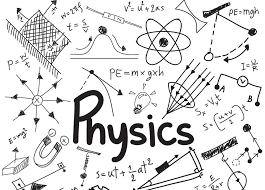
Question 1: What is Acceleration due to Gravity?
Answer: Acceleration due to gravity is the acceleration achieved by a bodyas a result of its gravitational force. It has SI unit as m/s2. It possesses both magnitude and direction, therefore, this quantity is a vector number or quantity. Acceleration due to gravity is characterized by g. The universal value of acceleration due to gravity (g)is 9.8 m/s2at the surface of the earth and at the sea height.
प्रश्न 1: गुरुत्वाकर्षण के कारण त्वरण क्या है?
उत्तर: गुरुत्वाकर्षण के कारण त्वरण अपने गुरुत्वाकर्षण बल के परिणामस्वरूप शरीर द्वारा प्राप्त त्वरण है। इसमें m / s2के रूप में SI इकाई है। इसके पास परिमाण और दिशा दोनों हैं, इसलिए, यह मात्रा एक वेक्टर संख्या या मात्रा है। गुरुत्वाकर्षण के कारण त्वरण का सार्वभौमिक मूल्य (g) पृथ्वी की सतह पर और समुद्र की ऊंचाई पर 9.8 m / s2है।
Question 2: What is Gravity?
Answer: Gravity may be defined as the force withwhich earth attracts a body near its centre. Gravitation or simply gravity is the force of attraction between any two objects. All objects in the universe attract each other with a specificquantity of force, but in most of the incidents, the force is verylow to be detectedowing to the very huge distance of separation. Likewise, gravity’s range is infinite, but the impactturns out to belower as objects go away.
- This force of attraction was first observed by Sir Isaac Newton and was presented as Newton’s law of gravitation in the year 1680. However, gravitation can generally exist in two main instances.
- Gravitation implies that there is an attraction of objects by the earth
Example:
- If a body (ball) is thrown in the air, it reaches a specific
height and dropsdown because of the gravity of the earth.
- Gravitation may be also allow the bodyto have attraction of objects in outer space.
- Example:
- Force of attraction between the other planets and sun.
प्रश्न 2: गुरुत्वाकर्षण क्या है?
उत्तर: गुरुत्वाकर्षण को उस बल के रूप में परिभाषित किया जा सकता है जिसके साथ पृथ्वी अपने केंद्र के पास एक पिंड को आकर्षित करती है। गुरुत्वाकर्षण या बस गुरुत्वाकर्षण किसी भी दो वस्तुओं के बीच आकर्षण का बल है। ब्रह्मांड में सभी वस्तुएं एक दूसरे को एक विशिष्ट मात्रा में बल के साथ आकर्षित करती हैं, लेकिन अधिकांश घटनाओं में, अलगाव की बहुत बड़ी दूरी के कारण बल बहुत कम है। इसी तरह, गुरुत्वाकर्षण की सीमा अनंत है, लेकिन प्रभाव कम है क्योंकि ऑब्जेक्ट दूर हैं।
- आकर्षण का यह बल पहली बार सर आइजैक न्यूटन द्वारा देखा गया था और इसे वर्ष 1680 में न्यूटन के गुरुत्वाकर्षण के नियम के रूप में प्रस्तुत किया गया था। हालांकि, गुरुत्वाकर्षण आमतौर पर दो मुख्य उदाहरणों में मौजूद हो सकता है।
- 1. गुरुत्वाकर्षण का अर्थ है कि पृथ्वी द्वारा वस्तुओं का आकर्षण है
उदाहरण:
- यदि किसी बॉडी (बॉल) को हवा में फेंका जाता है, तो यह एक विशिष्ट ऊंचाई तक पहुँच जाता हैतब पृथ्वी के गुरुत्वाकर्षण के कारण नीचे आती है।
- गुरुत्वाकर्षण से वस्तुओं को बाहरी अंतरिक्ष में आकर्षण भी हो सकता है।
- उदाहरण:
- अन्य ग्रहों और सूर्य के बीच आकर्षण बल।
Question 3: What are 3 types of acceleration?
Answer: In physics, we have the three kinds of acceleration which are the:
- changes in speed, 2. Changes in direction and 3. Changes in both speed and Direction simultaneously. The word “velocity” is frequentlyemployed in place of speed.
प्रश्न 3: त्वरण के 3 प्रकार क्या हैं?
उत्तर: भौतिकी में, हमारे पास तीन प्रकार के त्वरण हैं:
- गति में परिवर्तन, 2. दिशा में परिवर्तन और 3. गति और दिशा दोनों में एक साथ परिवर्तन। शब्द “वेग” का उपयोग अक्सर गति के स्थान पर किया जाता है।
Question 4: At what height gravity is zero?
Answer: Close To the surface of the Earth which we call sea level, gravity reduces with height such that mathematically (linear extrapolation)providenil gravity at a height of one half of the radius of Earth.
प्रश्न 4: किस ऊंचाई पर गुरुत्वाकर्षण शून्य है?
उत्तर: पृथ्वी की सतह के करीब जिसे हम समुद्र तल कहते हैं, गुरुत्वाकर्षण ऊंचाई से कम हो जाता है जैसे कि गणितीय रूप से (रैखिक एक्सट्रपलेशन) पृथ्वी के त्रिज्या के एक आधे की ऊंचाई पर शून्य गुरुत्वाकर्षण बन जाता है।
Question 5:Where is gravity is greatest on the earth?
Answer:Mount Nevado Huascarán in the Peru holds the smallest gravitational acceleration, at 9.7639 m/s2, while the greatest is at the surface of the Arctic Ocean, at 9.8337 m/s2 because of largest and lowest distances from the centre of the earth.
Question 6: Is it possible to have a zero gravity?
Answer: Reverse to commonfaith, there is no such issue as zero gravity. It should be noted that Weightlessness and zero gravity are two distinctfactors.
The earth’s gravity is responsible to hold the moon in its orbit. Astronauts are usually significantly nearer to earth than the moon is because the earth’s pull on them is much tougher.
प्रश्न 5: गुरुत्वाकर्षण पृथ्वी पर सबसे अधिक कहाँ है?
उत्तर: पेरू में माउंट नेवाडो हुस्करैन सबसे कम गुरुत्वाकर्षण त्वरण का स्थान है क्योंकि पृथ्वी के केंद्र से सबसे अधिक दूरी के कारण इसका मान जहाँ g है 9.7639 m / s2 है, जबकि सबसे अधिक आर्कटिक महासागर की सतह पर है जहाँ इसकी पृथ्वी के केंद्र से सबसे कम दूरी के कारण मान 9.8337 m / s2 है।
प्रश्न 6: क्या शून्य गुरुत्वाकर्षण होना संभव है?
उत्तर: सामान्य विश्वास के विपरीत, शून्य गुरुत्वाकर्षण जैसा कोई मुद्दा नहीं है। यह ध्यान दिया जाना चाहिए कि भारहीनता और शून्य गुरुत्वाकर्षण दो अलग-अलग कारक हैं।
पृथ्वी की गुरुत्वाकर्षण चंद्रमा को अपनी कक्षा में रखने के लिए जिम्मेदार है। अंतरिक्ष यात्री आमतौर पर चंद्रमा की तुलना में पृथ्वी के काफी करीब होते हैं क्योंकि पृथ्वी की उन पर खींचतान बहुत अधिक होती है।
Question 7a:What is an example of a negative acceleration?
Answer: When we throw a ball upwards, then also negative acceleration acts on it. Thus, when the ball reaches the highest point, the velocity of the ball becomes zero.
Question7.b: Is acceleration ever negative?
Answer:According to our principle, when an object is slowing down, the acceleration is in the opposite direction as the velocity. Thus, this object has a negative acceleration.
प्रश्न 7a: नकारात्मक त्वरण का एक उदाहरण क्या है?
उत्तर: जब हम किसी गेंद को ऊपर की ओर फेंकते हैं, तो उस पर भी नकारात्मक त्वरण कार्य करता है। इस प्रकार, जब गेंद उच्चतम बिंदु पर पहुंचती है, तो गेंद का वेग शून्य हो जाता है।
प्रश्न7.बी: त्वरण कभी नकारात्मक होता है?
उत्तर: हमारे सिद्धांत के अनुसार, जब कोई वस्तु धीमी होती है, तो वेग विपरीत दिशा में होता है। इस प्रकार, इस ऑब्जेक्ट में एक नकारात्मक त्वरण है।
Question 8: What is difference between acceleration and retardation?
Answer: Acceleration of an object is described as the rate of shift of its velocity with time. Velocity of the body rises with time. Retardation implies negative acceleration. If the velocity of a body reduces,the acceleration is termed as negative.
However, there is conflict in the literature, therefore, it is the frame of reference from where we treat it.
Question 9: Why is acceleration positive when velocity is negative?
Answer: An object which moves in the negative direction has a negative velocity. If the object is slowing down then its acceleration vector is directed in the opposite direction as its motion (in this case, a positive acceleration).
प्रश्न 8: त्वरण और मंदता के बीच अंतर क्या है?
उत्तर: किसी वस्तु के त्वरण को समय के साथ उसके वेग के बदलाव की दर के रूप में वर्णित किया जाता है। समय के साथ वस्तु का वेग बढ़ जाता है। मंदता का अर्थ है नकारात्मक त्वरण। यदि किसी वस्तु का वेग कम हो जाता है, तो त्वरण को ऋणात्मक कहा जाता है।
हालांकि, किताबों में अंतर है। वास्तव में यह संदर्भ के फ्रेम का सवाल है जहां से हम इसका उपयोग करते हैं।इसका मतलब है कि जहां से हम इसे लेते हैं, यह एक मानक मूल्य है।
प्रश्न 9: वेग नकारात्मक होने पर त्वरण सकारात्मक क्यों होता है?
उत्तर: एक वस्तु जो नकारात्मक दिशा में चलती है, एक नकारात्मक वेग है। यदि कोई वस्तु धीमी हो रही है तो उसके त्वरण वेक्टर को उसकी गति (इस मामले में, सकारात्मक त्वरण) के रूप में विपरीत दिशा में निर्देशित किया जाता है।
Question 10. What is the meaning of negative velocity?
Answer: Velocity is a vector quantity means it has both magnitude and direction. If we aregoingalongside a line, positive velocity implies we are going in one direction, and negative velocity implies we are moving in the other direction. Speed is the magnitude of the velocity vector, and therefore is forever positive.
Question 11:How do you neutralize gravity?
Answer: So far, no technology is there to defuse the pull of gravity. It is believed that the finest way to estimate the sense of weightlessness on Earth is to ride onboard a plane flying in parabolic arcs that imitate the shape of Saint Louis’s Gateway Arch.
प्रश्न 10. नकारात्मक वेग का क्या अर्थ है?
उत्तर: वेग एक सदिश राशि है जिसका अर्थ है कि इसमें परिमाण और दिशा दोनों हैं। यदि हम एक रेखा के साथ जा रहे हैं, तो सकारात्मक वेग का अर्थ है कि हम एक दिशा में जा रहे हैं, और नकारात्मक वेग का अर्थ है कि हम दूसरी दिशा में जा रहे हैं। गति वेग वेक्टर का परिमाण है, और इसलिए हमेशा के लिए सकारात्मक है।
प्रश्न 11: आप गुरुत्वाकर्षण को कैसे बेअसर करते हैं?
उत्तर: अब तक, कोई भी तकनीक गुरुत्वाकर्षण के खिंचाव को रोकने के लिए नहीं है। यह माना जाता है कि पृथ्वी पर भारहीनता की भावना का अनुमान लगाने का सबसे अच्छा और सैद्धांतिक तरीका है, परवलयिक आर्क्स में उड़ने वाले एक विमान की सवारी करना जो कि सेंट लुईस गेटवे आर्क के आकार की नकल करता है।
नासा ने अंतरिक्ष यात्रियों को प्रशिक्षित करने के लिए कुछ महत्वपूर्ण और सफल प्रयोग किए हैं।
Question 12: What factorsalter gravity?
Answer: Newton’s law tooasserts that the power of gravity between any two objects varies on two issues: the masses of the objects and the distance among them.
- Objects with larger mass have a greater forceof gravity between them.
- Objects that are nearermutually have a greater force of gravity between them.
Question 13: Does gravity affect weight?
- Answer: Weight is a measure of how considerable gravity drags a mass or object. On the moon, there is fewer gravity dragging on objects, so their weigh is less. However, mass is still the same.
प्रश्न 12: गुरुत्वाकर्षण के लिए कौन से कारक जिम्मेदार हैं?
उत्तर: न्यूटन का नियम यह कहता है कि किन्हीं दो वस्तुओं के बीच गुरुत्वाकर्षण की शक्ति दो मुद्दों पर भिन्न होती है: वस्तुओं का द्रव्यमान और उनके बीच की दूरी।
- बड़े द्रव्यमान वाली वस्तुओं में उनके बीच गुरुत्वाकर्षण का अधिक बल होता है।
- जो वस्तुएं परस्पर समीप हैं, उनके बीच गुरुत्वाकर्षण बल अधिक होता है।
प्रश्न 13: क्या गुरुत्वाकर्षण वजन को प्रभावित करता है?
- उत्तर: वजन इस बात का माप है कि गुरुत्वाकर्षण किसी द्रव्यमान या वस्तु को कितना प्रभावित करता है। चंद्रमा पर, वस्तुओं पर कम गुरुत्वाकर्षण खींचता है, इसलिए उनका वजन कम होता है। हालांकि, द्रव्यमान अभी भी समान है।
- Question 14: How weight is related to gravity?
- Answer: The weight of an object is defined as the force of gravity on the object and can be calculated as the mass times the acceleration of gravity, w = mg. Since the weight is a force, its SI unit is the newton.
- Question 15: What is distinction between weight and gravity?
Answer: The distinction is that weight is a result of the Force of gravity. Weight is anamount that wedetermine for a particular object, while gravity is a measure of how curved is the spacetime where that object is living. Weight is due to the force the earth applies on the body.
प्रश्न 14: गुरुत्वाकर्षण से वजन कितना प्रभावित होता है?
उत्तर: किसी वस्तु के भार को वस्तु पर गुरुत्वाकर्षण बल के रूप में परिभाषित किया जाता है और इसे w = mg के रूप में परिकलित किया जा सकता है। चूंकि वजन एक बल है, इसकी SI इकाई न्यूटन है।
प्रश्न 15: भार और गुरुत्वाकर्षण में क्या अंतर है?
उत्तर: अंतर यह है कि भार गुरुत्वाकर्षण बल का परिणाम है। भार एक ऐसी राशि है जो हम किसी विशेष वस्तु के लिए निर्धारित करते हैं, जबकि गुरुत्वाकर्षण इस बात का माप है कि वक्र वह स्थान है (how curved is the spacetime) जहां वह वस्तु मौजूद है। वजन किसी वस्तु पर पृथ्वी के जोर लगाने के कारण होता है।

Question 15: What is Gravitational Potential Energy?
Answer: When an object or a body having mass (m) is shifted from infinity to a point within the gravitational effect of a source mass (M) without accelerating it, then thequantity of work performed in moving it into the source field is deposited in the type of energy which is the potential energy or is called as the gravitational potential energy.
Explanation: We are aware that the potential energy of an object or a body at a given place is described as the energy deposited in the body at that particular place or position. If the place or position of the body shifts due to the use of outside forces the shift in potential energy is equivalent to the amount of work performed on the body by that forces.
It should be noted that the gravitational impact on an object or body at infinity is nil, consequently, potential energy is zero, which is termed as a reference point.
प्रश्न 15: हम गुरुत्वाकर्षण स्थितिज उर्जाको कैसे परिभाषित कर सकते हैं?
उत्तर: उत्तर: जब किसी वस्तु या पिंड का द्रव्यमान (m) अनंत से किसी स्रोत द्रव्यमान (M) के गुरुत्वाकर्षण प्रभाव के भीतर एक बिंदु पर स्थानांतरित किया जाता है, तो उसे कार्यक्षेत्र में स्थानांतरित करने में किए गए कार्य की मात्रा को जमा किया जाता है। ऊर्जा के प्रकार में इस प्रकार की ऊर्जा को स्थितिजऊर्जा कहा जाता है या इसे गुरुत्वाकर्षण स्थितिजऊर्जा कहा जाता है।
व्याख्या: हम जानते हैं कि किसी स्थान पर किसी वस्तु या पिंड की स्थितिजऊर्जा को उस स्थान या स्थिति में वस्तु में जमा ऊर्जा के रूप में वर्णित किया जाता है। यदि किसी वस्तु का स्थान या स्थान बाहरी शक्तियों के उपयोग के कारण बदल जाता है, तो स्थितिजऊर्जा में परिवर्तन उस बल द्वारा वस्तु पर किए गए कार्य की मात्रा के बराबर है।
यह ध्यान दिया जाना चाहिए कि अनंत पर एक वस्तु पर गुरुत्वाकर्षण प्रभाव शून्य है, परिणामस्वरूप, स्थितिजऊर्जा शून्य है, जिसे एक मानक बिंदु के रूप में कहा जाता है।
Question 16: How can we derive the Gravitational Potential Energy Formula?
Answer: The equation for gravitational potential energy is:
= m⋅g⋅h
Where we define,
- m is the mass in kilograms,
- g is the acceleration due to gravity (9.8 on Earth)
- h is the height over the earth in Meters.
प्रश्न 16: हम गुरुत्वीय स्थितिजऊर्जा फॉर्मूला कैसे प्राप्त कर सकते हैं?
उत्तर: गुरुत्वाकर्षण स्थितिजऊर्जा के लिए समीकरण है:
= m =g⋅h
जहां हम परिभाषित करते हैं,
- मीटर किलोग्राम में द्रव्यमान होता है,
- g गुरुत्वाकर्षण के कारण त्वरण है (पृथ्वी पर 9.8 m/s2)
- h पृथ्वी की ऊँचाई पर Meters में है।
Question 17: What is the Formula of Acceleration due to Gravity?
Answer: Force working on a body as a result of gravity is expressed by,
f = mg (1)
Where f is the force working or acting on the body, g is the acceleration due to gravity, m is mass of the body.
Corresponding to the universal law of gravitation, f = GmM/(r+h)2
Where,
f = force between two bodies,
G = universal gravitational constant (6.67×10⁻¹¹ Nm2/kg2)
m = mass of the object,
M = mass of the earth,
r = radius of the earth.
h = height at which the body is from the surface of the earth.
As the height (h) is marginallyinsignificant or small compared to the radius of the earth we re-build the above equation as follows:
f = GmM/r2 (2)
Now equating (1) and (2) both the above expressions,
mg = GmM/r2
or g = GM/r2
Hence, the formula of acceleration due to gravity is provided by, g = GM/r2
Note: It varies on the mass and radius of the earth.
This supports us realize the following:
All bodies suffer the similar acceleration due to gravity, regardless of its mass.
Value of acceleration due to gravity on earth varies upon the mass of the earth and not actually the mass of the body.
प्रश्न 17: गुरुत्वाकर्षण के कारण त्वरण का सूत्र क्या है?
उत्तर: गुरुत्वाकर्षण के परिणामस्वरूप किसी वस्तु पर काम करने वाला बल किसके द्वारा व्यक्त किया जाता है,
f = mg
जहाँ f शरीर पर काम करने या काम करने वाला बल है, g गुरुत्वाकर्षण के कारण त्वरण है, m वस्तु का द्रव्यमान है।
गुरुत्वाकर्षण के सार्वभौमिक नियम के अनुरूप, f = GmM / (r + h)2
जबकि,
f = दो निकायों के बीच बल,
G = सार्वभौमिक गुरुत्वाकर्षण स्थिरांक (6.67 × 10⁻¹¹ Nm2 / kg2)
m = वस्तु का द्रव्यमान,
म = पृथ्वी का द्रव्यमान,
r = पृथ्वी की त्रिज्या।
h = ऊंचाई जिस पर शरीर पृथ्वी की सतह से है।
जैसा कि ऊंचाई (एच) पृथ्वी के त्रिज्या की तुलना में मामूली रूप से नगण्य या छोटा है, हम उपरोक्त समीकरण को फिर से बनाते हैं:
f = GmM / r2
समीकरण (1) और (2) बराबर
mg = GmM/r2
or g = GM/r2
इसलिए, गुरुत्वाकर्षण के कारण त्वरण का सूत्र g = GM/r2द्वारा प्रदान किया जाता है
नोट: यह पृथ्वी के द्रव्यमान और त्रिज्या पर भिन्न होता है।
यह हमें निम्नलिखित का एहसास करने में मदद करता है:
सभी पिंडों में गुरुत्वाकर्षण के कारण समान त्वरण होता है, चाहे उसका द्रव्यमान या किसी भी द्रव्यमान के लिए हो।
पृथ्वी पर गुरुत्वाकर्षण के कारण त्वरण का मान पृथ्वी के द्रव्यमान पर निर्भर करता है न कि वस्तु के द्रव्यमान पर।
Question 18: How can we calculate the Acceleration due to Gravity on the Surface of Earth?
Answer: Earth as believed to be an identical or uniform solid sphere with anaverage density. We understandthe usual formula,
Density = mass/volume
Then, Density ρ = M/[4/3 πR3]
⇒M = ρ× [4/3 πR3]
We also realize that, g = GM/R2.
On substituting the values of M we get,
g = 4/3 [πρRG], At any distance ‘r’ from the centre of the earth
g = 4/3 [πρRG], The value of acceleration due to gravity ‘g’ is influencedby:
- Altitude above the earth’s surface. 2. Depth below the earth’s surface.
3.The structure or shape of the earth. 4. Rotational motion of the earth.
प्रश्न 18: पृथ्वी की सतह पर गुरुत्वाकर्षण के कारण हम त्वरण की गणना कैसे कर सकते हैं?
उत्तर: माना जाता है कि पृथ्वी एक औसत घनत्व के साथ एक समान या एकसमान ठोस गोला है। हम सामान्य सूत्र को समझते हैं,
घनत्व = द्रव्यमान / आयतन
फिर, घनत्व ρ = M / [4/3 πR3]
⇒M = ρ× [4/3 πR3]
हमें यह भी पता चलता है कि, g = GM / R2
M के मूल्यों को प्रतिस्थापित करने पर,
g = 4/3 [πρRG], पृथ्वी के केंद्र से किसी भी दूरी पर ‘r’g = 4/3 [RρRG],
गुरुत्वाकर्षण g के कारण त्वरण का मान किससे प्रभावित होता है:
- पृथ्वी की सतह से ऊपर की ऊंचाई। 2. पृथ्वी की सतह के नीचे गहराई।
- पृथ्वी की संरचना या आकार। 4. पृथ्वी की घूर्णी गति।
Question 19: How can we explain the variation of g with Height?
Answer:
Explanation of Acceleration due to Gravity at given height (H) from the surface of the earth
Assume a mass “m” at a height “H” from the surface of the earth. But Then, the force working on this mass as a result of gravity is:
F = GMm/(R+H)2
While M is the mass of earth and R is the radius of the earth. The acceleration due to gravity at a particular height is ‘H’ becomes:
mg(at H)= GMm/(R+H)2 (1)
⇒ g(at H)= GM/[R2(1+ H/R)2 ] . . . . . . (2)
The acceleration due to gravity on the surface of the earth is given by:
g (at surface) = GM/R2 . . . . . . . . . (3)
On dividing equation (3) and (2) we get,
g(at H )= g (at surface) (1+H/R)-2. . . . . . (4)
This is the acceleration due to gravity at a height above the surface of the earth. Observing the above rule, we can reveal that the value of g decreases with increase in height of an object and the value of g becomes zero at infinite distance from the earth.
Approximation Formula:
From Equation (4)
when H<< R, the value of g at height ‘H’ is expressed by:
g(at height H) = g (at surface)/(1 – 2H/R)

प्रश्न 19: हम ऊँचाई के साथ g की विभिन्नता को कैसे समझा सकते हैं?
उत्तर:पृथ्वी की सतह से ऊँचाई (H) पर गुरुत्वाकर्षण के कारण त्वरण का स्पष्टीकरण
पृथ्वी की सतह से ऊँचाई “H” पर एक द्रव्यमान “m” मान लें। लेकिन फिर, गुरुत्वाकर्षण के परिणामस्वरूप इस द्रव्यमान पर काम करने वाला बल है:
F = GMm/(R+H)2
जबकि M पृथ्वी का द्रव्यमान है और R पृथ्वी का त्रिज्या है। ’H’ की ऊंचाई पर गुरुत्वाकर्षण के कारण त्वरण बनता है:
mg(at H)= GMm/(R+H)2 (1)
⇒ g(at H)= GM/[R2(1+ H/R)2 ] . . . . . . (2)
पृथ्वी की सतह पर गुरुत्वाकर्षण के कारण त्वरण है:
g (at surface) = GM/R2 . . . . . . . . . (3)
समीकरण (3) को समीकरण से विभाजित करने पर (2) हम पाते हैं,
g (at H )= g (at surface) (1+H/R)-2. . . . . . (4)
यह पृथ्वी की सतह से ऊपर की ऊंचाई पर गुरुत्वाकर्षण के कारण त्वरण है। उपरोक्त नियम का पालन करते हुए, हम यह प्रकट कर सकते हैं कि किसी वस्तु की ऊंचाई में वृद्धि के साथ जg का मूल्य घटता जाता है और पृथ्वी से अनंत दूरी पर जg का मूल्य शून्य हो जाता है।
लगभग सूत्र:
समीकरण (4) से
जब H << R, ऊंचाई g H ‘पर g का मान द्वारा व्यक्त किया जाता है:
g(at height H) = g (at surface)/(1 – 2H/R)
Question 20: How can we explain the variation of g due to Shape of Earth?
Answer: As we know that the earth is an oblate (pumpkin-shaped) spheroid, its radius close to the equator is extra than its radius close to the poles.
Since for a given mass, the acceleration due to gravity is inversely proportional to the square of the radius of the earth, it fluctuates with the latitude due to structure or shape of the earth.
gP/gE = R2E/R2P(C)
Where gE and gP are the accelerations due to gravity at equator and poles, RE and RP are the radii of earth near equator and poles, respectively.
From the equation (C ) above, it is evident that acceleration due to gravity is higher at poles and fewer or low at the equator. Therefore, if someonetravels from the equator to poles his or her weight reduces as the value of g drops.

प्रश्न 20: हम पृथ्वी के आकार के कारण g की विभिन्नता को कैसे समझा सकते हैं?
उत्तर: जैसा कि हम जानते हैं कि पृथ्वी एक तिरछा (कद्दू के आकार का) गोलाकार है, भूमध्य रेखा के करीब इसकी त्रिज्या ध्रुवों के करीब त्रिज्या से अधिक है।
चूंकि किसी दिए गए द्रव्यमान के लिए, गुरुत्वाकर्षण के कारण त्वरण पृथ्वी के त्रिज्या के वर्ग के विपरीत आनुपातिक है, यह पृथ्वी की संरचना या आकार के कारण अक्षांश के साथ उतार-चढ़ाव करता है।
GP/gE = R2E/R2P (C)
जहां भूमध्य रेखा और ध्रुवों पर गुरुत्वाकर्षण के कारण gE और gP त्वरण हैं, RE और RP क्रमशः भूमध्य रेखा और ध्रुवों के पास पृथ्वी की त्रिज्या हैं।
उपरोक्त समीकरण (C) से, यह स्पष्ट है कि गुरुत्वाकर्षण के कारण g(त्वरण) ध्रुवों पर अधिक और भूमध्य रेखा पर कम होता है। इसलिए, यदि कोई भूमध्य रेखा से ध्रुवों तक यात्रा करता है, तो उसका वजन कम हो जाता है और g का मूल्य कम हो जाता है।
द यूनिक काॅन्सेप्ट ऑफ फिजिक्स के वाॅट्सएप ग्रुप से जुड़ने के लिए यहाँ क्लिक करें।
द यूनिक काॅन्सेप्ट ऑफ फिजिक्स के टेलीग्राम ग्रुप से जुड़ने के लिए यहाँ क्लिक करें।
द यूनिक काॅन्सेप्ट ऑफ फिजिक्स के फेसबुक पेज से जुड़ने के लिए यहाँ क्लिक करें।
विनय एक्सप्रेस के यूट्यूब चैनल के माध्यम से देख सकेगें प्रो. हर्ष के विडियोज
प्रो. ओम कुमार हर्ष द्वारा विनय एक्सप्रेस के यूट्यूब चैनल पर द यूनिक काॅन्सेप्ट आॅफ फिजिक्स सीरीज का विडियो वर्जन के माध्यम से फिजिक्स प्रेमियों के लिए फिजिक्स के यूनिक काॅन्सेप्ट समझाने का प्रयास किया जा रहा है।
]]>
Vinay Express News, Australia / Bikaner. Famous Prof. of Bikaner origin. The fourth concept of The Unique Concept of Physics Series has been released in the bilingual version (Hindi and English language) by Om Kumar Harsh. For students and teachers interested in Physics field, The information provided by Prof. Harsha is proving very useful.
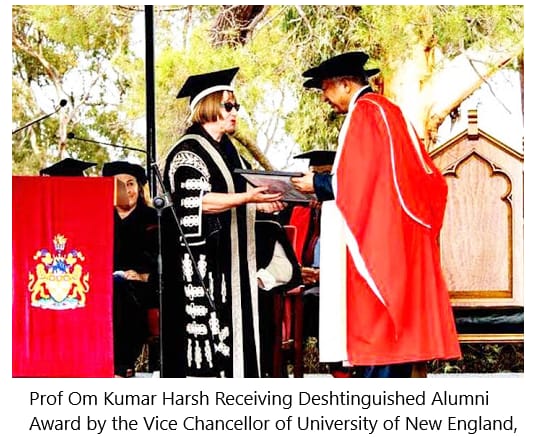
Before Lecture 4 we want to say something:
Please note that our objective is not provide answers of all questions while our real objective is to prove clearance of concept of some facts of basic physics. We will try our best to give you all conceptual facts related to those physical quantities whose fundamentals are not easily available.
As I asked you the basic facts of the Moment of Inertia of the rigid body during last two chapters, I am happy to tell you that I have already put two videos on this problem one in Hindi and one in English. Please see the YouTube.
कृपया ध्यान दें कि हमारा उद्देश्य सभी प्रश्नों के उत्तर प्रदान नहीं कर रहा है, जबकि हमारा वास्तविक उद्देश्य बुनियादी भौतिकी के कुछ तथ्यों की अवधारणा को साबित करना है। हम उन भौतिक राशियों से संबंधित सभी वैचारिक तथ्यों को देने के लिए अपनी पूरी कोशिश करेंगे, जिनके मूल तत्व आसानी से उपलब्ध नहीं हैं।
जैसा कि मैंने आपसे पिछले दो अध्यायों के दौरान कठोर शरीर के जडत्व आघूर्ण के बुनियादी तथ्यों को पूछा है, मुझे आपको यह बताते हुए खुशी हो रही है कि मैंने इस समस्या पर दो वीडियो पहले ही हिंदी में और एक अंग्रेजी में डाला है। कृपया YouTube देखें।

Lecture: 4
Question 1: Why an object has the potential energy?
Answer: Potential energy of an object is due to its position or orientation on the earth. Because of earth gravitational force every object is associated (or stored in it) with energy without that it cannot occupy any position on the earth.
व्याख्यान: 4
प्रश्न 1: किसी वस्तु में स्थितिजऊर्जा क्यों होती है?
उत्तर: किसी वस्तु की स्थितिजऊर्जा पृथ्वी पर उसकी स्थिति या अभिविन्यास के कारण होती है। पृथ्वी के गुरुत्वाकर्षण बल के कारण हर वस्तु ऊर्जा के साथ जुड़ी हुई है (या उसमें संग्रहीत है) इसके बिना वह पृथ्वी पर किसी भी स्थिति पर कब्जा/ स्थिर नहीं कर सकती है।
Question 2: Why potential energy is negative at the surface of the earth?
Answer: It is a kind of energy which is required by an object to sustain itself against the earth gravitational force it means some energy is to be supplied ( or work is to be done) on an object in order to make it stand against this force or to bring it at the surface of the earth from a point (infinity) where earth’s gravitational attraction on it zero and therefore it is a negative energy in nature.
There is other reason also that the gravitational energy between earth and the object is the attractive and therefore, because of attraction object will allow to come on the surface of the earth by an external force on it. Negative implies a shortfall, and in this case, it is an energy shortfall. However, positive, or negative energy concept is a relative one and it is the frame or a scale against it is measured.
प्रश्न 2: पृथ्वी की सतह पर स्थितिजऊर्जा नकारात्मक क्यों है?
उत्तर: यह एक प्रकार की ऊर्जा है जिसे किसी वस्तु द्वारा पृथ्वी गुरुत्वाकर्षण बल के विरुद्ध बनाए रखने के लिए आवश्यक है इसका अर्थ है कि इस बल के विरुद्ध खड़े होने के लिए किसी वस्तु पर कुछ ऊर्जा की आपूर्ति की जानी है (या काम किया जाना है)। या इसे एक बिंदु (अनंत) से पृथ्वी की सतह पर लाना जहां पृथ्वी का गुरुत्वाकर्षण आकर्षण शून्य है और इसलिए यह प्रकृति में एक नकारात्मक ऊर्जा है।
अन्य कारण यह भी है कि पृथ्वी और वस्तु के बीच गुरुत्वाकर्षण ऊर्जा आकर्षक है और इसलिए, क्योंकि आकर्षण वस्तु पृथ्वी की सतह पर एक बाहरी बल द्वारा आने की अनुमति देगा। नकारात्मक का अर्थ है एक कमी, और इस मामले में यह एक ऊर्जा की कमी है। हालांकि, सकारात्मक या नकारात्मक ऊर्जा अवधारणा एक सापेक्ष है और यह फ्रेम या इसके खिलाफ एक पैमाने मापा जाता है।
Question 3: What is the kinetic energy and why a body possess it?
Answer: Kinetic energy is a kind of energy that an object or a particle possess it due to its motion. Off course it is a kind of energy, so it is associated with work and therefore with a force also.
A body possess it because a force is required (or released or done by it) to move from one place to place because of earth’s gravitational field.
When we push an object, it acquires a velocity which increases its kinetic energy.If an object falls then it acquires this energy because of earth’s gravitational field.
प्रश्न 3: गतिज ऊर्जा क्या है और क्यों कोई वस्तु इस ऊर्जा को बनाए रखती है
उत्तर: काइनेटिक ऊर्जा एक प्रकार की ऊर्जा होती है जो किसी वस्तु या किसी कण की गति के कारण होती है। बेशक यह एक प्रकार की ऊर्जा है, इसलिए यह काम (work) से जुड़ी है और इसलिए एक बल के साथ भी।
एक वस्तु के पास इसलिए है क्योंकि पृथ्वी के गुरुत्वाकर्षण क्षेत्र के कारण एक स्थान से दूसरे स्थान पर जाने के लिए एक बल की आवश्यकता होती है (या इसके द्वारा जारी या किया जाता है)।
जब हम किसी वस्तु को धक्का देते हैं, तो यह एक वेग प्राप्त करता है जो इसकी गतिज ऊर्जा को बढ़ाता है।यदि कोई वस्तु गिरती है तो यह पृथ्वी के गुरुत्वाकर्षण क्षेत्र के कारण इस ऊर्जा को प्राप्त करती है।
Question 4: What is the formula for the kinetic energy and how it comes up?
Kinetic energy formula is ½ mv2 where m is the mass of the object and v is its velocity. This formula originates from the following concept:
Let a body of mass m, move with the same velocity u.
Let us move it by distance d, due to continuous force F, working on it.
Work performed on the body of mass ‘m’ is:
W=F× d ……………………………………(i)
As a result of the force F, velocity shifts or changes to u and the acceleration created is ‘f’. Connection between v, u, f and d can be given by equation of motion:
formula v2−u2=2ad
Therefore d=(v2−u2)/2(ii)
F=mf…………(iii)
Substituting (ii) and (iii) in (i) we get
W=F×d
=mf×(v2−u2)/2
W=m(v2−u2)/2
If u=0,(means body is starting from rest)
W= (mv2 ) / 2
Work done=Change in kinetic energy
Therefore Ek=(mv2 ) / 2
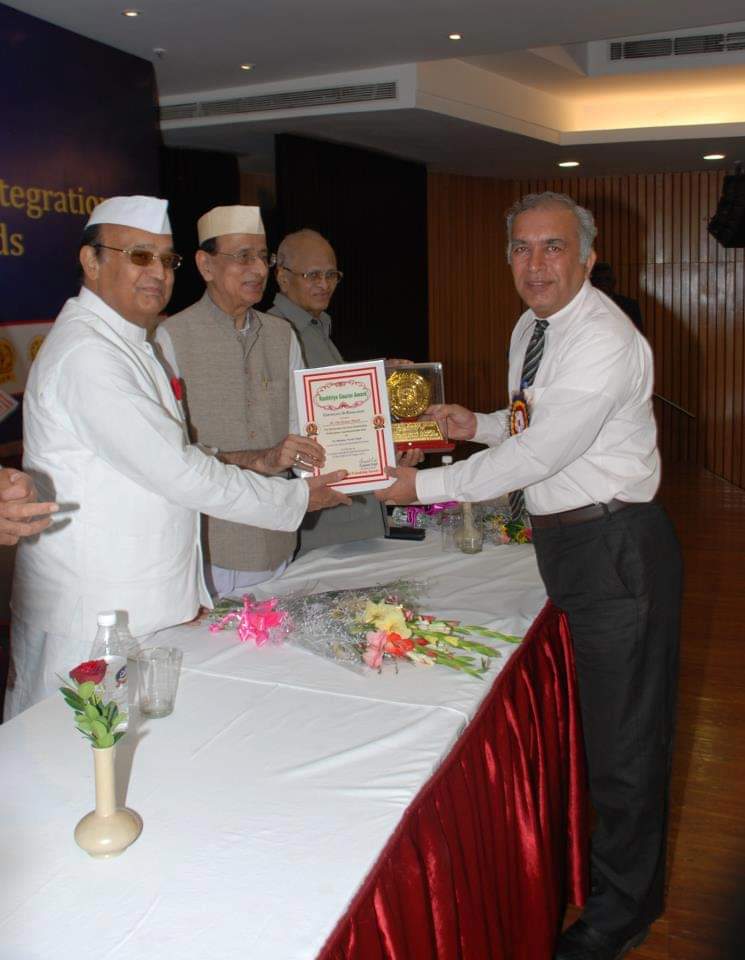
प्रश्न 4: गतिज ऊर्जा का सूत्र क्या है और यह कैसे आती है?
गतिज ऊर्जा सूत्र ½ mv2है जहाँ m वस्तु का द्रव्यमान है और v इसका वेग है। यह सूत्र निम्नलिखित अवधारणा से उत्पन्न होता है:
द्रव्यमान m का एक वस्तु, uउसी वेग से चलते हैं।the same velocity u
निरंतर बल F के कारण, इस पर कार्य करते हुए, हम इसे d की दूरी पर ले जाते हैं।
द्रव्यमान ‘m’ के वस्तु पर किया गया कार्य है:
W = F × d ……………………………………… (i)
बल F के परिणामस्वरूप, वेग शिफ्ट हो जाता है या u में बदल जाता है और निर्मित त्वरण ‘f’ है। V, u, f और d के बीच संबंध गति के समीकरण द्वारा दिए जा सकते हैं:
सूत्र v2−u2=2ad
इसलिए d=(v2−u2)/2(ii)
F=mf…………(iii)
Substituting (ii) and (iii) in (i) we get
W=F×d
=mf×(v2−u2)/2
W=m(v2−u2)/2
If u=0,(means body is starting from rest)
अगर u = 0, (मतलब आराम से शुरू हो रहा है)
W= (mv2 ) / 2
काम किया = गतिज ऊर्जा में परिवर्तन
इसलिए Ek = (mv2) / 2
Question 5: What is the relation between Potential Energy and Kinetic Energy:
Answer: When a body is displaced from positions of rest or equilibrium, they acquire energy that was already deposited in the body before being knocked out of rest (equilibrium) by gravity. The potential energy stored in the body is accountable for the energy that arises upon release which is called kinetic energy. Please remember this is only true with macroscopic objects not for atomic or molecular dimensions.
Thus, we see that when we push a body or an object, we impart an energy which is the against the gravity force of the Earth thus by pushing we are working against the position of the body and hence the against the earth gravitational force and this force is converting into the Kinetic Energy of the object. Similarly, if we try to stop a moving object its kinetic energy decrease and the potential energy increases. Thus, it seems that sum of the Potential and Kinetic Energy remains same, yes, it is.
In other words:
The basic connection between the two is their capability to convert into each other. In other words, potential energy converts into kinetic energy, and kinetic energy transforms into potential energy, and then reverse over again.
प्रश्न 5: स्थितिजऊर्जा और काइनेटिक ऊर्जा के बीच क्या संबंध है:
उत्तर: जब एक वस्तुको आराम या संतुलन की स्थिति से विस्थापित किया जाता है, तो वे ऊर्जा प्राप्त करते हैं जो गुरुत्वाकर्षण द्वारा आराम (संतुलन) से बाहर खटखटाए जाने से पहले ही शरीर में जमा हो गई थी। शरीर में जमा होने वाली स्थितिजऊर्जा उस ऊर्जा के लिए जवाबदेह होती है जो रिलीज होने पर उत्पन्होती है जिसे गतिज ऊर्जा कहा जाता है।
इस प्रकार, हम देखते हैं कि जब हम किसी पिंड या वस्तु को धक्का देते हैं, तो हम एक ऊर्जा प्रदान करते हैं, जो पृथ्वी के गुरुत्वाकर्षण बल के विरुद्ध होती है, इस प्रकार हम धक्का देकर वस्तुकी स्थिति के विरुद्ध काम कर रहे होते हैं और इसलिए पृथ्वी के गुरुत्वाकर्षण बल के विरुद्ध और यह बल वस्तु के काइनेटिक ऊर्जा में परिवर्तित हो रहा है। इसी तरह, यदि हम किसी गतिमान वस्तु को रोकने की कोशिश करते हैं तो उसकी गतिज ऊर्जा घट जाती है और स्थितिजऊर्जा बढ़ जाती है। इस प्रकार, ऐसा लगता है कि स्थितिजऔर काइनेटिक ऊर्जा का योग समान रहता है, हाँ, यह है।
दूसरे शब्दों में:
दोनों के बीच मूल संबंध एक-दूसरे में बदलने की उनकी क्षमता है। दूसरे शब्दों में, स्थितिजऊर्जा गतिज ऊर्जा में परिवर्तित हो जाती है, और गतिज ऊर्जा स्थितिजऊर्जा में बदल जाती है, और इसका उल्टा भी सच है
Question 6: What are the examples of the Kinetic Energy in the daily life?
Answer: What are kinetic energy examples?
Examples of Kinetic Energy in Everyday Life
- Hydropower Plants. Hydropower plants are places where the generation of electricity takes place with the help of water. …
- Windmills form one of the good examples of applications of kinetic energy. …
- Moving Car. …
- Bullet from a Gun. …
- Flying Airplane. …
- Walking & Running. …
- …
प्रश्न 6: दैनिक जीवन में काइनेटिक ऊर्जा के उदाहरण क्या हैं?
उत्तर: गतिज ऊर्जा उदाहरण क्या हैं?
दैनिक जीवनमें काइनेटिक एनर्जी के उदाहरण
- हाइड्रोपावर प्लांट्स। हाइड्रोपावर प्लांट ऐसे स्थान हैं जहां बिजली का उत्पादन पानी की मदद से होता है। …
- पवनचक्कियां। पवनचक्कियां गतिज ऊर्जा के अनुप्रयोगों के अच्छे उदाहरणों में से एक बनाती हैं। …
- चलती कार। …
- एक बंदूक से गोली। …
- फ्लाइंग एयरप्लेन। …
- चलना और दौड़ना। …
- साइकिल चलाना। …
Question 7: What is the work? How mathematically it can be defined?
Answer: Work as the transfer of energy from one object to another.
Since work = Force . Distance
If someone is involved in pushing and one object pushing another object then our efforts or force is converted into the work which another object (which is being pushed) carries it or stores this work.
Overall, one can say that converting potential energy into the kinetic energy and vice versa are under the force of gravity therefore virtually force of gravity is transformed under this conversation because the objects are under the gravity when they are on the Earth.
प्रश्न 7: कार्यक्या है? गणितीय रूप से इसे कैसे परिभाषित किया जा सकता है?
उत्तर: ऊर्जा का एक वस्तु से दूसरी वस्तु में स्थानांतरण के रूप में कार्य करना।
चूंकि कार्य= बल. दूरी
यदि एक वस्तु को किसी अन्य वस्तु को धकेलता हूं तो हमारा प्रयास या बल उस कार्य में परिवर्तित हो जाता है जिसे कोई अन्य वस्तु (जिसे धकेला जा रहा है) उसे वहन करती है या इस कार्य को संग्रहीत करती है।
कुल मिलाकर, कोई यह कह सकता है कि स्थितिजऊर्जा को गतिज ऊर्जा में परिवर्तित करना और इसके विपरीत गुरुत्वाकर्षण के बल के अधीन हैं इसलिए गुरुत्वाकर्षण के बल को इस बातचीत के तहत रूपांतरित किया जाता है क्योंकि वस्तुएं गुरुत्वाकर्षण के नीचे होती हैं जब वे पृथ्वी पर होते हैं।
Question 8:What is Gravitational Force? What is the Universal law of Gravitation?
Answer: Newton’s Law of Universal Gravitation is utilized to describe gravitational force. This law says that every single massive particle in the space attracts every single other massive particle with a force which is directly proportional to the product of their masses andalso inversely proportional to the square of the gap or distance between them.
Newton’s law of universal gravitation
F = (G m1 m2 )/ r2
F = Force , G= Gravitational Constant, m1is the mass of object 1
And m2 is the mass of object 2 and r = is the distance between centres of the masses of m1 and m2
Question 8:Why Newton’s law of universal gravitationexists?
Answer: The answer is property of earth as gravity: an invincible force that drags objects toward each other.
Universal law of Gravitation states that:
F = (GM1M2) /R2
F = Force, G = Gravitational Constant, M1 Mass of object one
M2mass of object 2 और R = distance between centres of M1andM2
प्रश्न 8: गुरुत्वाकर्षण बल क्या है और गुरुत्वाकर्षण बल का न्यूटन नियम क्या है?
उत्तर: गुरुत्वाकर्षण बल का वर्णन करने के लिए न्यूटन के सार्वभौमिक गुरुत्वाकर्षण नियम का उपयोग किया जाता है। यह नियम कहता है कि अंतरिक्ष में हर एक विशाल कण हर एक बड़े पैमाने पर कण को एक बल के साथ आकर्षित करता है जो सीधे उनके द्रव्यमान के उत्पाद के आनुपातिक है और उनके बीच के अंतर या दूरी के वर्ग के व्युत्क्रमानुपाती भी है।
न्यूटन का सार्वभौमिक गुरुत्वाकर्षण का नियम
F = (GM1M2) /R2
F = बल, G = गुरुत्वाकर्षण निरंतर, M1वस्तु 1 का द्रव्यमान है
और M2 वस्तु 2 का द्रव्यमान है और R = M1 और M2 के द्रव्यमान के केंद्रों के बीच की दूरी है
Question 9: why the law of gravitation exists?
Answer: It is the property of the Earth in the form of gravity: an unstoppable force that pulls objects towards each other.
Gravitation is a natural trend by which all things with mass or energy—including planets, stars, galaxies—are bring in toward one another. On Earth, gravity provides weight to physical bodies, and the Moon’s gravity triggers the sea tides.

प्रश्न 9: न्यूटन का सार्वभौमिक गुरुत्वाकर्षण का नियम क्यों मौजूद है?
उत्तर: यह गुरुत्वाकर्षण के रूप में पृथ्वी की संपत्ति है: एक अजेय बल जो वस्तुओं को एक दूसरे की ओर खींचता है।
गुरुत्वाकर्षण एक प्राकृतिक प्रवृत्ति है जिसके द्वारा द्रव्यमान या ऊर्जा के साथ सभी चीजें-जिनमें ग्रह, तारे, आकाशगंगा शामिल हैं-एक दूसरे की ओर लाते हैं। पृथ्वी पर, गुरुत्वाकर्षण भौतिक निकायों को वजन प्रदान करता है, और चंद्रमा का गुरुत्वाकर्षण समुद्री ज्वार को ट्रिगर करता है।
Question 10: What is the acceleration due to gravity?
Definition:
Anybodysituated in the field of the earth suffers a gravitational drag. Gravitational acceleration is defined as the bodycatching an acceleration as a result of force of gravity working on it in the earth’s gravitational field. It is characterized by ‘g’ and its unit is m/s2. Gravitational acceleration is a quantity of vector, that is it has together magnitude and direction.
प्रश्न 10: गुरुत्वाकर्षण के कारण त्वरण क्या है?
परिभाषा:
पृथ्वी के क्षेत्र में स्थित कोई भी व्यक्ति गुरुत्वाकर्षण खींचता है। गुरुत्वाकर्षण त्वरण को पृथ्वी के गुरुत्वाकर्षण क्षेत्र में इस पर काम करने वाले गुरुत्वाकर्षण बल के परिणामस्वरूप त्वरण को पकड़ने वाले वस्तु के रूप में परिभाषित किया गया है। इसकी प्रतीक’g’ है और इसकी इकाई m / s2है। गुरुत्वाकर्षण त्वरण वेक्टर की एक मात्रा है, अर्थात इसमें परिमाण और दिशा एक साथ है।
Question 11: What is the formula for the acceleration due to gravity?
Formula:
Applying the following equation, the gravitational acceleration working on anybody can be explained as
g=GM/(r+h)2
Here, G is the universal gravitational constant (G = 6.673×10⁻¹¹ N.m2/Kg2.)
M is the mass of the body whose gravitational force performs on the given body under the given situation.
r is the planet radius.
h is the height of the body from the body surface.
When the body is on or near the surface of the earth, the force of gravity working on the body is nearly constant and the subsequent equation can be utilized.
g=GM/r2

प्रश्न 11: गुरुत्वाकर्षण के कारण त्वरण का सूत्र क्या है?
सूत्र:
निम्नलिखित समीकरण को लागू करना, गुरुत्वाकर्षण त्वरण
g=GM/(r+h)2
यहाँ, G सार्वभौमिक गुरुत्वाकर्षण स्थिरांक है (G = 6.673 × 10⁻¹¹ N.m2 / Kg2)।
mवस्तु का द्रव्यमान है जिसका गुरुत्वाकर्षण बल स्थिति के तहत दिए गए वस्तु पर प्रदर्शन करता है।
r ग्रह त्रिज्या है।
h शरीर की सतह से वस्तु की ऊंचाई है।
जब वस्तु धरतीकी सतह पर या उसके पास होता है, तो वस्तु पर काम करने वाले गुरुत्वाकर्षण बल लगभग स्थिर होते हैं और निम्नलिखितसमीकरण का उपयोग किया जा सकता है:g=GM/r2
Question 12:What are factors does g (Acceleration due to gravity) depends on?
“g” implies to acceleration due to gravity.
Factors on which g varies are:
Height b. Depth c. Shape of earth d. Rotation of earth.
Height : “g” reduces as one goes away from the surface of the Earth.
it is controlled by formula , g’= g [ 1 – (2h/R) ] , where h is the height , R is radius therefore when g’=0, height h = R ,.
Depth : The value of gravitational acceleration reduces if one goesnear the center of the Earth. It is controlled by formula g’=g [ 1-(d/R)]where d is depth, R is radius
Shape : As earth is not aideal sphere , it radius alongsideequator is greater than that of poles. That is: Re >Rp
Now as we know g = GM/R2 that is g varies inversely on square of radius therefore
“g”at poles is larger than that of value g at equator.
Therefore, value of g reduces when we go from poles to equator.
Rotation of the Earth:
Here we are not giving its explanation because it is for higher classes.
प्रश्न 12: गुरुत्वाकर्षण के कारण त्वरण किस कारक पर निर्भर करता है?
“g” गुरुत्वाकर्षण त्वरण जिन कारकों पर जी भिन्न होता है:
ऊँचाई b गहराई c पृथ्वी का आकार d पृथ्वी का घूमना।
ऊँचाई: “g” पृथ्वी की सतह से दूर जाने के कारण कम हो जाता है।
यह सूत्र द्वारा नियंत्रित किया जाता है, g ‘= g [1 – (2h / R)], जहाँ h ऊँचाई है, R त्रिज्या है इसलिए ऊँचाई h = R, g’ = 0।
b.गहराई: गुरुत्वाकर्षण त्वरण का मान कम हो जाता है अगर कोई पृथ्वी के केंद्र के पास जाता है। यह सूत्र g ‘= g [1- (d / R)] द्वारा नियंत्रित किया जाता है जहां d की गहराई है, R त्रिज्या है
c.आकार: जैसा कि पृथ्वी एक आदर्श क्षेत्र नहीं है, यह भूमध्य रेखा के साथ त्रिज्या ध्रुवों की तुलना में अधिक है। वह है: Re> Rp
अब जैसा कि हम जानते हैं कि g = GM/R2है जो कि इसलिए g त्रिज्या के वर्ग पर विपरीत रूप से भिन्न होता है
ध्रुवों पर “g” भूमध्य रेखा पर मान g से बड़ा है।
इसलिए, जब हम ध्रुवों से भूमध्य रेखा पर जाते हैं, तो जी का मूल्य कम हो जाता है।
d.पृथ्वी का घूमना:
यहां हम इसकी व्याख्या नहीं दे रहे हैं क्योंकि यह उच्च वर्गों के लिए है।
जानिये क्या है यूनिक काॅन्सेप्ट ऑफ फिजिक्स सीरीज: विश्व विख्यात प्रोफेसर डाॅ. ओके हर्ष ने जारी किया मिशन एंड विजन
सुप्रसिद्ध प्रो. हर्ष एवं एन.एल.सेवग द्वारा संचालित यूनिक काॅन्सेप्ट ऑफ फिजिक्स के दुसरे चरण की प्रश्नोत्तर जारीः यहां क्लिक कर पढे़ं पूरा आलेख
द यूनिक काॅनसेप्ट ऑफ फिजिक्स श्रृंखला के तीसरे चरण का आलेख जारी
द यूनिक काॅनसेप्ट ऑफ फिजिक्स श्रृंखला के तीसरे चरण का आलेख जारी
द यूनिक काॅन्सेप्ट ऑफ फिजिक्स के वाॅट्सएप ग्रुप से जुड़ने के लिए यहाँ क्लिक करें।
द यूनिक काॅन्सेप्ट ऑफ फिजिक्स के टेलीग्राम ग्रुप से जुड़ने के लिए यहाँ क्लिक करें।
द यूनिक काॅन्सेप्ट ऑफ फिजिक्स के फेसबुक पेज से जुड़ने के लिए यहाँ क्लिक करें।
विनय एक्सप्रेस के यूट्यूब चैनल के माध्यम से देख सकेगें प्रो. हर्ष के विडियोज
प्रो. ओम कुमार हर्ष द्वारा विनय एक्सप्रेस के यूट्यूब चैनल पर द यूनिक काॅन्सेप्ट आॅफ फिजिक्स सीरीज का विडियो वर्जन के माध्यम से फिजिक्स प्रेमियों के लिए फिजिक्स के यूनिक काॅन्सेप्ट समझाने का प्रयास किया जा रहा है।
प्रो. हर्ष के विडियोज देखने के लिए निम्नांकित लिंक पर क्लिक करें
पहला विडियो
दूसरा विडियो
अंग्रेजी वर्जन विडियो
]]>
Question 1
What is the difference when we measure torque/angular momentum about a point and about an axis?
Answer: 1 We consider torque about point in mechanics. It comes from the fundamental definition. Torque about an axis is taken when a body is hinged about that axis. We consider torque about it because only the component of torque that is along the axis is responsible for rotation rest gets cancelled.
प्रश्न 1: जब हम एक बिंदु और एक अक्ष के बारे में टोक़ / कोणीय गति को मापते हैं तो क्या अंतर होता है?
उत्तर: 1 हम यांत्रिकी में बिंदु के बारे में टोक़ पर विचार करते हैं। यह मौलिक परिभाषा से आता है। एक अक्ष के बारे में टोक़ तब लिया जाता है जब कोई शरीर उस अक्ष के बारे में टिका होता है। हम इसके बारे में टोक़ पर विचार करते हैं क्योंकि धुरी के साथ केवल टोक़ का घटक रोटेशन रोटेशन को रद्द करने के लिए जिम्मेदार है।
Question 2: How the different properties of mechanics are co-related or connected?
Answer: Figure below nicely demonstrates the correlation among different properties of mechanics:
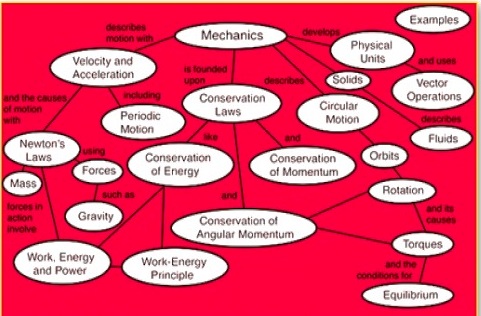
Ref: http://hyperphysics.phy-astr.gsu.edu/hbase/hframe.html
प्रश्न 2: यांत्रिकी के विभिन्न गुण सह-संबंधित या जुड़े हुए कैसे हैं?
उत्तर: नीचे दिए गए चित्र यांत्रिकी के विभिन्न गुणों के बीच संबंध को प्रदर्शित करते हैं:
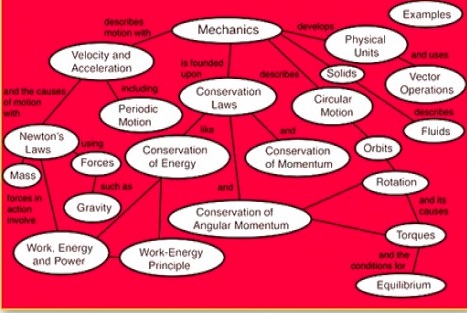
Ref: http://hyperphysics.phy-astr.gsu.edu/hbase/hframe.html
Question 3: What is the difference between the Linear motion and Rotational motion?
Answer: Linear motion involves an object moving from
one point to another in a straight line.
- Rotational motion involves an object rotating
about an axis.
प्रश्न 3: रैखिक गति और घूर्णी गति में क्या अंतर है?
उत्तर: रेखीय गति में किसी वस्तु से गति होती है एक सीधी रेखा में एक से दूसरे बिंदु पर।
घूर्णी गति में एक वस्तु घूमती है एक अक्ष के बारे में।
Question 4: What are the examples of the Rotational motion?
Answer: Examples include a merry-go-round, the rotating
earth, a spinning skater, a top, and a turning wheel.
प्रश्न 4: घूर्णी गति के उदाहरण क्या हैं?
उत्तर: उदाहरणों में एक मीरा-गो-राउंड, घूर्णन शामिल है
पृथ्वी, एक कताई स्केटर, एक शीर्ष, और एक मोड़ पहिया।
Question 5: What is the Rotational velocity? What is its Unit?
Answer: Rotational velocity is how fast the object is turning.
Units: revolutions per minute (rpm); degrees per second.
Rotational displacement is how far the object rotates.
- Units: fractions of a complete revolution; degrees; radians
- 1 complete revolution = 360º = 2 π radians
- Analogous to linear displacement: the straight-line distance travelled by an object (including direction of travel)
प्रश्न 5: घूर्णी वेग क्या है? इसकी इकाई क्या है?
उत्तर: घूर्णी वेग वस्तु को कितनी तेजी से मोड़ रहा है।
इकाइयाँ: क्रांतियाँ (revolutions) प्रति मिनट (आरपीएम); प्रति सेकंड डिग्री।
घूर्णी विस्थापन, वस्तु कितनी दूर घूमती है।
- इकाइयाँ: एक पूर्ण क्रांति (revolution) के अंश; डिग्री; रेडियंस
- पूर्ण क्रांति = 360º = 2 π रेडियन
- रैखिक विस्थापन के अनुरूप: सीधी रेखा की दूरी किसी वस्तु द्वारा यात्रा की जाती है (यात्रा की दिशा सहित)
Question 6: What is the Rotational acceleration? What is its Units?
Answer: Rotational acceleration is the rate of change of rotational velocity.
- Units: revolutions per second per second (rev/s2).
प्रश्न 6: घूर्णी त्वरण क्या है? इसकी इकाइयाँ क्या हैं?
उत्तर: घूर्णी त्वरण घूर्णी वेग के परिवर्तन की दर है।
इकाइयाँ: क्रांतियों (revolutions) प्रति सेकंड प्रति सेकंड (रेव (revolution) / s2)।
Question 7: How can we use Mass, Momentum, Energy, and Newton’s Second Law for the rotational motion?
As we know that use mass, linear momentum, translational kinetic energy, and Newton’s 2nd law to describe linear motion, we can also describe a general rotational motion using equivalent scalar/vector/tensor quantities:
- Mass Rotational inertia:
- Linenar/angular momentum:
- Force/ Torque:
- Kinetic energy:
For example, just as we use the equation of motion F = ma to describe a linear motion, we can use its counterpart. The descriptions are equivalent, and the choice can be made purely for the convenience of use. The torque on the particle is equal to the moment of inertia about the rotation axis times the angular acceleration. Means, Torque = Moment of Inertia. Angular Acceleration.
Note: As we use mass, linear momentum, translational kinetic energy, and Newton’s second law to describe linear motion, we can describe a general rotational motion using equivalent scalar/vector/tensor quantities.
प्रश्न 7: घूर्णी गति के लिए हम मास, मोमेंटम, ऊर्जा और न्यूटन के दूसरे नियम का उपयोग कैसे कर सकते हैं?
उत्तर 7: जैसा कि हम जानते हैं कि रैखिक गति का वर्णन करने के लिए द्रव्यमान, रैखिक गति, पारभासी गतिज ऊर्जा और न्यूटन के दूसरा नियम का उपयोग करते हैं, हम समान स्केलर / वेक्टर / टेनसर मात्रा का उपयोग करके एक सामान्य घूर्णी गति का भी वर्णन कर सकते हैं:
- मास घूर्णी जड़ता:
- रैखिक / कोणीय गति:
- बल / टोक़:
- गतिज ऊर्जा:
उदाहरण के लिए, जैसे हम एक रेखीय गति का वर्णन करने के लिए गति F = ma के समीकरण का उपयोग करते हैं, हम एक कोणीय गति का वर्णन करने के लिए इसके कण पर टोक़ = जड़त्व आघूर्ण . कोणीय त्वरण
विवरण समकक्ष हैं.
Question 8: Describe the definition of key term in linear and angular motion?
Answer 8: Definition of Key Items are as follows:
- uniform circular motion: Movement around a circular path with constant speed.
- torque: A rotational or twisting effect of a force; (SI unit newton-meter or Nm; imperial unit foot-pound or ft-lb)
- rotational inertia: The tendency of a rotating object to remain rotating unless a torque is applied to it.
प्रश्न 8: रैखिक और कोणीय गति में महत्वपूर्ण शब्द की परिभाषा बताइए?
उत्तर 8: प्रमुख वस्तुओं की परिभाषा इस प्रकार है:
- एकसमान वृत्तीय गति: स्थिर गति के साथ एक वृत्ताकार पथ पर घूमना।
- टोक़: एक बल का घूर्णी या घुमा प्रभाव; (एसआई इकाई न्यूटन-मीटर या एनएम; शाही (imperial) इकाई फुट-पाउंड या फीट-एलबी)
- घूर्णी जड़ता: एक घूर्णन वस्तु की प्रवृत्ति जब तक एक टोक़ उस पर लागू नहीं होती है तब तक घूमती रहती है।
नोट: जैसे ही हम द्रव्यमान, रैखिक गति, पारभासी गतिज ऊर्जा और न्यूटन के दूसरे नियम का उपयोग रैखिक गति का वर्णन करने के लिए करते हैं, हम समान स्केलर / वेक्टर / टेन्सर मात्राओं का उपयोग करके एक सामान्य घूर्णी गति का वर्णन कर सकते हैं।
Question 9: Define work and energy?
· Work and Energy:
- The ideas of work and energy are directly bound to the idea of force since an applied force can do work on an object and affect a change in energy.
- Energy is defined as the capacity or ability to carry out or do the work.
· Work
- The idea of work in physics is considerably beyond carefully defined than the ordinary utilization of the word.
- Work is performed on an item or object when an applied force pushes it through a distance. In our daily life, work is linked to costs of powerful effort, but this is not the case in the language of physics.
A person that retains a powerful object does no physical work because the force is not allowing to push the object beyond a distance.
Work, corresponding to the physics description, is being done while the weighty object is being raised but not while the object is immobile.
work is W = F · x, where F is the used force and x is the distance pushed, that is, translation or displacement. Work is a scalar quantity means it has not direction. The SI unit for work is the joule (J), which is newton‐meter or kg m/s2.
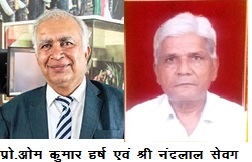
प्रश्न 9: कार्य /काम और ऊर्जा को परिभाषित करें?
- कार्य /काम और ऊर्जा:
- कार्य /काम और ऊर्जा के विचार सीधे बल के विचार से बंधे हैं क्योंकि एक लागू बल किसी वस्तु पर काम कर सकता है और ऊर्जा में परिवर्तन को प्रभावित कर सकता है।
- ऊर्जा को कार्य करने की क्षमता के रूप में परिभाषित किया गया है।
- कार्य /काम
- भौतिकी में क्षमता का विचार शब्द के सामान्य उपयोग की तुलना में काफी परे/दूर तक परिभाषित है।
- कार्य किसी वस्तु या वस्तु पर किया जाता है जब एक लागू बल इसे दूरी से धकेलता है। हमारी दैनिक जिंदगी में, काम शक्तिशाली प्रयास के लागत से जुड़ा हुआ है, लेकिन भौतिकी की भाषा में ऐसा नहीं है।
एक व्यक्ति जो एक शक्तिशाली वस्तु को बरकरार रखता है वह कोई शारीरिक काम नहीं करता है क्योंकि बल वस्तु को दूरी से परे धकेलने की अनुमति नहीं देता है।
भौतिकी विवरण के अनुसार काम किया जा रहा है, जबकि वज़नदार वस्तु को उठाया जा रहा है लेकिन वस्तु स्थिर नहीं है।
कार्य W = F · x है, जहाँ F का उपयोग किया गया बल है और x दूरी, यानी अनुवाद या विस्थापन है। काम एक अदिश (scalar) राशि है जिसका अर्थ है कि यह दिशा नहीं है। कार्य के लिए SI इकाई जूल (J) है, जो न्यूटन kg मीटर या किग्रा मी / s2 है।
Question 10. What is the kinetic energy? How can we define it mathematically?
Answer: Kinetic energy is the energy of an object when it is in motion. The representation for kinetic energy can be developed from the definition for work and from kinematic relationships.
Consider a force applied parallel to the surface that moves an object with constant acceleration.
- From the definition of work, from Newton’s second law of motion, and from kinematics, E. = (1/2) mv2 Kinetic energy is a scalar quantity with the same units as work, joules (J). For example, a 2 kg mass moving with a speed of 3 m/s has a kinetic energy of 9 J.
- The above derivation shows that the network is equal to the change in kinetic energy. This relationship is called the work‐energy theorem:
प्रश्न 10. गतिज ऊर्जा क्या है? हम इसे गणितीय रूप से कैसे परिभाषित कर सकते हैं?
उत्तर: गति में होने पर काइनेटिक ऊर्जा किसी वस्तु की ऊर्जा है। गतिज ऊर्जा का प्रतिनिधित्व कार्य के लिए परिभाषा से और गतिज संबंधों से विकसित किया जा सकता है।
सतह के समानांतर लागू एक बल पर विचार करें जो किसी वस्तु को निरंतर त्वरण के साथ स्थानांतरित करता है।
- कार्य की परिभाषा से, न्यूटन के गति के दूसरे नियम से, और कीनेमेटीक्स से, गतिज ऊर्जा = (1/2) mv2 गतिज ऊर्जा (काइनेटिक ऊर्जा) एक स्केलर मात्रा है जिसमें काम, जूल (जे) जैसी इकाइयाँ हैं। उदाहरण के लिए,
3m/s की गति से चलने वाले 2 किलो द्रव्यमान में 9 जे की गतिज ऊर्जा होती है।
- उपरोक्त व्युत्पत्ति से पता चलता है कि कार्य गतिज ऊर्जा में परिवर्तन के बराबर है।
Question 11: What is the potential energy? Give its example?
- Potential energy, described to as accumulated energy, is the capability of a system to make work due to its position or internal structure.
- Examples are energy stored in a pile driver at the top of its path or energy stored in a coiled spring. Potential energy is measured in units of joules.
प्रश्न 11: स्थितिज ऊर्जा क्या है? इसका उदाहरण दीजिए?
- स्थितिज ऊर्जा, जिसे संचित ऊर्जा के रूप में वर्णित किया गया है, यह एक प्रणाली की क्षमता है जो इसकी स्थिति या आंतरिक संरचना के कारण काम करती है।
- उदाहरण ऊर्जा एक ढेर चालक में अपने पथ के शीर्ष पर संग्रहीत होती है. जूल की इकाइयों में संभावित ऊर्जा को मापा जाता है।
Question 12: What is the difference between kinetic and kinematics?
Answer: Kinetics is centred on understanding the origin of various kinds of motions of an object such as rotational motion in which the object encounters force or torque. Kinematics explains the terms such as acceleration, velocity, and position of objects.
Kinematics explains the terms such as acceleration, velocity, and position of objects. The mass of the object is not considered while studying the kinematics.
| Distinction or Difference Between Kinetics and Kinematics | |
| Kinetics | Kinematics |
| Analyses or study of the reason for the motions of the object | Analyses or study of the position, acceleration, speed of an object |
| In this issue mass of the body is considered | Here mass of the object is not considered |
| It is used in the design of vehicles | It is used to examine the movement of planetary bodies |
| Here the Force is taken into account | Here the Force is not taken into account |
| It does not include any mathematical representations | This includes mathematical expressions |
प्रश्न 12: काइनेटिक्स और किनेमेटिक्स में क्या अंतर है?
उत्तर: काइनेटिक्स किसी वस्तु के विभिन्न प्रकार के गतियों की उत्पत्ति को समझने पर केंद्रित है जैसे कि घूर्णी गति जिसमें वस्तु का बल या टॉर्क का सामना होता है। किनेमैटिक्स त्वरण, वेग और वस्तुओं की स्थिति जैसे शब्दों की व्याख्या करता है।
किनेमैटिक्स त्वरण, वेग और वस्तुओं की स्थिति जैसे शब्दों को समझाता है। किनेमेटिक्स का अध्ययन करते समय वस्तु के द्रव्यमान पर विचार नहीं किया जाता है।
काइनेटिक्स और किनेमेटिक्स के बीच अंतर विवरण:
काइनेटिक्स
वस्तु की गतियों के कारण का विश्लेषण या अध्ययन
किनेमेटिक्स
किसी वस्तु की स्थिति, त्वरण, गति का विश्लेषण या अध्ययन
काइनेटिक्स
इस वस्तु के द्रव्यमान को माना जाता है।
किनेमेटिक्स
यहाँ वस्तु के द्रव्यमान को नहीं माना जाता है
काइनेटिक्स
इसका उपयोग वाहनों के डिजाइन में किया जाता है
किनेमेटिक्स
इसका उपयोग ग्रहों के पिंडों की गति की जांच करने के लिए किया जाता है
काइनेटिक्स
यहां फोर्स का ध्यान रखा जाता है।
किनेमेटिक्स
यहां फोर्स का ध्यान नहीं रखा जाता है
काइनेटिक्स
इसमें कोई गणितीय प्रतिनिधित्व शामिल नहीं है
किनेमेटिक्स
इसमें गणितीय अभिव्यक्तियाँ शामिल हैं
Question 13: What is the gravitational potential energy?
Answer: Gravitational potential energy is energy of the position of a body. First, think about the gravitational potential energy close to the surface of the earth where the acceleration due to gravity (g) is approximately steady or constant.
In this example, an object’s gravitational potential energy with respect to some reference level is P.E. = mgh, where h is the vertical distance above the particular reference level. To lift an object slowly, a force equal to its weight (mg) is applied through a height (h). The work accomplished is equal to the change in potential energy: W = P. E. f − P. E. o = mgh f − mgh o , where the subscripts (f and o) refer to the final and original heights of the body.
Launching a rocket into space needs work to divide the mass of the earth and the rocket to overpower the gravitational force. For larger distances from the centre of the earth, the above equation is ineffective because g (acceleration due to gravity) is not same for all the position.
प्रश्न 13: गुरुत्वाकर्षण संभावित ऊर्जा क्या है?
उत्तर: गुरुत्वाकर्षण स्थितिज ऊर्जा एक वस्तु की स्थिति की ऊर्जा है। सबसे पहले, पृथ्वी की सतह के करीब गुरुत्वाकर्षण स्थितिज ऊर्जा के बारे में सोचें जहां गुरुत्वाकर्षण (जी) के कारण त्वरण लगभग स्थिर या स्थिर है।
इस उदाहरण में, किसी वस्तु के गुरुत्वाकर्षण क्षमता को कुछ संदर्भ स्तर के संबंध में स्थितिज ऊर्जा = mgh, जहाँ h विशेष संदर्भ स्तर से ऊपर की खड़ी दूरी है। किसी वस्तु को धीरे-धीरे उठाने के लिए, उसके वजन (mg) के बराबर एक बल एक ऊंचाई (एच) के माध्यम से लगाया जाता है। पूरा किया गया कार्य स्थितिज ऊर्जा में परिवर्तन के बराबर है: W = P. E. f – P. E. o = mgh f – mgh o, जहां ग्राहक (f और o) वस्तु की अंतिम और मूल ऊंचाइयों का उल्लेख करते हैं।
एक रॉकेट को अंतरिक्ष में प्रक्षेपित करने के लिए पृथ्वी के द्रव्यमान और रॉकेट को गुरुत्वाकर्षण बल पर हावी होने के लिए काम करने की आवश्यकता होती है। पृथ्वी के केंद्र से बड़ी दूरी के लिए, उपरोक्त समीकरण अप्रभावी है क्योंकि g (गुरुत्वाकर्षण के कारण त्वरण) (acceleration due to gravity) सभी स्थिति के लिए समान नहीं है।
Question 14: How can we define the power? What is the difference between power and energy?
- Power is the rate of doing or performing work, average Power is P = W/t, where t is the time through which work (W) is done. While energy is the capacity of doing work. For example, first person has more energy compared to second person it does not mean that first person has more power. It is possible that first person can work for one hour while the second person can complete the same work withing half hour. It means the second person can work more faster than first because second person has more power.
प्रश्न 14: हम पावर को कैसे परिभाषित कर सकते हैं? पावर और ऊर्जा में क्या अंतर है?
- पावर काम करने या करने की दर है, औसत पावर पी = W / t है, जहां t वह समय है जिसके माध्यम से काम (w) किया जाता है। जबकि ऊर्जा कार्य करने की क्षमता है। उदाहरण के लिए, पहले व्यक्ति के पास दूसरे व्यक्ति की तुलना में अधिक ऊर्जा है इसका मतलब यह नहीं है कि पहले व्यक्ति में अधिक पावर है। यह संभव है कि पहला व्यक्ति एक घंटे के लिए काम कर सकता है जबकि दूसरा व्यक्ति आधे घंटे के साथ वही (same) काम पूरा कर सकता है। इसका मतलब है कि दूसरा व्यक्ति पहले की तुलना में अधिक तेजी से काम कर सकता है क्योंकि दूसरे व्यक्ति के पास अधिक पावर है।
Question 15: What is the law of principle of conservation of energy?
Answer: The principle of conservation of energy is one of the extremely broad general laws of physics. It says that energy is neither created nor destroyed but can only be converted from one form to another in an isolated system.
प्रश्न 15: ऊर्जा के संरक्षण के सिद्धांत का नियम क्या है?
उत्तर: ऊर्जा के संरक्षण का सिद्धांत भौतिकी के अत्यंत व्यापक सामान्य नियमों में से एक है। यह कहता है कि ऊर्जा न तो बनाई जाती है और न ही नष्ट की जाती है, लेकिन एक पृथक प्रणाली (Isolated System) में केवल एक रूप से दूसरे रूप में परिवर्तित की जा सकती है।
द यूनिक काॅन्सेप्ट ऑफ फिजिक्स के वाॅट्सएप ग्रुप से जुड़ने के लिए यहाँ क्लिक करें।
द यूनिक काॅन्सेप्ट ऑफ फिजिक्स के टेलीग्राम ग्रुप से जुड़ने के लिए यहाँ क्लिक करें।
द यूनिक काॅन्सेप्ट ऑफ फिजिक्स के फेसबुक पेज से जुड़ने के लिए यहाँ क्लिक करें।
]]>
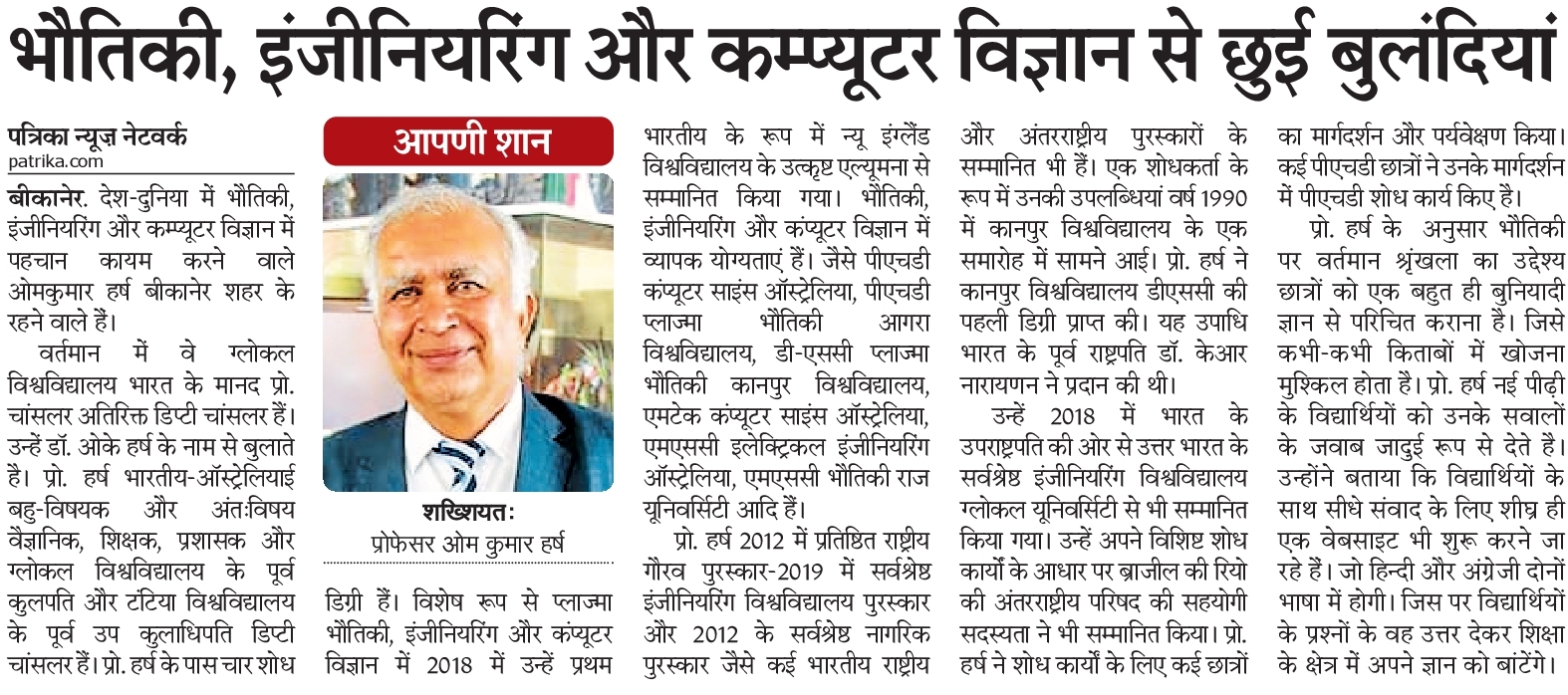
विनय एक्सप्रेस के सुधि पाठकों के लिए प्रस्तुत है द यूनिक काॅन्सेप्ट ऑफ सीरीज के दुसरे चरण की प्रश्नोत्तरी
1. कठोर (रीजिड) धुरी क्या है, हमें इसकी आवश्यकता क्यों है?
actual question is:
What is the rigid body in mechanics? Why we need it?
उत्तर: भौतिकी समस्या में, एक रेजिड बॉडी (जिसे रेजिड ऑब्जेक्ट के रूप में भी जाना जाता है) एक ठोस निकाय है जिसमें बहाली या विरूपण शून्य है या बहुत कम है इसे अनदेखा या उपेक्षित किया जा सकता है। एक रेजिड बॉडी पर किसी भी दो दिए गए बिंदुओं के बीच की दूरी बाहरी ताकतों या उस पर नियोजित क्षणों की परवाह किए बिना समय में समान या स्थिर रहती है।
उन्नत गणित में, एक बिंदु का अर्थ सामान्य रूप से कुछ सेटिंग (समायोजन) के एक भाग या स्थान को निर्धारित किया जाता है।
इंजीनियरिंग में, विरूपण किसी वस्तु के आकार या आकार में बदलाव को इंगित करता है।
विशेष सापेक्षता के सिद्धांत में, व्यवहार में, एक पूरी तरह से रेजिड शरीर का अस्तित्व संभव नहीं है।
एक रेजिड बॉडी को आम तौर पर द्रव्यमान के निरंतर या निर्बाध वितरण के रूप में माना जाता है।
हम ऐसा रेजिड बॉडी लेते हैं क्योंकि हम दो बिंदुओं के बीच की दूरी को बदले बिना बाहरी बल के प्रभाव को देखना चाहते हैं ताकि बल का वितरण रेजिड बॉडी पर एक समान हो जो इसे “एक पूरे के रूप में शरीर” के हमारे अध्ययन के लिए उपयोगी बनाता है। कोणीय गति, टोक़ आदि के संबंध में हम मानते हैं कि एक रेजिड शरीर में द्रव्यमान का निरंतर वितरण होता है।
या रेजिड बॉडी अपने अभिविन्यास को घुमा या बदल सकती है जबकि इसका केंद्र द्रव्यमान स्थिर होता है।
उदाहरण के साथ शरीर?
– रेजिड बॉडी के उदाहरण: धुआं, आग, पानी, हवा, पत्तियां, कपड़ा, चुंबक, झुंड, मछली, कीड़े, भीड़ आदि।
2. हम पहले सिद्धांत से किसी अन्य मात्रा या समीकरण या व्युत्पत्तिकी सहायता के बिना स्वतंत्र रूप से जडत्व आघूर्ण को कैसे परिभाषित और गणना कर सकते हैं? और हम कैसे साबित कर सकते हैं कि I = Mk2
Ans: यह एक उल्लेखनीय दिलचस्प सवाल है, और इसका जवाब वर्तमान प्रश्नोत्तरी में नहीं दिया जा रहा है। छात्रों को सलाह दी जाती है कि वे अपने उत्तर जानने के लिए अपने दोस्तों और किसी अन्य व्यक्ति से आगे और आगे के बारे में सोचें। इसका उत्तर जानने से पहले यदि छात्र इसे कई बार आजमाते हैं तो विद्यार्थी बाद में सहज हो जाएगा। यदि कोई व्यक्ति चाहे वह छात्र हो या कोई अन्य व्यक्ति इस प्रश्न का ठीक से उत्तर देता है तो हम अंतरराष्ट्रीय स्तर पर उसका नाम सार्वजनिक करेंगे। हम कुछ समय बाद इसका जवाब देंगे।
3. जडत्व आघूर्ण, अन्यथा कोणीय द्रव्यमान या घूर्णी जड़ता के रूप में जाना जाता है, क्यों?
Ans; एक रेजिड बॉडी का जडटव अघुरना घूर्णी गति में उतनी ही भूमिका निभाता है जितनी कि सीधी गति में जड़ता। इसका अर्थ यह है कि जडत्व अघूर्ण को जड़ता या कोणीय द्रव्यमान या घूर्णी जड़ता के द्रव्यमान के रूप में भी कहा जा सकता है क्योंकि जडत्व अघूर्णा कोणीय या घूर्णी गति के दौरान प्रतिरोध प्रदान करता है।
या
दूसरे शब्दों में, जडत्व अघूर्ना एक मात्रा है जो एक घूर्णन अक्ष के बारे में एक वांछित कोणीय त्वरण के लिए आवश्यक टोक़ (Torque) को नियंत्रित करती है। यह इस तथ्य की तरह है कि “द्रव्यमान एक समान त्वरण के लिए आवश्यक बल को कैसे नियंत्रित करता है”।
4. हम भौतिकी में “मोमेंट” (आघूर्ण) क्यों लेते हैं? यह क्या दर्शाता है?
उत्तर: मान लीजिए कि कोई पिंड (चीज) किसी विशेष अक्ष के बारे में घूम रहा है, तो निश्चित रूप से उसका रोटेशन एक उचित बल के बिना संभव नहीं है, इसलिए यह हर बार होता है जब भी एक प्रासंगिक बल लागू होता है।
अब निम्नलिखित बातों पर विचार करें:
– हमारे पास एक पिंड (चीज) है
-हम इसे एक निश्चित अक्ष के चारों ओर घूमना चाहते हैं
-इसका मतलब है कि चीज की धुरी से एक निश्चित दूरी है
-इसको घुमाने के लिए एक तरह के बल की जरूरत होती है
प्रश्न यह है कि दी गई दूरी पर हम किस बिंदु पर कितना बल लगाते हैं कि वह घूमने लगती है?
समीकरण का उपयोग करके एक पल की परिमाण की गणना की जा सकती है:
एक बल का “मोमेंट” = बल × दूरी
“मोमेंट” (M) को न्यूटन-मीटर (Nm) में मापा जाता है
बल (F) को न्यूटन (N) में मापा जाता है
दूरी (डी) मीटर (मीटर) में मापा जाता है
यह याद रखना महत्वपूर्ण है कि दूरी (डी) धुरी / धुरा से बल की कार्रवाई की रेखा तक लंबवत दूरी है।
वास्तव में, बल या प्रणाली बलों को मोड़ने के लिए एक वस्तु का कारण हो सकती है इसका मतलब है कि “एक “मोमेंट” एक बल का मोड़ प्रभाव है”। मोमेंट एक बिंदु के बारे में एक दक्षिणावर्त या एंटीक्लॉकवाइज दिशा में कार्य करते हैं। चुना गया बिंदु वस्तु पर कोई बिंदु हो सकता है।
गति का केंद्र वास्तविक बिंदु हो सकता है जिसके बारे में बल रोटेशन का कारण बनता है। यह एक संदर्भ बिंदु या अक्ष भी हो सकता है जिसके बारे में बल को रोटेशन का कारण माना जा सकता है। यह तब तक मायने नहीं रखता है जब तक कि किसी विशेष बिंदु को हमेशा संदर्भ बिंदु के रूप में लिया जाता है।
इसका अर्थ है कि किसी बल का “मोमेंट” किसी विशेष बिंदु या अक्ष के चारों ओर घूमने के लिए किसी पिंड को प्रभावित करने की उसकी प्रवृत्ति या झुकाव का माप या डिग्री है। … ऐसा तब होता है जब हर बार एक बल का संचालन किया जाता है ताकि वह पिंड के केंद्रक (जहां सामूहिक क्रियाओं का केंद्र) से न गुजरे। दूसरे शब्दों में, एक मोमेंट का बल बल होता है जिसमें एक समान और उलटा बल नहीं होता है, जो सीधे उसके अधिनियम की रेखा के साथ होता है।
यह एक पिंड को बल की दिशा में स्थानांतरित करने, या अनुवाद करने की प्रवृत्ति से अलग है। विकसित होने के एक पल के लिए, बल को पिंड पर इस तरह से कार्य करना चाहिए कि पिंड मुड़ना शुरू हो जाए।
दो लोगों को विपरीत दिशा से डॉकर्नोब पर एक दरवाजे पर धक्का देने की कल्पना करें। यदि दोनों एक समान बल के साथ आगे बढ़ रहे हैं, तो संतुलन की एक स्थिति है। यदि उनमें से एक अचानक दरवाजे से वापस कूद जाएगा, तो दूसरे व्यक्ति के धक्का का अब कोई विरोध नहीं होगा और दरवाजा दूर झूल जाएगा। जो अभी भी दरवाजे पर जोर दे रहा था उसने एक पल पैदा किया।
एक मोमेंट को फुट-पाउंड, किप-फीट, न्यूटन-मीटर या किलोनटन-मीटर की इकाइयों में व्यक्त किया जाता है। मोमेंट के केंद्र के बारे में एक दक्षिणावर्त रोटेशन को एक सकारात्मक क्षण माना जाएगा; जबकि क्षणों के केंद्र के बारे में एक वामावर्त रोटेशन नकारात्मक माना जाएगा।
5. दैनिक जीवन में जडत्व आघूर्ण के अनुप्रयोग क्या हैं।
Ans: a. एक ऑटोमोबाइल का FLYWHEEL: फ्लाईव्हील एक भारी द्रव्यमान है जो इंजन के क्रैंकशाफ्ट पर लगाया जाता है। चक्का के एमओआई (MOI) की मात्रा बहुत अधिक है और बिजली एकत्र करने से रोकता है।
b. जहाज निर्माण- जहाज निर्माण पर जडत्व आघूर्ण बड़ा प्रभाव डालता है। एक जहाज लुढ़क कर गिर सकता है लेकिन एक जहाज कभी भी पिचिंग से नीचे नहीं जाएगा।
6. दैनिक जीवन में जड़ता के अनुप्रयोग क्या हैं?
उत्तर: वास्तविक जीवन में जड़ता के क्षण के उदाहरण:
हमारे दैनिक जीवन में जड़ता के उदाहरण हैं:
जब तेजी से ब्रेक का उपयोग किया जाता है, तो हमें आगे या आगे बढ़ने की प्रवृत्ति होती है।
जब बस आराम से चलती है तो हम पीछे हटते हैं।
जब आप अपने वाहनों में बैठे होते हैं तो आप वाहन को सामने की ओर तेज करते हुए पीछे की ओर अचानक खिसकने का अनुभव करते हैं क्योंकि शरीर स्थिर स्थिति में था जबकि वाहन आगे बढ़ने लगा।
एक कार्डबोर्ड के ऊपर रखा गया एक सिक्का ग्लास पर गिर जाता है जब कार्डबोर्ड को अचानक बाहर निकाल दिया जाता है क्योंकि कार्डबोर्ड ने गति प्राप्त कर ली है जबकि सिक्का ‘आराम से रहना’ जारी है।
7. किन बातों पर किसी चीज की जडत्व आघूर्ण निर्भर करता है?
उत्तर
अधिक वस्तु का द्रव्यमान है, अधिक जड़ता का क्षण है।
यदि शरीर के रोटेशन की धुरी बदल जाती है, तो जडत्व आघूर्ण बदल जाता है।
विभिन्न आकृतियों और आकार वाली वस्तुओं में जडत्व आघूर्ण अलग-अलग कहोते हैं।
शरीर की जडत्व आघूर्ण शरीर के द्रव्यमान, शरीर के रोटेशन की धुरी और शरीर के आकार और आकार पर निर्भर करता है।
प्रश्न 7: परिज्ञान की त्रिज्या (Radius of Gyration) क्या है जो जड़ता की समस्या (R) के क्षण में एक मात्रा है:
उत्तर: रोटेशन की एक धुरी के बारे में एक चीज के विकिरण के रेडियस को एक बिंदु पर रेडियल दूरी के रूप में परिभाषित किया गया है, जिसमें शरीर के द्रव्यमान के वास्तविक वितरण के रूप में जड़ता का एक पल होगा, अगर चीज का कुल द्रव्यमान वहां केंद्रित था। … एक शरीर के रूप में एक चलती बिंदु के एक प्रक्षेपवक्र का प्रतिनिधित्व कर सकता है। Or
गणितीय रूप से परिमाण की त्रिज्या प्रासंगिक अनुप्रयोग के आधार पर, वस्तु के किसी भी हिस्से या किसी दिए गए अक्ष से वस्तु के भागों का मूल माध्य वर्ग दूरी है। … यह वास्तव में बिंदु द्रव्यमान से घूर्णन के अक्ष तक की दूरी है।
गेरिएशन ( Gyration) का त्रिज्या एक अक्ष के चारों ओर किसी वस्तु के घटकों के वितरण को संदर्भित करता है।
जड़ता के द्रव्यमान के क्षण के संदर्भ में, यह रोटेशन के अक्ष से एक बिंदु द्रव्यमान (द्रव्यमान, मी) के लिए दूरी है।
प्रश्न 8: कोणीय त्वरण क्या है:
कोणीय त्वरण: कोणीय वेग के परिवर्तन की दर, जिसे अक्सर α द्वारा दर्शाया जाता है।
भौतिकी में, कोणीय त्वरण, कोणीय वेग के परिवर्तन की समय दर का वर्णन करता है। … कोणीय त्वरण की गणना प्रति इकाई समय कोणों की इकाइयों में की जाती है जो (SI इकाइयों में प्रति सेकंड वर्ग में रेडियन है) और आमतौर पर प्रतीक अल्फा (α) द्वारा की जाती है।
प्रश्न 9: हम टॉर्क (Torque) को कैसे परिभाषित कर सकते हैं:
उत्तर: टॉर्क: एक बल का घूर्णी या घुमा प्रभाव; (एसआई इकाई न्यूटन-मीटर या एनएम; शाही इकाई फुट-पाउंड या फीट-एलबी
• जब टॉर्क को एक वस्तु के लिए नियोजित किया जाता है तो यह जड़ता के क्षण के विपरीत त्वरण के साथ घूमना शुरू कर देता है।
• इस संबंध को न्यूटन के रोटेशन के लिए दूसरा नियम माना जा सकता है। इस प्रकार, जड़ता का क्षण घूर्णी द्रव्यमान है, और टोक़ घूर्णी बल है।
• कोणीय गति भी न्यूटन के पहले नियम का पालन करती है। यदि कोई बाहरी बल किसी वस्तु पर नहीं खेलता है, तो कोई वस्तु क्रिया या गति में गति में रहती है और कोई वस्तु आराम से रुकती है।
प्रश्न 10. रैखिक और कोणीय गति में क्या अंतर है? दोनों गतियों के उदाहरण दीजिए।
रैखिक गति में सीधी रेखा में एक बिंदु से दूसरे बिंदु पर जाने वाली वस्तु शामिल होती है।
घूर्णी गति में अक्ष के बारे में घूमती हुई वस्तु शामिल होती है।
रैखिक गति किसी भी गति है जो एक दिशा में एक सीधी रेखा के साथ चलती है। … कोणीय गति घूर्णी गति है, यह तब होता है जब शरीर या ऑब्जेक्ट पर सभी बिंदु एक ही निश्चित केंद्रीय रेखा या अक्ष के बारे में एक गोलाकार पथ में चलते हैं।
प्रश्न 11: कोणीय गति क्या है?
कोणीय गति को एक निश्चित बिंदु या निश्चित अक्ष के बारे में एक निकाय की गति के रूप में परिभाषित किया गया है। यह बिंदु या धुरी पर शरीर के लिए खींची गई रेखा से गुज़रे कोण के बराबर है।
प्रश्न 12 : रैखिक और कोणीय वेग के बीच क्या संबंध है?
उत्तर: किसी दिए गए समय में रोटेशन कोण जितना अधिक होगा, कोणीय वेग उतना ही अधिक होगा। कोणीय वेग ω रैखिक वेग v के अनुरूप है। हम रैखिक वेग और कोणीय वेग के बीच संबंध को दो अलग-अलग तरीकों से लिख सकते हैं: v = rω या ω = v / r
प्रश्न 13. कोणीय त्वरण क्या है?
उत्तर: कोणीय त्वरण को उस दर के रूप में परिभाषित किया जाता है जिस पर कोणीय वेग बदल रहा है।
किसी भी समय किसी वस्तु की गति बदल रही है क्योंकि इसमें एक त्वरण है। रैखिक त्वरण गति में, केवल वेग हर पल बदल रहा है जबकि कोणीय त्वरण के दौरान हर पल वेग और दिशा दोनों बदलते हैं।
प्रश्न 14: कोणीय वेग किस दिशा में है?
कोणीय वेग और कोणीय गति की दिशा घूर्णन के समतल के लंबवत होती है। दाहिने हाथ के नियम का उपयोग करते हुए, कोणीय वेग और कोणीय गति दोनों की दिशा को उस दिशा के रूप में परिभाषित किया जाता है जिसमें आपके दाहिने हाथ का अंगूठा तब घुमाता है जब आप अपनी उंगलियों को घुमाव की दिशा में मोड़ते हैं।
प्रश्न 15: एकसमान वृत्तीय गति में क्या त्वरण स्थिर है?
त्वरण वेग में परिवर्तन है, या तो इसकी परिमाण में – अर्थात, गति – या इसकी दिशा में, या दोनों। समरूप वृत्तीय गति में, वेग की दिशा लगातार बदलती रहती है, इसलिए हमेशा एक संबद्ध त्वरण होता है, भले ही गति स्थिर हो।
प्रश्न 16: कोणीय वेग कितने प्रकार का संभव है? उनका वर्णन करो।
उत्तर: कोणीय वेग दो प्रकार के होते हैं: कक्षीय कोणीय वेग और स्पिन कोणीय वेग।
स्पिन कोणीय वेग का वर्णन है कि एक कठोर शरीर अपने रोटेशन के केंद्र के संबंध में कितनी तेजी से घूमता है। ऑर्बिटल (Orbital) कोणीय वेग का तात्पर्य यह है कि कोई पॉइंट ऑब्जेक्ट एक निश्चित मूल के बारे में कितनी तेजी से घूमता है, यानी मूल के सापेक्ष इसकी कोणीय स्थिति के परिवर्तन की समय दर। स्पिन (spin) कोणीय वेग मूल की पसंद से स्वतंत्र है, कक्षीय कोणीय वेग के विपरीत जो मूल की पसंद पर बदलता है।
प्रश्न 16: कोणीय वेग कितने प्रकार का संभव है? उनका वर्णन करो।
उत्तर: कोणीय वेग दो प्रकार के होते हैं: कक्षीय कोणीय वेग और स्पिन कोणीय वेग।
स्पिन कोणीय वेग का वर्णन है कि एक रिजिड शरीर अपने रोटेशन के केंद्र के संबंध में कितनी तेजी से घूमता है। ऑर्बिटल कोणीय वेग का तात्पर्य यह है कि कोई पॉइंट ऑब्जेक्ट एक निश्चित मूल के बारे में कितनी तेजी से घूमता है, यानी मूल के सापेक्ष इसकी कोणीय स्थिति के परिवर्तन की समय दर। स्पिन कोणीय वेग मूल की पसंद से स्वतंत्र है, कक्षीय कोणीय वेग के विपरीत जो मूल की पसंद पर बदलता है।

प्रश्न 17: आप कोणीय गति को रैखिक गति में कैसे परिवर्तित करते हैं?
यदि v एक घूर्णन वस्तु की रैखिक गति का प्रतिनिधित्व करता है, तो इसकी त्रिज्या r, और समय की प्रति इकाई रेडियन की इकाइयों में इसका कोणीय वेग है, तो v = rω यह एक बहुत ही मूल्यवान सूत्र है: इसने इन तीन राशियों को जोड़ा, ताकि दो को जानकर हम हर बार तीसरे को खोज सकें।
प्रश्न 18: वृत्तीय गति में रैखिक वेग क्या है?
रैखिक वेग मापता है कि वृत्त की परिधि के साथ बिंदु कितनी तेजी से घूम रहा है। इसे “लीनियर वेलोसिटी” कहा जाता है क्योंकि हम मीटर या मील से लेकर परिधि तक रैखिक माप का उपयोग करते हैं।
प्रश्न 19: क्या रैखिक वेग और स्पर्शरेखा वेग समान हैं?
स्पर्शरेखा वेग किसी भी वस्तु के रैखिक गति के साथ एक वृत्ताकार पथ है। यह स्पर्शरेखा वेग के रूप में जाना जाता है। … दूसरे शब्दों में, किसी भी तात्कालिक पर रैखिक वेग इसकी स्पर्शरेखा का वेग है।
प्रश्न 20: कितने प्रकार के कोणीय त्वरण संभव हैं और हम उन्हें कैसे परिभाषित कर सकते हैं?
उत्तर: भौतिकी में, कोणीय त्वरण, कोणीय वेग के परिवर्तन की समय दर को दर्शाता है। चूँकि दो प्रकार के कोणीय वेग होते हैं, जैसे कि स्पिन कोणीय वेग और कक्षीय कोणीय वेग, स्वाभाविक रूप से दो प्रकार के कोणीय त्वरण होते हैं, जिन्हें क्रमशः स्पिन कोणीय त्वरण और कक्षीय कोणीय त्वरण कहा जाता है। स्पिन कोणीय त्वरण एक रिजिड शरीर के कोणीय त्वरण को संदर्भित करता है इसके रोटेशन के केंद्र के बारे में, और कक्षीय कोणीय त्वरण एक निश्चित मूल के बारे में एक बिंदु कण के कोणीय त्वरण को संदर्भित करता है।
प्रश्न 21: रेखीय गति से कोणीय गति में जाने पर हम सामान्य भौतिक राशियों के परिवर्तनों को कैसे समझ सकते हैं?
उत्तर: रेखीय गति से कोणीय गति में जाने पर हम हमेशा शरीर के द्रव्यमान (m) को Inertia (जडत्व आघूर्ण) (I), रैखिक वेग (v) के द्वारा कोणीय वेग से बदलते हैं, कोणीय त्वरण द्वारा रैखिक त्वरण और टॉर्क द्वारा बल प्रदर्शन करता है1
द यूनिक काॅन्सेप्ट ऑफ फिजिक्स के वाॅट्सएप ग्रुप से जुड़ने के लिए यहाँ क्लिक करें।
द यूनिक काॅन्सेप्ट ऑफ फिजिक्स के टेलीग्राम ग्रुप से जुड़ने के लिए यहाँ क्लिक करें।
द यूनिक काॅन्सेप्ट ऑफ फिजिक्स के फेसबुक पेज से जुड़ने के लिए यहाँ क्लिक करें।
E.mail:vinayexpressindia@gmail.com
]]>
विनय एक्सप्रेस के सुधि पाठकों के लिए प्रो. ओके हर्ष एवं नंदलाल सेवग द्वारा फिजिक्स क्षेत्र में नवीन पहल प्रस्तुत है।
लेखक परिचयः-

श्री नंदलाल सेवग : श्री नंदलाल सेवग चोपड़ा सीनियर सेकेंडरी स्कूल, गंगाशहर, बीकानेर से भौतिकी में सेवानिवृत्त व्याख्याता और उप-प्रधानाचार्य (अनौपचारिक) हैं। उन्होंने लंबे समय तक फोर्ट हायर सेकेंडरी स्कूल, बीकानेर में भी काम किया है। उन्हें राजस्थान के विभिन्न सरकारी स्कूलों में भौतिकी और संबद्ध विषयों को पढ़ाने का लंबा अनुभव है। उन्होंने अपने लंबे करियर के दौरान विभिन्न प्रकार के छात्रों को पढ़ाया है। उन्होंने सीनियर हायर सेकेंडरी, हायर सेकंडरी और हाई स्कूल स्कूल में विभिन्न सिलेबस के निर्माण में बहुत योगदान दिया है। उन्होंने वयस्कों और ग्रामीण लोगों के शिक्षण और सीखने की प्रक्रिया में भी योगदान दिया है।
श्री नंदलाल एक महान सामाजिक व्यक्ति हैं जिन्होंने समाज के विभिन्न कारणों के लिए अपनी सेवाएँ दी हैं। बीकानेर का समाज उन्हें बहुत अच्छी तरह से जानता है। वह काफी विनम्र और दयालु व्यक्ति हैं जो बिना किसी लाभ और पैसे के काम करते हैं। भौतिकी की अवधारणाओं की यह श्रृंखला पूरी तरह से उनके पिता श्री गिरधर लालजी सेवाग को समर्पित है जिन्होंने अपना पूरा जीवन दूसरों के लिए काम किया। यह श्री नंदलाल सेवग के लिए एक शानदार एहसास है। हम आशा करते हैं कि छात्र इसका अधिक से अधिक लाभ उठाने का प्रयास करेंगे। वर्तमान वैचारिक ज्ञान भौतिकी ट्यूटोरियल का उद्देश्य केवल छात्रों को भौतिकी के मूल स्तर का ज्ञान प्रदान करना है। हर छोटे ट्यूटोरियल में इस बात को डालने की कोशिश की जाएगी कि क्या ऐसा तरीका है जिससे छात्र इसका कारण समझ सकें और ऐसा क्यों है? आम तौर पर हर चीज़ टेक्स्ट बुके या अन्य किताबों में उपलब्ध है जिसमें सब कुछ है। लेकिन यहां हम बुनियादी भौतिकी के हर गहरे मूल स्तर की व्याख्या करना चाहते हैं।
प्रोफेसर ओम कुमार हर्ष:
ओम कुमार हर्ष, वर्तमान में ग्लोकल विश्वविद्यालय, भारत के मानद प्रो-चांसलर (अतिरिक्त) (डिप्टी चांसलर) हैं, उन्हें लोकप्रिय रूप से डॉ। ओ.के. हर्ष के नाम से बुलाते हैं। प्रोफेसर हर्ष भारतीय-ऑस्ट्रेलियाई बहु-विषयक और अंतःविषय वैज्ञानिक, शिक्षक, प्रशासक और ग्लोकल विश्वविद्यालय के पूर्व कुलपति, और टंटिया विश्वविद्यालय और ग्लोकल विश्वविद्यालय के पूर्व उप कुलाधिपति (डिप्टी चांसलर) हैं।
प्रो हर्ष के पास चार शोध डिग्री हैं, विशेष रूप से प्लाज्मा भौतिकी, इंजीनियरिंग और कंप्यूटर विज्ञान में। 2018 में उन्हें प्रथम भारतीय के रूप में न्यू इंग्लैंड विश्वविद्यालय के उत्कृष्ट एल्यूमना से सम्मानित किया गया। उनके पास भौतिकी, इंजीनियरिंग और कंप्यूटर विज्ञान में व्यापक योग्यताएं हैं जैसे: पीएच.डी. (कंप्यूटर साइंस, ऑस्ट्रेलिया), पीएच.डी. (प्लाज्मा भौतिकी), आगरा विश्वविद्यालय, D.Sc. (प्लाज्मा भौतिकी) कानपुर विश्वविद्यालय, एम। टेक। (कंप्यूटर साइंस, ऑस्ट्रेलिया), M.Sc. (इलेक्ट्रिकल इंजीनियरिंग, ऑस्ट्रेलिया), M.Sc. (फिजिक्स, राज यूनिवर्सिटी) और Grad Cert. Chem. Instruments (ऑस्ट्रेलिया)। प्रोफेसर हर्ष बीकानेर सिटी के हैं।
डॉ। हर्ष 2012 में प्रतिष्ठित “राष्ट्रीय गौरव पुरस्कार”, 2019 में “सर्वश्रेष्ठ इंजीनियरिंग विश्वविद्यालय पुरस्कार” और 2012 के सर्वश्रेष्ठ नागरिक पुरस्कार” जैसे कई भारतीय राष्ट्रीय और अंतर्राष्ट्रीय पुरस्कारों के प्राप्तकर्ता हैं। एक शोधकर्ता के रूप में, उनकी उपलब्धियां तब सामने आईं जब 1990 में कानपुर विश्वविद्यालय के एक समारोह में, प्रो हर्ष ने कानपुर विश्वविद्यालय डी.एससी की पहली डिग्री प्राप्त की। यह उपाधि भारत के पूर्व राष्ट्रपति डॉ। के.आर. नारायणन द्वारा प्रदान की गई थी। उन्हें 2018 में भारत के उपराष्ट्रपति द्वारा उत्तर भारत के सर्वश्रेष्ठ इंजीनियरिंग विश्वविद्यालय (ग्लोकल यूनिवर्सिटी) से भी सम्मानित किया गया। उन्हें अपने विशिष्ट शोध कार्यों के आधार पर ब्राजील की रियो की अंतर्राष्ट्रीय परिषद की सहयोगी सदस्यता से भी सम्मानित किया गया। उनका अधिक विवरण इंटरनेट में पाया जा सकता है।
प्रो हर्ष ने शोध कार्यों के लिए कई छात्रों का मार्गदर्शन और पर्यवेक्षण किया। कई पीएच.डी. छात्रों ने सफलतापूर्वक उनके तहत पीएचडी शोध कार्य पूरा किया। उनके बहुत अच्छे छात्रों में से एक प्रोफेसर जे पी गोयल हैं जो मेरठ कॉलेज से सेवानिवृत्त हुए हैं। प्रो गोयल ने इंटरमीडिएट और B.Sc के लिए भौतिकी पर कई किताबें लिखी हैं।
प्रोफेसर हर्ष के और श्री नंदलाल सेवग के अनुसार, भौतिकी पर द यूनिक कॉन्सेप्ट ऑफ फिजिक्स का उद्देश्य छात्रों को सीरीज के वाॅट्सएप ग्रुप, टेलीग्राम ग्रुप और फेसबुक पेज के साथ ऑनलाइन न्यूज पोर्टल्स आदि के माध्यम से
एक बहुत ही बुनियादी ज्ञान से परिचित कराना है, जिसे कभी-कभी किताबों में खोजना मुश्किल होता है। यह वादा किया जाता है कि सवालों के जवाब जादुई रूप से दिए जाएंगे। छात्रों और पाठकों को समाचार पत्रों में उल्लिखित प्रश्नों पर अपने आगे के प्रश्न भेजने की सलाह दी जाती है। कृपया अन्य विषयों पर प्रश्न न भेजें। एक-एक करके हम अन्य विषयों को भी पाक्षिक आधार पर कवर करेंगे। ईमेल है: profharsh@gmail.com आप मुझे इस ईमेल पर सवाल भेज सकते हैं।
द यूनिक काॅन्सेप्ट ऑफ फिजिक्स के वाॅट्सएप ग्रुप से जुड़ने के लिए यहाँ क्लिक करें।
द यूनिक काॅन्सेप्ट ऑफ फिजिक्स के टेलीग्राम ग्रुप से जुड़ने के लिए यहाँ क्लिक करें।
द यूनिक काॅन्सेप्ट ऑफ फिजिक्स के फेसबुक पेज से जुड़ने के लिए यहाँ क्लिक करें।
The Unique Concept of Physics

पहले चरण में हम प्रश्नों की शुरुआत करेंगे जैसे:
1. भौतिकी क्या है और हम इसका अध्ययन क्यों करते हैं?
2. नट शेल (संक्षिप्त) में न्यूटन द्वारा दिए गए गति के बुनियादी नियमों को परिभाषित करें। इसे विवरण में भी स्पष्ट कीजिए।
3. इनर्शिया (जडत्व) और जडत्व आघूर्ण के बीच अंतर क्या है? या
घूर्णी गति में जडत्व और जडत्व आघूर्ण की भूमिका क्या है?
जवाब
1. भौतिकी क्या है और हम इसका अध्ययन क्यों करते हैं?
उत्तर
a. भौतिकी एक प्राकृतिक विज्ञान है जिसमें ऊर्जा और बल जैसी संबंधित अवधारणाओं के साथ अंतरिक्ष और समय के माध्यम से पदार्थ और इसकी गति का अध्ययन शामिल है। अधिक व्यापक रूप से, यह समझने की कोशिश में प्रकृति का अध्ययन है कि ब्रह्मांड कैसे व्यवहार करता है। एक विज्ञान जो पदार्थ और ऊर्जा और उनकी परस्पर क्रिया से संबंधित है। : किसी विशेष प्रणाली की भौतिक प्रक्रियाएँ और घटनाएँ।: किसी चीज का भौतिक गुण और रचना।
2. नट शेल में (संक्षेप में शब्दों की सीमित भाषा) न्यूटन द्वारा दिए गए गति के बुनियादी नियमों को परिभाषित करें।
उत्तर-न्यूटन का पहला नियम कहता है कि बल क्या है? दूसरा नियम बल का माप देता है। जबकि तीसरा नियम बल की दिशा को परिभाषित करता है।
सर आइजैक न्यूटन ने 1665 में गति के तीन नियमों का प्रस्ताव दिया।
a. यदि कोई वस्तु नहीं घूम रही है, तो वह अपने आप हिलना शुरू नहीं करेगी। यदि कोई वस्तु घूम रही है, तो वह तब तक रुकेगी या दिशा नहीं बदलेगी जब तक कि कोई चीज उसे धक्का न दे।
b. वस्तुओं को आगे और तेजी से आगे बढ़ाया जाएगा जब वे पर्याप्त बल के माध्यम से धकेल दिए जाएंगे। c. जब किसी वस्तु को एक दिशा में धकेला जाता है, तो हमेशा विपरीत दिशा में एक ही आकार का प्रतिरोध होता है।
न्यूटन के पहले नियम में कहा गया है कि हर वस्तु एक सीधी रेखा में आराम या एक समान गति में रहेगी जब तक कि किसी बाहरी बल की कार्रवाई से अपने परिस्थिति को बदलने के लिए मजबूर न किया जाए। यह सामान्य रूप से जड़ता की परिभाषा के रूप में लिया जाता है। यहाँ मुख्य बात यह है कि यदि किसी वस्तु पर कोई शुद्ध बल कार्य नहीं करता है (यदि सभी बाहरी बल एक दूसरे को रद्द करते हैं) तो वस्तु एक स्थिर वेग बनाए रखेगी। यदि वह वेग शून्य है, तो वस्तु आराम पर रहती है। यदि एक बाहरी बल लागू किया जाता है, तो बल के कारण वेग बदल जाएगा।
दूसरा नियम बताता है कि किसी बाहरी बल के अधीन होने पर किसी वस्तु का वेग कैसे बदलता है। नियम समय के अनुसार गति में परिवर्तन (द्रव्यमान गुणा वेग) के बराबर होने के लिए एक बल को परिभाषित करता है।
न्यूटन ने गणित के केल्कुस को भी विकसित किया, और दूसरे नियम में “परिवर्तन” को परिभाषित किया गया जो कि अंतर रूपों (गणित) में सबसे सटीक रूप से परिभाषित हैं। (किसी बाहरी बल के अधीन किसी कण द्वारा अनुभव किए गए वेग और स्थान भिन्नता को निर्धारित करने के लिए भी कण का उपयोग किया जा सकता है।) किसी स्थिर द्रव्यमान m के साथ किसी वस्तु के लिए, दूसरा नियम कहता है कि बल F कण द्रव्यमान का गुणन है और इसका त्वरण a और बल =
F = m * a
बाहरी लागू बल के लिए, वेग में परिवर्तन वस्तु के द्रव्यमान पर निर्भर करता है। एक बल वेग में परिवर्तन का कारण होगा; और इसी तरह, वेग में परिवर्तन एक बल उत्पन्न करेगा। समीकरण दोनों तरह से काम करता है।
तीसरा नियम बताता है कि प्रकृति में प्रत्येक क्रिया (बल) के लिए एक समान और विपरीत प्रतिक्रिया होती है। दूसरे शब्दों में, यदि ऑब्जेक्ट A वस्तु B पर बल लगाता है, तो ऑब्जेक्ट B, वस्तु A पर समान बल भी लगाता है।
एक जेट इंजन भी कार्रवाई और प्रतिक्रिया के माध्यम से जोर पैदा करता है। इंजन गर्म निकास गैसों का उत्पादन करता है जो इंजन के पीछे बहती हैं। प्रतिक्रिया में, एक जोर बल विपरीत दिशा में उत्पन्न होता है। ध्यान दें कि बल विभिन्न वस्तुओं पर लगाए जाते हैं।
4. इनर्शिया (जडत्व) और जडत्व आघूर्ण के बीच अंतर क्या है?
या
घूर्णी गति में जडत्व और जडत्व आघूर्ण की भूमिका क्या है?
जड़ता द्रव्यमान की एक रैखिक स्थिति की विशेषता है, जिसमें यह वर्णन किया गया है कि कोई वस्तु किसी बल से गति में परिवर्तन का प्रतिरोध करती है या समकक्ष रूप से कितनी भारी है। जडत्व आघूर्ण घूर्णी गति में वास्तव में “प्रभावी जड़ता” है जो घूर्णी गति का विरोध करता है। हम जानबूझकर इसके जवाब यहां विस्तार से नहीं दे रहे हैं। एक बार जब आप हमारे अगले व्याख्यान को समझेंगे जो 12 फरवरी, 2021 को दिखाई देगा, तब यह स्पष्ट हो जाएगा। इससे पहले आप यहां दिए गए हमारे सवालों को समझने की कोशिश करें। यह हमारे उत्तर प्राप्त करने में मदद करेगा।
आप सभी से हमारा निवेदन है कि निम्नलिखित प्रश्नों के बारे में सोचें, जिनके उत्तर अगली जानकारी में 12 फरवरी, 2021 को दिए जाएंगे।:
1. कठोर (रीजिड) धुरी क्या है, हमें इसकी आवश्यकता क्यों है?
2. हम पहले सिद्धांत से किसी अन्य मात्रा या समीकरण या व्युत्पत्तिकी सहायता के बिना स्वतंत्र रूप से जडत्व आघूर्ण को कैसे परिभाषित और गणना कर सकते हैं? और हम कैसे साबित कर सकते हैं कि I = Mk2
3. जडत्व आघूर्ण, अन्यथा कोणीय द्रव्यमान या घूर्णी जड़ता के रूप में जाना जाता है, क्यों?
4. हम वस्तु का आघूर्ण क्यों लेते हैं? यह क्या दर्शाता है?
5. दैनिक जीवन में जडत्व आघूर्ण के अनुप्रयोग क्या हैं।
यदि कोई प्रोफेसर ओम कुमार हर्ष के ई मेल एड्रेस पर ऊपर दिए गए दूसरे प्रश्न का सही उत्तर भेज सकता है, तो उसे सही उत्तर के व्यक्ति का बहुत सम्मान किया जाएगा और उसे उचित प्रेरणा पुरस्कार दिया जाएगा।
फिर से दोहराएं यह प्रश्न है:
हम पहले सिद्धांत से किसी अन्य मात्रा या समीकरण या व्युत्पत्तिकी सहायता के बिना स्वतंत्र रूप से जडत्व आघूर्ण को कैसे परिभाषित और गणना कर सकते हैं? और हम कैसे साबित कर सकते हैं कि I = Mk2
आम तौर पर इस सवाल का जवाब बेहद मुश्किल है लेकिन यह बहुत आसान भी है। आपको इसका जवाब 9 फरवरी, 2021 तक ईमेल: profharsh@gmail.com पर भेजना होगा। कृपया अपने फ़ोन नंबर और पते का उल्लेख करें।